In short
- Winter offers fewer flowers but plenty of plant material: branches, berries, pine cones, dark greenery.
- Darkness comes early: candles and lighting are part of the design, not an extra.
- In December churches and venues are often already decorated for Christmas: start from what is there.
- Picking holly, butcher's broom and other wild plants is restricted in several Italian regions: use cultivated greenery.
Getting married in Italy in winter has many advantages: more available dates, intimate venues, warm settings with candles and fireplaces. Winter wedding flowers change, but they do not disappear. This guide helps you choose seasonal flowers and greenery, use light well, handle Christmas and know what to ask your florist. To find someone who works in your chosen area, see our list of wedding florists in Italy.
Winter flowers
The guidance is indicative. Many flowers are available all year from greenhouses or abroad; those below are the ones you will most often meet in winter, or that are at their best then.
| Month | Flowers you will often find | Greenery and materials |
|---|---|---|
| December | Amaryllis, hellebore, roses, anemones, carnations, orchids | Fir, pine, cedar, eucalyptus, pine cones, berries |
| January | Anemones, first ranunculus, hellebore, tulips | Bare branches, birch, cotton, magnolia |
| February | Ranunculus, anemones, tulips, mimosa towards the end of the month, hyacinths | Blossom branches such as peach and almond in mild years |
In the South and on the islands winter is milder and some flowers arrive earlier. In the mountains and the North the local flower season is shorter. For the whole year read our guide to seasonal flowers in Italy.
Branches, berries and greenery: the winter base
In winter greenery does much of the work. It gives volume, scent and structure, often at a contained cost. The most used elements:
- conifers: fir, pine, cedar and cypress, with their scent;
- eucalyptus and magnolia, whose leaves are rust-coloured underneath;
- bare branches or branches with lichen, birch, contorted hazel;
- berries: red, white or dark, from cultivated plants;
- pine cones, cotton, fruit such as pomegranates and citrus.
Protected plants: be careful about picking
Holly, butcher's broom and other woodland plants are Christmas symbols, but in several Italian regions picking them in the wild is banned or limited. The rules vary from region to region. The safe route is to buy cultivated greenery from your florist, who knows where it comes from. Do not gather plants in the woods for DIY decorations without knowing the local rules.
Light, candles and short evenings
In winter it gets dark in the late afternoon. The reception takes place almost entirely under artificial light, and the flowers need to work in that light:
- pale colours and whites read well by candlelight;
- dark colours (burgundy, plum, forest green) add warmth but need lighting;
- metallics such as gold and copper reflect light and help;
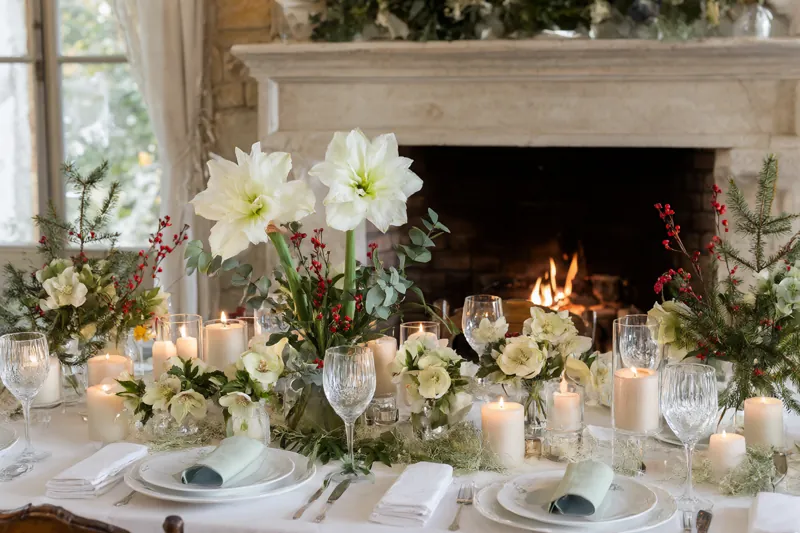
- candles in large numbers are one of the signs of a winter wedding.
Candles near dry greenery, pine cones and fabric need care. Every venue has rules on naked flames: candles in glass cylinders, minimum distances, sometimes LED only. Ask for them in writing.
Weddings close to Christmas
Marrying in December often means finding churches, hotels and villas already decorated. That can be an advantage:
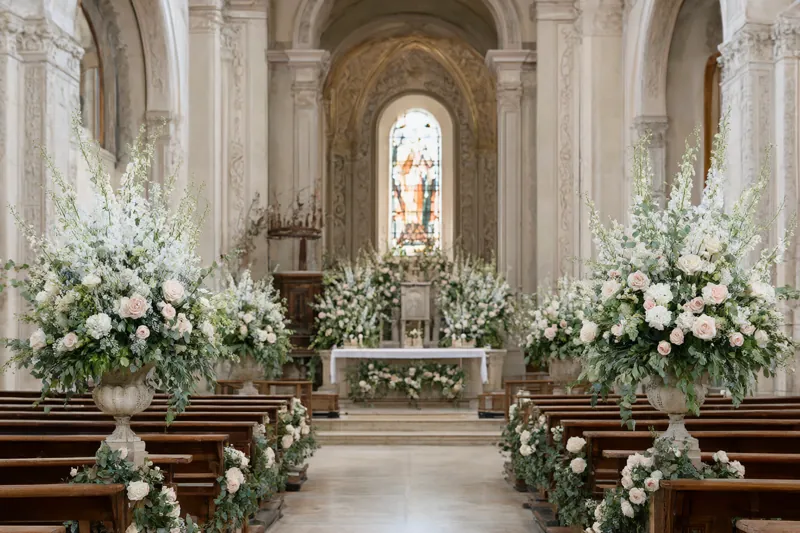
- in church there will be a nativity scene, fir trees, poinsettias. Many parishes do not allow them to be moved, and in Advent (the four weeks before Christmas) some ask for restrained decorations. Ask the priest what you can add. Our guide to church wedding flowers explains the most common rules.
- at the venue the tree and garlands can become part of the setting. Ask for photos of last year's Christmas decorations and coordinate colours.
You can follow the Christmas theme (red, green, gold, poinsettias) or step away from it with a different palette: white and green, white and silver, warm burgundy and copper. Both work if they are consistent. Poinsettias are widely used in Italian churches in December: if you like them, they can become part of the design and, at the end of the party, a small gift for guests.
For Christmas floral decorations in general, beyond weddings, see our list of Christmas floral decorators.
Greenery and plants after the party
Many winter elements last longer than summer flowers. Branches, conifers, berries and potted plants can be reused: plants can become wedding favours or be replanted, branches and pine cones can decorate homes for the holidays. Ask your florist what stays with you and what is hired, and arrange collection at the end of the evening. Greenery that cannot be reused can be composted if it contains no wire or floral foam.
Cold, indoors and outdoors
Cold is less of an enemy to flowers than heat: many arrangements last longer. There are still things to watch:
- frost: flowers left in a car or outside overnight can freeze and blacken;
- temperature swings between the cold outside and heated rooms: some flowers open suddenly near radiators and fireplaces;
- fireplaces and stoves: keep arrangements away from direct heat.
Outdoor winter ceremonies are rare but possible, for example in the mountains or under a portico. You will need blankets, lighting and an indoor plan.
The winter bouquet
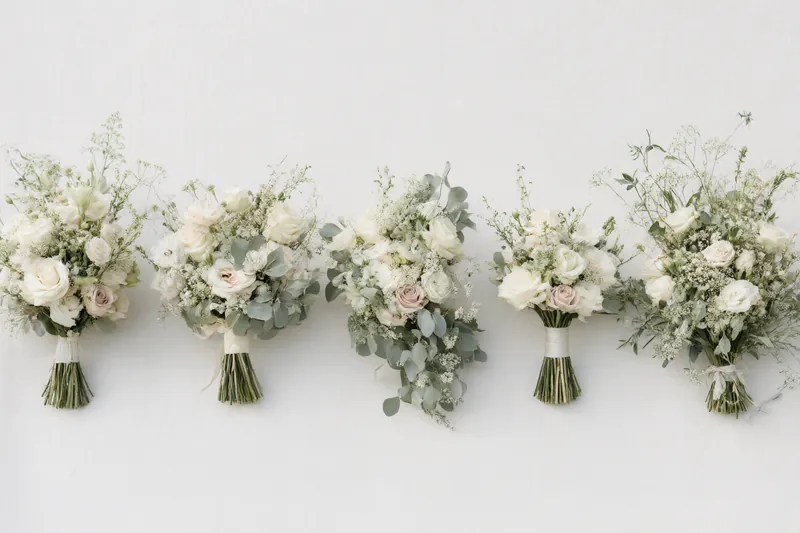
A winter bouquet can be white and green with roses, anemones and hellebores, or darker with berries and burgundy tones. Some brides add a textile touch, such as a velvet ribbon. With long-sleeved dresses or capes, the bouquet can be more compact.
Costs: what changes in winter
There are no price ranges valid everywhere. Some trends are known, though:
- greenhouse or imported flowers can cost more;
- around Valentine's Day the price of some flowers, such as red roses, tends to rise;
- branches and greenery give a lot of volume, often at a contained cost;
- winter dates are less in demand, and some suppliers are more flexible.
For couples coming from abroad
A winter wedding in Italy can surprise people from colder countries or from the southern hemisphere, where December is summer. A few useful points:
- many seaside and countryside areas are much quieter in winter, and some venues close: check that yours is open;
- the big historic cities stay lively and often keep Christmas lights up until Epiphany, 6 January, a public holiday in Italy;
- in Italy chrysanthemums are linked to remembrance of the dead and are everywhere in November: better avoid them or discuss them with your florist;
- the flower market slows down over the holidays and some suppliers close for a few days: agree orders and deliveries well in advance.
Winter palettes that work
Some combinations come up often at winter weddings:
- white and green with silver, clean and bright even in low light;
- burgundy, plum and copper, warm, suited to villas and castles;
- white, gold and dark green, close to Christmas without being themed;
- neutral tones with branches, cotton and dried flowers, for a more natural style.
Questions to ask your florist
- Which flowers are good in my month?
- Which greenery and berries do you use? Are they cultivated?
- How do you handle candles under this venue's rules?
- Will the church already be decorated for Christmas? How do we coordinate?
- How do you protect the flowers from cold during transport?
- Are there dates around the holidays when flowers cost more?
To sum up
A winter wedding is built with fewer flowers and more texture: greenery, branches, berries, candles and warm light. To organise everything in good time, read our guide on when to book your wedding florist.
Once you have a date and venue, request a quote and say whether you want to follow the Christmas theme or step away from it.