In short
- In March ranunculus and anemones are often at their best, with tulips, narcissi and blossoming branches.
- The weather is changeable: every outdoor idea needs an indoor plan B.
- Lent and Easter can limit flowers in church: always ask the parish.
- The South is already in spring; in the North late frosts are still possible.
March is the month spring arrives in Italy, but not everywhere on the same day. In Sicily and Campania gardens are already in flower, while on the Po Valley plain a frost can still burn the buds. For March wedding flowers in Italy it is a generous month: many spring varieties are at their best and demand for weddings is still low. This guide helps you make the most of it, whether you live in Italy or are flying in with your guests.
Remember that flower seasons are indicative: for the full picture read our guide to seasonal flowers in Italy month by month. To see who works in your area, browse our wedding florists.
What is in flower in March
- Ranunculus: for many florists March is the best month, with long stems and full heads.
- Anemones: still around, towards the end of their season.
- Tulips: single, double and parrot types, some grown in Italy.
- Narcissi, hyacinths, grape hyacinths, freesias: scent and pale colours.
- Violets and pansies: small, good for low centrepieces and details.
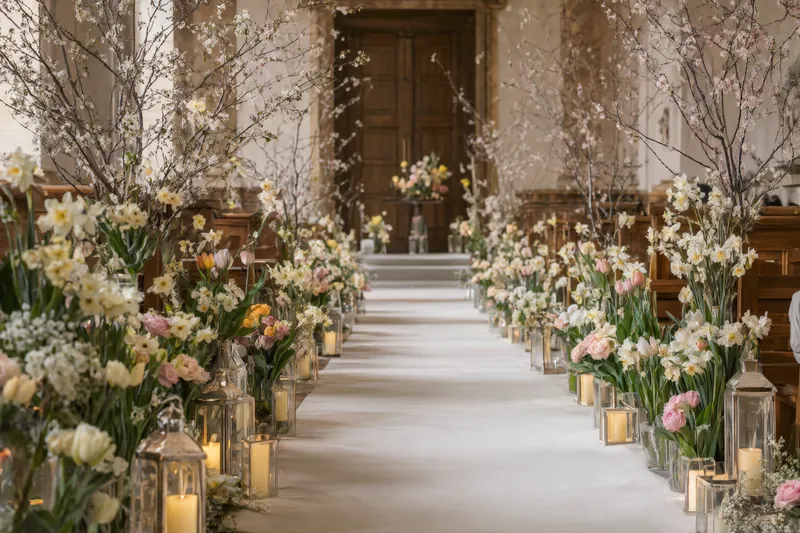
- Blossoming branches: peach, cherry, almond, plum, magnolia, forsythia.
- Camellias: flowers and branches with glossy leaves, beautiful in low vases.
- Mimosa: in its last weeks, around 8 March.
Ranunculus take the lead this month: our guide to ranunculus and anemones explains how to choose them and how well they last.
March flowers at a glance: availability, cost and colours
This table brings together the flowers and greenery you are most likely to find in March, in line with our seasonal flower calendar. Cost is relative to the other flowers of the same month and only indicative: it changes with the area, the supplier, quantities and the year.
| Flower | Availability in Italy | Relative cost | Typical palette | Best used for |
|---|---|---|---|---|
| Ranunculus | peak season (the best month) | low | peach, pink, white, yellow | bouquets, centrepieces |
| Anemones | late season | medium | white, purple, red | bouquets, low centrepieces |
| Tulips | peak season | low | pink, white, yellow, peach | centrepieces, vases |
| Narcissi, hyacinths, grape hyacinths | peak season | low | yellow, lilac, blue, white | centrepieces, lunch tables |
| Freesias | peak season | medium | white, yellow, lilac | bouquets, buttonholes |
| Violets and pansies | peak season | low | purple, lilac, yellow | low centrepieces, details |
| Blossom branches (peach, cherry, magnolia, forsythia) | peak season | medium | pink, white, yellow | large vases, church, entrances |
| Camellias | peak season | medium | white, pink, red | low vases, top table |
| Mimosa | late season | low | yellow | details, entrances |
| Peonies and hydrangeas | imported | high | pink, white, blue | best avoided in March |
| Spring greenery (ferns, pittosporum, eucalyptus, ruscus) | peak season | low | fresh green | base for arrangements, table runners |
Costs beyond the flowers themselves, such as dates, logistics and structures, are covered in the cost section further down.
Greenery and fruit in March
Greenery becomes lighter: young leaves, budding branches, ferns, pittosporum, eucalyptus in paler tones. Citrus is still available, especially lemons and the last oranges from the South. In many areas you will also find broad beans and peas in the pod, which some florists use in rustic arrangements, away from the food being served.
North, Centre and South in March
| Area | Typical weather | What works | Watch out for |
|---|---|---|---|
| North | Cool, possible late frosts, rain | Bulbs, ranunculus, forsythia and cherry branches | Rooms that need heating, night frost on flowers left outside |
| Centre | Uncertain spring, sunshine and downpours | Peach and cherry branches, ranunculus, camellias | Countryside venues with wet ground |
| South and islands | Mild by day, cool in the evening | Early wild flowers, citrus, local ranunculus | Wind on the coast, damp evenings |
On the northern lakes, many villas reopen between March and April: check that your venue is operating and that its gardens are already looked after. In the South, March can bring an outdoor lunch at a masseria (a fortified farmhouse, typical of Puglia) or a villa, but evenings stay cool: you will need blankets or an indoor room for after dinner.
Changeable weather: plan B first
March is the month of surprise weather. Morning sunshine can turn into an afternoon downpour. For your flowers that means:
- arrangements designed to be moved easily from outside to inside;
- heavy bases to withstand the wind;
- a covered area where the florist can set up even in the rain;
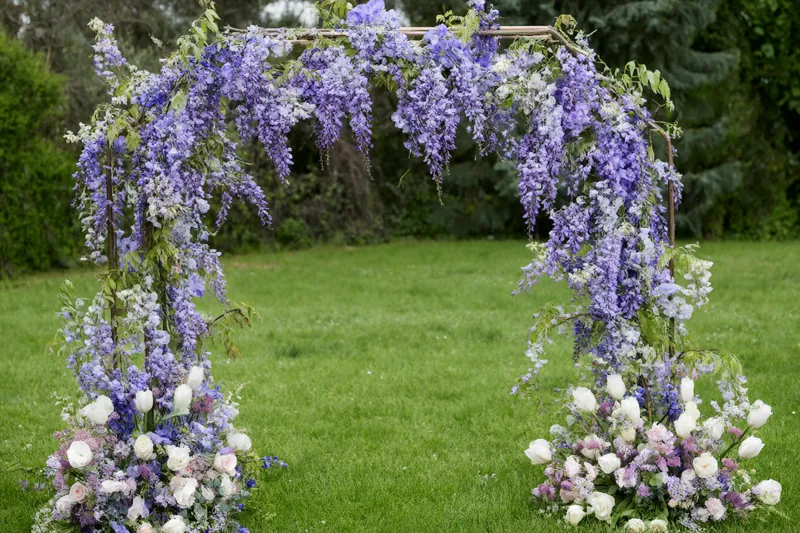
- a floral arch or backdrop that can be rebuilt indoors, or an alternative agreed in advance.
Our guide to a rain plan B helps you set this up with the venue and the florist.
Lent, Easter and churches
March often falls entirely within Lent and sometimes includes Easter, which moves each year between late March and April. Two practical consequences for a Catholic wedding:
- during Lent many parishes ask for restrained decorations or limit flowers on the altar;
- during Holy Week weddings are usually not celebrated and churches have their own decorations.
After Easter, by contrast, churches are often already decorated with white flowers, and some couples agree with the parish to add to them. Rules change from church to church: always ask the parish priest. You will find florists who often work in churches in our list for church wedding flowers.
How flowers hold up in March
Mild temperatures are ideal for cut flowers. There are two risks: night frost if an arrangement is left outside or in a van, and falling petals from blossoming branches in a draught. Tulips also move: they keep growing and bend towards the light even in a vase. Nothing serious, provided the florist puts them in place at the last moment and where their loose shape is part of the effect.
Venues waking up
March is when many seasonal venues reopen: lakeside villas, agriturismi (farm stays), masserie, historic houses with gardens. The advantage is that you can often choose your date calmly. The drawback is that gardens may still be bare, with newly planted beds and leafless trees. Ask the venue for recent photos from the same period, not just pictures taken in June, and design the flowers around what will really be there. In historic cities such as Rome, Florence and Venice, March is a good compromise between longer daylight and fewer tourists.
What tends to cost less, and more, in March
| Tends to cost less | Tends to cost more |
|---|---|
| Italian ranunculus, tulips and bulbs | Imported peonies, out-of-season hydrangeas |
| Local blossoming branches | Large outdoor arches with a full second plan B set-up |
| Spring greenery | Reopening venues asking for extra decoration |
| Low-season dates | Weekends close to Easter |
March is still outside the high season, so it is easier to book the florist you want. The final figure always depends on the design: if you want to understand how it is built, read our guide to wedding flower costs in Italy.
Colour palettes for March
- Spring pastels: peach ranunculus, pink tulips, lilac hyacinths. Light and bright.
- White and acid green: white tulips, still-green viburnum, pale peach blossom.
- Yellow and blue: narcissi and grape hyacinths. Cheerful, good for lunches and daytime ceremonies.
- Cherry blossom pink: blossoming branches in the lead, a few flowers at the base, pale linen.
Questions to ask your florist
- Are the ranunculus you will use grown in Italy? In which week are they at their best?
- If it rains, how does the set-up of the outdoor ceremony change?
- Will the blossom branches last until evening? Where will you place them so petals do not make a mess?
- Have you worked in this church during Lent or close to Easter?
- What would you advise me not to use in March because it is out of season?
Before and after March
If your date is still open, compare March with February, more wintry and with mimosa at its peak, and with April, when wisteria and lilac arrive but so do more weddings.
Once you have a date and a venue, ask for a quote and say whether the ceremony will be outdoors, so the florist can include the plan B.