In short
- Liguria has a long tradition of growing flowers and foliage, especially around Sanremo: many materials can come from nearby.
- Venues are often villas, terraces and seaside villages: small spaces, beautiful settings.
- The real challenge is access: narrow roads, car-free centres, villages reached on foot, by train or by boat.
- Set-up and breakdown need more time and more people: make sure your quote covers this.
This guide is for couples planning a Portofino or Cinque Terre wedding, or any wedding on the Italian Riviera: Portofino and the Gulf of Tigullio, the Cinque Terre and the Gulf of Poets, and the western Riviera di Ponente. You will find what local flower growing offers, the main types of venue, the access problems you should expect, and the questions to ask your florist.
Why Liguria
Liguria is a thin strip of coast squeezed between mountains and sea. Colourful towns, terraced hillsides, villas above the water, gardens full of citrus trees and exotic plants. Many couples from abroad come for the famous names, and Italian couples come for the sea without the long journey south.
For flowers, Liguria has a rare advantage: production is close by. Its disadvantage, access, needs experience and careful planning. To find the people who work along this coast, browse the list of wedding florists in Liguria.
The Riviera of Flowers and Ligurian growers
Western Liguria, between Sanremo and Albenga, has long been one of Italy's most important areas for cut flowers, ornamental greenery and potted plants. Sanremo has a wholesale flower market that supplies the trade.
Depending on the season, local products include:
- ranunculus and anemones, mainly from winter to spring;
- mimosa, at the end of winter;
- broom and other cutting flowers;
- ornamental foliage such as eucalyptus;
- herbs and potted plants, on the plain around Albenga.
Not everything comes from Liguria. Many flowers arrive from other regions and from abroad. But for a spring wedding, fresh local flowers are a realistic option. Ask your florist what they can source locally in your month. For the national picture, read our guide on where Italian wedding flowers come from.
Areas and their venues
| Area | Typical venues | What it means for flowers |
|---|---|---|
| Portofino and Tigullio | Historic villas, hotels, terraces above the harbour, churches on the headland | Restricted traffic, very little parking, small spaces |
| Cinque Terre | Terraces among vineyards, small churches, seafront restaurants | Villages largely car-free, steep steps |
| Gulf of Poets | Castles, villas, seaside villages | Some places can also be reached by sea |
| Riviera di Ponente | Villas with gardens, historic hotels, inland villages | Close to the growers, easier access |
| Inland hills | Hill villages, farm stays (agriturismi), olive groves | Narrow winding roads, cool evenings |
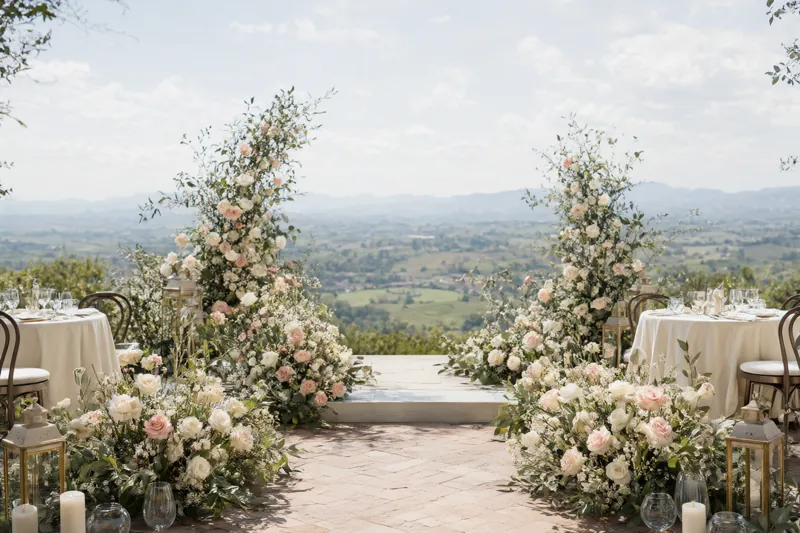
Many venues are terraced. Spaces are long and narrow, often on several levels. This changes how tables are laid out and how flowers are carried from one spot to another.
Narrow access: the logistics problem
In Liguria, distance in kilometres tells you little. What matters is how you get there.
Roads and parking
Coastal roads are narrow and busy, especially on summer weekends. Some town centres restrict car access. A van may not get close to the venue, or may only be allowed to unload at set times. Check with the Comune (the town hall) whether permits are needed.
Car-free villages and steps
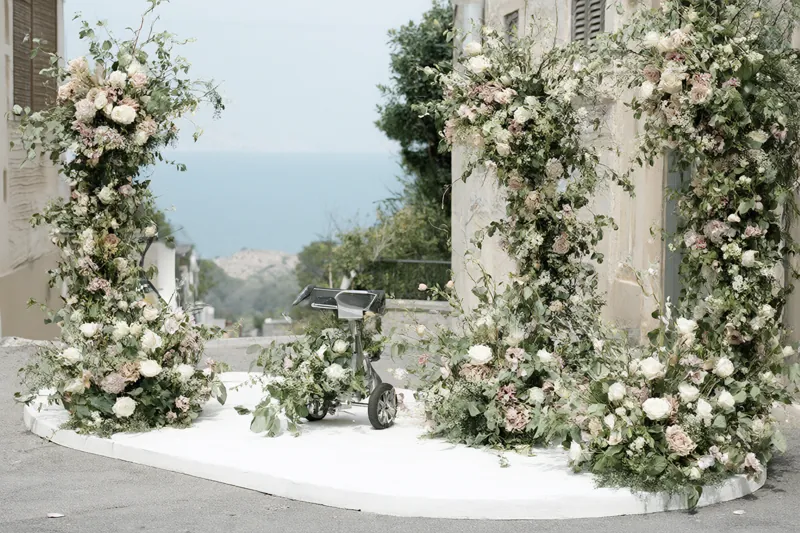
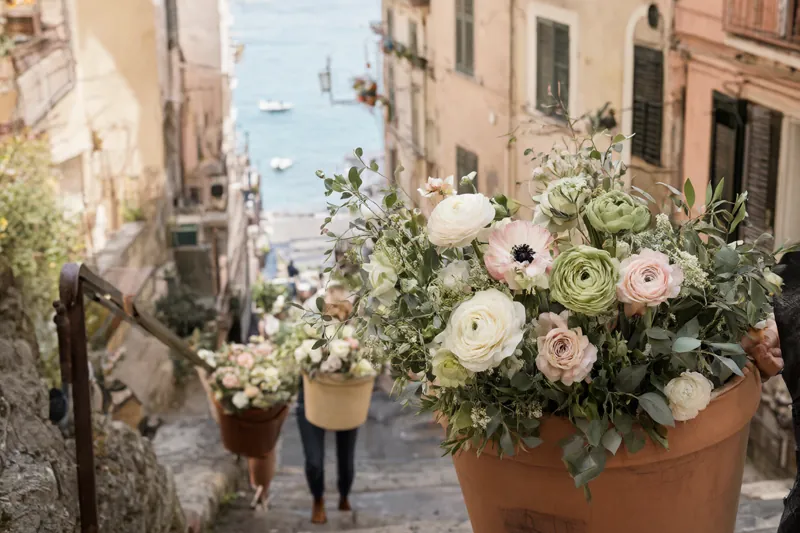
In the Cinque Terre and many other villages, centres can only be reached on foot, often up long flights of steps. Arrangements are carried by hand or on small trolleys. Large structures, arches and heavy vases become a serious problem.
Train and boat
Some places are easier to reach by train or by sea. Your florist may need several trips, and the sea sets the timetable. If the sea is rough, a boat delivery can be cancelled.
In practice this means:
- more people on the team;
- more hours for set-up and breakdown;
- lighter, modular arrangements;
- a transport cost that should be spelled out in the quote.
Before you sign, arrange a site visit with your florist, or ask the venue for photos and video of the route from the last point a car can reach. For the costs that may appear, read our guide to hidden extra costs in wedding flowers.
Flowers that work on the Ligurian coast
There is no required style. But some choices suit the setting better:
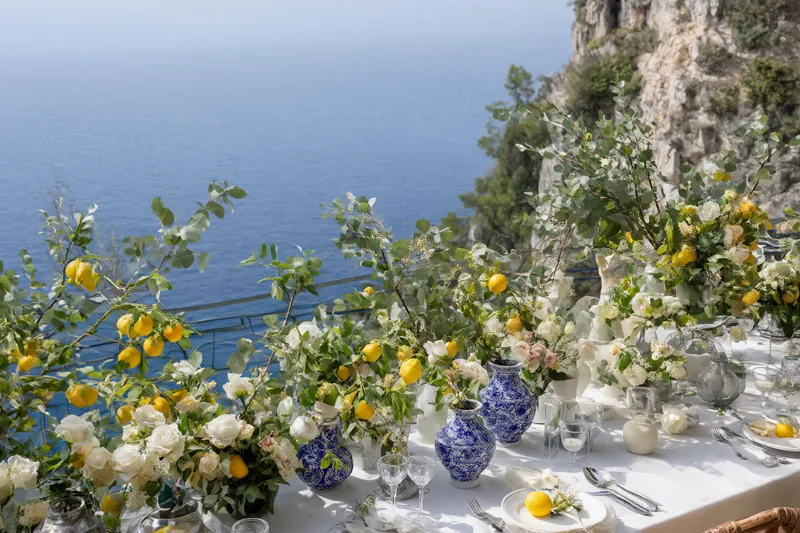
- citrus in pots, or branches with fruit, common in Ligurian gardens;
- olive, grown on the fasce, the stone terraces typical of the region;
- herbs such as rosemary, thyme and lavender;
- local greenery, hardy and often cheaper than flowers;
- spring flowers such as ranunculus and anemones, in their season.
On terraces by the sea, wind and salt air set the rules: low arrangements, stable bases, and no open flames outdoors without the venue's permission. If you like this direction, read our guide to Mediterranean-style wedding flowers.
Seasons in Liguria
These notes are indicative. The coast is mild, the hills inland are cooler.
| Period | Weather | For flowers |
|---|---|---|
| March to April | Mild, possible rain | Ranunculus, anemones, late-winter mimosa, fresh local flowers |
| May to June | Very popular, long days | Roses, peonies in May, garden flowers |
| July to August | Hot, humid, crowded resorts | Greenery, hardy flowers, late set-up |
| September to October | Sea still warm, soft light | Dahlias, roses, fruit, greenery |
| November to February | Quieter, frequent rain | Greenhouse flowers, greenery, citrus |
In high season the coast is very busy. Suppliers, guest rooms and parking all become scarce.
Between autumn and winter Liguria can get heavy rain, sometimes within a few hours. On a seaside terrace, plan an indoor backup from the start, with a design that can be moved quickly. In summer, humidity near the sea makes vases and tablecloths sweat and tires delicate flowers: water-filled containers and set-up in the last useful hours work better.
Churches and town halls
Many couples want a small church by the sea or a civil ceremony in a town hall room with a view. Spaces are often small and the rules precise:
- ask the parish what can go on the altar and pews, and whether petals can be thrown;
- ask the Comune which rooms or places are available for civil weddings, with what times and fees;
- check whether there are other ceremonies on the same day, which shorten your set-up time.
Questions to ask your florist
- Have you worked at this venue before? How did you bring the flowers in?
- Which flowers and greenery can you source in Liguria in our month?
- How close can the van get? Do we need permits?
- How many people do you need for set-up? Is that included in the price?
- Can structures be taken apart into light pieces?
- If the sea is rough, how will you get there?
- What happens if it rains on the terrace?
- What time do you have to leave the venue?
To sum up
Liguria offers flowers grown nearby and beautiful venues, but small spaces and difficult access. Choose a florist who knows the coast and ask for a quote that covers transport, team and realistic timings. If you are comparing other seaside destinations, see our list of florists for destination weddings in Italy.
Once you have a date and a venue, request a quote and describe clearly how the venue is reached.