In short
- The Mediterranean style rests on greenery (olive, citrus, herbs), white and natural materials.
- It works where there is strong light, pale stone and outdoor space.
- Heat is the main enemy: you need hardy flowers and set-ups in the cooler hours.
- Potted olive trees and live plants are subject to plant health rules: ask how they are sourced.
Olive trees, lemons, terracotta, linen tablecloths, a long table under a pergola. For many couples, Italian and from abroad, this is the very picture of a wedding in Italy. This guide to Mediterranean wedding flowers explains which elements make up the style, where it looks best, in which season, and which mistakes to avoid so it does not end up looking like a postcard.
The elements of the style
The Mediterranean style is first of all greenery and texture. There are flowers, but they rarely dominate.
| Element | Examples | Typical use |
|---|---|---|
| Greenery | Olive, lemon, orange, pittosporum, myrtle, rosemary | Table garlands, arches, bouquets |
| Fruit | Lemons, oranges, pomegranates in autumn, figs | Centrepieces, buffet, seating plan |
| White flowers | Jasmine, gardenia, white roses, orange blossom | Bouquet, church, top table |
| Colour accents | Bougainvillea, agapanthus, lavender, oleander | Entrances, arches, feature corners |
| Materials | Terracotta, painted ceramics, wicker, linen, wood | Vases, chargers, baskets |
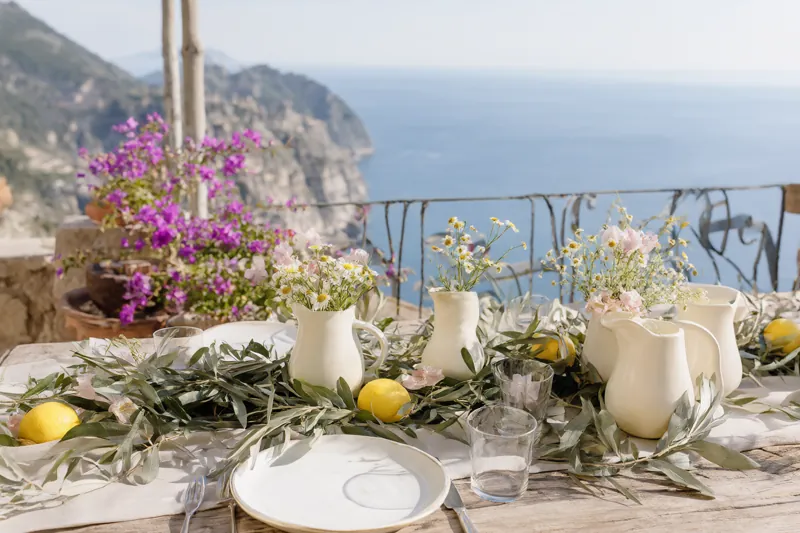
Many couples love olive garlands running down long banquet tables, alternating with candles and lemons. It photographs beautifully, and it is also one of the easiest set-ups to adapt to different budgets, because greenery generally costs less than premium flowers.
Where it works: regions and venues
The style comes from the landscape of the South and the islands, but it is not a regional obligation. Florists in Puglia or Sicily also work in classic, minimalist or boho styles.
- Puglia: masserie (fortified farmhouses), pale stone, ancient olive trees. Here the Mediterranean style feels at home. Find professionals on our page of wedding florists in Puglia.
- Sicily: citrus, ceramics, Baroque architecture. You can push the colour further. See our wedding florists in Sicily.
- Amalfi Coast and Capri: lemons, sea-view terraces, majolica tiles. Spaces are often small and logistics complex.
- Sardinia: myrtle, Mediterranean scrub, granite, natural tones.
- Liguria: olive trees, terraced gardens, seaside villas.
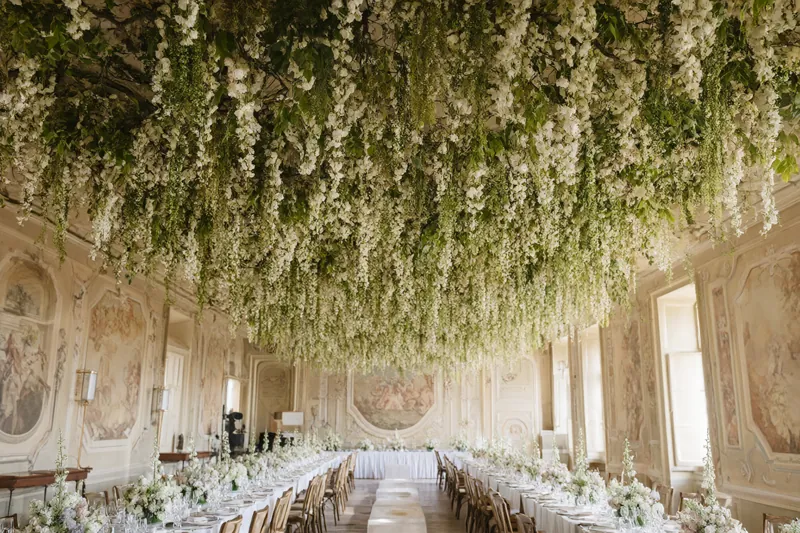
Outside these regions the style works well in gardens with olive trees, sunny terraces and stone courtyards. It is less natural in palazzi with frescoes and velvet, where it can look out of place.
The seasons of the Mediterranean style
| Period | What it offers | Watch out for |
|---|---|---|
| April to May | Orange blossom, jasmine, fresh greenery, soft light | Cool evenings, possible rain |
| June | Agapanthus, lavender, bougainvillea, lemons | Heat starting to build |
| July to August | Bougainvillea, oleander, lavender | Strong heat, delicate flowers suffer |
| September to October | Pomegranates, figs, grapes, warm light | Shorter days, risk of storms |
This is indicative: flowering and availability change from year to year. The usual window for Mediterranean weddings runs from May to early October. To plan around the heat, read our guide to summer wedding flowers and the heat.
Heat, sun and wind: practical rules
The Mediterranean style is lived outdoors. That means:
- set-up in the cooler hours, or as close as possible to the guests' arrival;
- hardy flowers: greenery, citrus, dried or preserved flowers cope better with sun than hydrangeas and peonies;
- water reserves in the arrangements;
- heavy bases for vases and candles, because wind is common by the sea and in the hills;
- shade for the bouquet until the ceremony.
If the reception is outdoors, plan a plan B with your florist too. Our guide to marquees and plan B explains how flowers are adapted.
The bouquet and Mediterranean details
The Mediterranean bouquet is often white and green, with gardenias, white roses, orange blossom when the season allows, and a sprig of olive or myrtle. Myrtle is also a nod to tradition: in several parts of Italy it was used in bridal wreaths and bouquets. Other typical details:
- buttonholes with a sprig of olive or an orange blossom;
- place cards with a small lemon or a sprig of rosemary;
- a seating plan on wooden crates, majolica tiles or frames with greenery;
- bags of confetti, the sugared almonds Italians give as wedding favours, tied with linen and a flower.
For the groom's details, read our guide to buttonholes and flowers for the groom.
The Mediterranean table
The table is where this style shines most. The most common choices are long tables with linen cloths, olive garlands down the centre, glass candle holders, bowls of lemons and small vases of white flowers. On round tables, low arrangements of greenery with a few flowers and a piece of fruit work well. Always leave room for plates, glasses and bottles: the caterer will ask for it anyway.
Lemons and fruit near food
Lemons on the tables are beautiful, but they remain decoration:
- wash them if they sit near plates;
- do not cut them open on the table for effect: in the heat the juice attracts insects;
- fruit such as figs and grapes ripens fast and can stain tablecloths;
- on the buffet, the caterer decides where they can go.
For details, read our guide to flowers that are safe near food.
Potted olive trees and plant health rules
Some set-ups use potted olive or citrus trees as a backdrop for the ceremony. In Puglia and some other areas the bacterium Xylella fastidiosa is present, and the European Union has set rules on moving certain host plants out of the defined zones. The rules mainly concern plants intended for planting.
In practice: if you want live plants, ask your florist where they come from and whether they travel with the required documents. If in doubt, the reference point is the plant health service of the region concerned. Hiring from local nurseries is often the simplest solution.
What to avoid
- The souvenir look. Too many lemons, painted ceramics everywhere, strong colours in every corner. Better to choose two or three elements and repeat them.
- Flowers out of context. Peonies and hydrangeas outdoors in mid-August suffer. Your florist will suggest alternatives.
- Forgetting the evening. Many Mediterranean receptions carry on after sunset. Lighting matters as much as flowers: read our guide to lighting and flowers.
- Banned petals and confetti. Some venues and churches do not allow throwing petals or rice. Ask first.
Questions to ask your florist
- Which Mediterranean elements would you use at my venue without overdoing it?
- Which flowers can handle the heat of my month and the time of the ceremony?
- Are the potted olive or citrus trees hired? Where do they come from?
- How do you manage the set-up in sun and wind?
- Can the ceremony greenery be reused on the tables?
To sum up
The Mediterranean style works when it looks as if it grew out of the place. Make greenery the lead, choose a few materials and respect the heat. For a wider picture, read our guide to wedding flower styles and the one on citrus and olive in wedding flowers.
If you are marrying in Italy from abroad, look at our destination wedding florists in Italy. Then request a quote with your venue, date and ceremony time.
Sources
- Commission Implementing Regulation (EU) 2020/1201 on measures to prevent the introduction and spread of Xylella fastidiosa: https://eur-lex.europa.eu/eli/reg_impl/2020/1201/oj