In short
- A florist sells and arranges flowers, often from a shop; many also do weddings.
- A floral designer designs the floral scheme for your spaces, with hire items, structures and a team.
- A wedding designer looks after the visual style of the whole event: flowers, tables, lighting, stationery, furniture.
- None of these is a regulated title in Italy: the portfolio decides, not the label.
When you look for someone to do your wedding flowers in Italy, you meet several names: florist (fiorista), flower designer, floral designer, wedding designer, sometimes event designer. Sometimes they mean different jobs, sometimes the same person. This guide explains what each one usually does, when you need one or the other and how the quote changes.
Why the names get mixed up
In Italy none of these professions has a professional register or a protected title. A florist with a shop can call themselves a flower designer, and many floral designers started out as florists. The English terms spread with international weddings and social media, so you will see them on Italian websites too.
So do not choose by job title. Look at what the person has actually done and what they offer. If you want to start from a list of professionals who work on weddings, see our wedding florists in Italy.
Four roles, four jobs
The florist
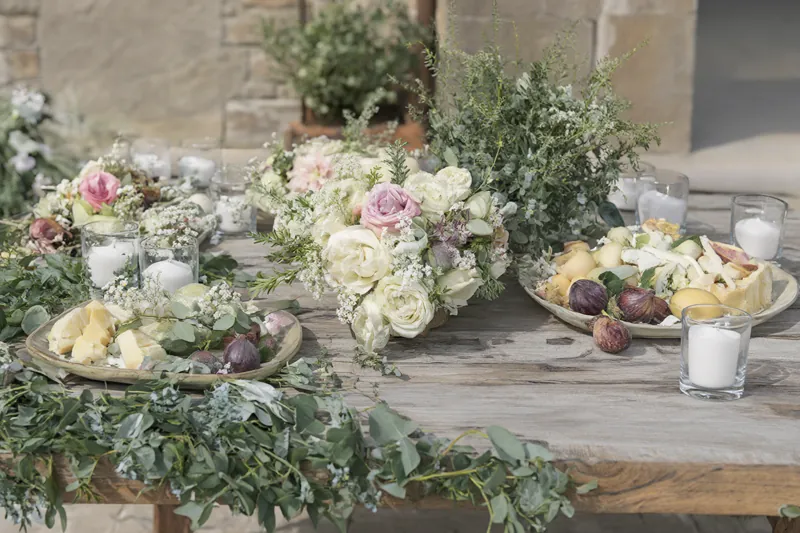
A florist usually works from a shop. They sell cut flowers, plants and arrangements for every occasion: birthdays, anniversaries, funerals, home delivery. Many florists also do weddings, often in their own town or province.
What they usually offer for a wedding:
- the bridal bouquet and buttonholes;
- arrangements for the church or the town hall (in Italy, the Comune, where civil ceremonies take place);
- centrepieces and arrangements for the reception;
- delivery and placing.
Strengths: they know flowers well, buy directly from wholesalers and are close by. Possible limits: they do not always have a hire stock, structures or a team able to set up and take down large designs in a few hours.
The floral designer
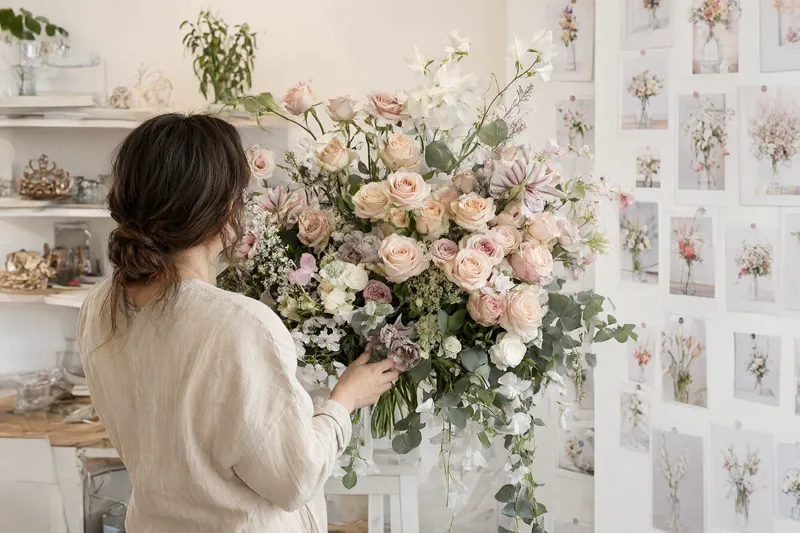
A floral designer plans the floral scheme for one or more spaces. They start from the venue, the light and the style, and propose a design with sketches, a colour palette and reference photos. Then they build it with a team.
What they usually offer:
- a design for the whole scheme, often after a site visit;
- arrangements for the ceremony, drinks reception, dinner and top table;
- hire of vases, stands, candelabra, arches and structures;
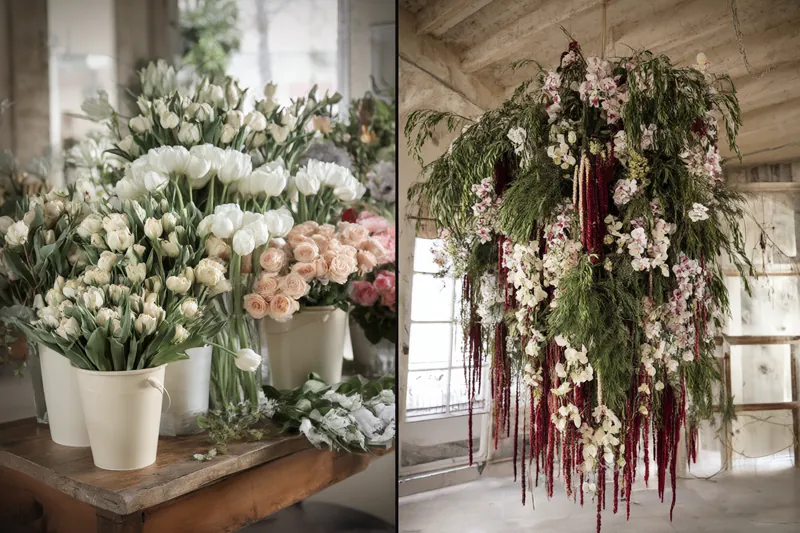
- installations such as floral arches, hanging designs and flower-lined aisles;
- set-up and breakdown, timed with the venue and the caterer.
Many floral designers have no shop open to the public and work by appointment only. Some also handle corporate and high-end events. You can see examples of large-scale work in our list of floral installations.
The wedding designer
A wedding designer looks after the visual style of the entire event: not only the flowers but also linen, plates, glasses, seating, lighting, printed stationery and signage. They create a concept and have suppliers produce it.
Two common set-ups:
- the wedding designer is also a floral designer and makes the flowers with their own team;
- the wedding designer designs and hands the flowers to an outside floral designer whom they coordinate.
In the second case, it matters to know who is responsible for the result and whom you pay directly.
And the wedding planner?
A wedding planner organises: they help you choose the venue, select and coordinate suppliers, keep track of budget and deadlines and run the day. They are not florists. Many planners, though, have trusted floral designers they suggest to couples. How the roles split is explained in our guide to floral designers and wedding planners.
Side-by-side comparison
| Florist | Floral designer | Wedding designer | |
|---|---|---|---|
| Main job | Selling and arranging flowers | Designing and building floral schemes | Visual style of the whole event |
| Shop | Usually yes | Often no, works by appointment | Usually no |
| Site visit | Sometimes | Almost always | Almost always |
| Hire items and structures | Limited or none | Often included | Coordinated across suppliers |
| Set-up team | Small | Sized to the event | Coordinates several teams |
| Best suited to | Simple weddings, ceremonies, small receptions | Weddings with several spaces, installations, destination weddings | Events with a strong visual concept and many elements |
This table describes typical cases. There are florists who handle big designs and floral designers who look after small weddings with the same care.
Which one do you need?
A florist is enough if
- the wedding is small or medium-sized, with ceremony and reception close together;
- you need a bouquet, the church and centrepieces, with no structures;
- the venue already has vases, tables and furniture;
- you want someone close by and easy to meet.
You need a floral designer if
- there are several spaces to dress: ceremony, drinks, dinner, after-dinner;
- you want arches, hanging installations or large set pieces;
- the venue is empty and you need hire items;
- you are getting married far from home and need someone to handle everything on site.
You need a wedding designer if
- you want a visual concept linking flowers, tables, lighting and stationery;
- your budget allows you to hand the creative direction to one person.
How the costs change
There are no fixed rates. What changes is the structure of the quote:
| Item | Florist | Floral designer | Wedding designer |
|---|---|---|---|
| Flowers and arrangements | Yes | Yes | Through a supplier or directly |
| Design and site visit | Rarely charged separately | Sometimes separate, sometimes included | Often a dedicated line |
| Hire items | Rarely | Often | Coordinated |
| Set-up and breakdown | Delivery, sometimes placing | Dedicated line | Coordinated |
| Travel | Usually local | If outside their area | If outside their area |
| Design or coordination fee | No | Rarely | Often |
When you compare a florist with a floral designer, check that both quotes cover the same items. A lower total may leave out hire or breakdown. The items are explained in our guide to wedding flower costs in Italy. Also check whether prices include VAT (IVA in Italy).
More practical tips
How to tell from a website or profile
Before writing, you can get an idea from how the professional presents themselves. Some useful clues:
- the photos: if they mostly show shop bouquets and gift arrangements, it is probably a florist with a retail business; if they show whole rooms, outdoor ceremonies and structures, they work on event design;
- the venues: people who do many weddings often mention the type of venue, the region or the season;
- the services listed: hire, design, site visits, set-up and breakdown point to a floral designer's work;
- the area covered: those who work with international couples often list the regions they travel to and the languages they speak.
These are only clues. A neighbourhood florist may have long experience of villa weddings and simply not publish it. That is why asking directly remains the best method.
What about corporate events?
The same differences apply outside weddings. For a weekly delivery to an office or hotel, a florist is often the practical choice. For a conference, a gala dinner or a product launch with a stage and set pieces, you need someone who designs the spaces, respects brand colours and handles fast set-ups in tight windows. In those cases a floral designer, or an event designer with a floral designer on the team, works alongside whoever is staging the room and the lighting.
Questions to work out who you are talking to
- Who physically makes the arrangements: you or a supplier?
- Do you have your own hire stock, or do you hire from others?
- How many people will you have on set-up day?
- Do you do a site visit and a design before the final quote?
- Do you also handle breakdown at the end of the party?
- Will you coordinate with the caterer, the venue and the wedding planner?
- Do you work in English, and will the contract be in English too?
Making your choice
You do not need the grandest title, you need the right person for your kind of wedding. For the full method, read our guide on how to choose your wedding florist. Once you know what you need, use find your florist or request a quote, telling them about your spaces, guest count and style.