In short
- Start with style: choose someone who has already done work close to what you have in mind.
- Look at whole weddings, not just the best shots, and ask where and in which season they took place.
- A good florist asks questions and suggests a site visit before the final quote.
- Only sign a written contract that says what happens if a flower is unavailable, if it rains or if you cancel.
Choosing a wedding florist in Italy is easier than it looks once you know what to look at. This guide is for couples getting married in Italy, including those planning from the UK, the US, Australia or elsewhere, who want to judge a florist or floral designer before signing: what to ask, how to read a portfolio and how to spot the warning signs.
Before you search: the three things you need
A florist cannot give you a serious proposal without knowing three things:
- date and venue, even if only on hold;
- number of guests, and so the number of tables;
- an indicative budget for flowers, even just a range.
With this information you can already narrow the field. Many Italian florists work in a specific area and take a limited number of weddings each season. To find those who work near your venue, start from our list of wedding florists across Italy and look at the ones active in that region.
If you do not yet know how much to set aside, read our guide to wedding flower costs in Italy first.
Florist or floral designer: who do you actually need?
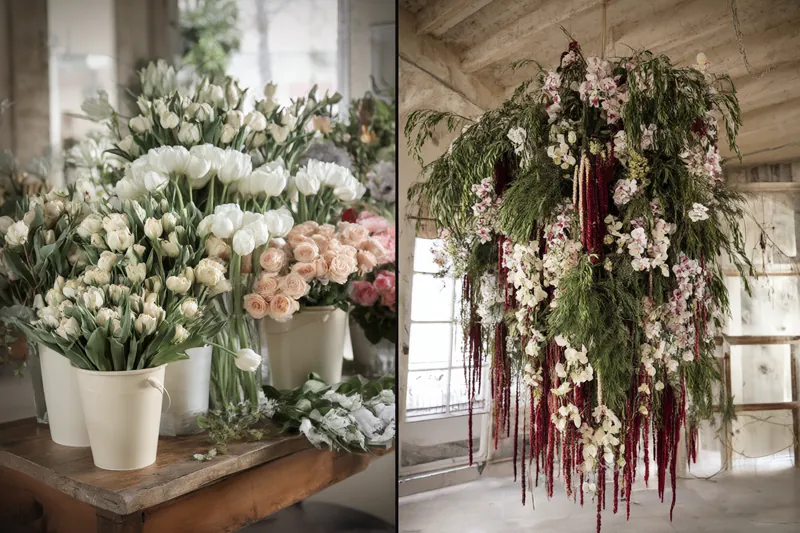
It is not just a question of job titles. A florist with a shop can do a beautiful job with the bouquet, the church and the centrepieces. A floral designer (in Italy often called a "flower designer") usually designs the whole scheme, often with hire items, structures and a team to set up. For large installations, arches, hanging designs or a destination wedding with many spaces to dress, you need someone used to that scale of work. The differences are explained in our guide to florists, floral designers and wedding designers.
How to read a portfolio
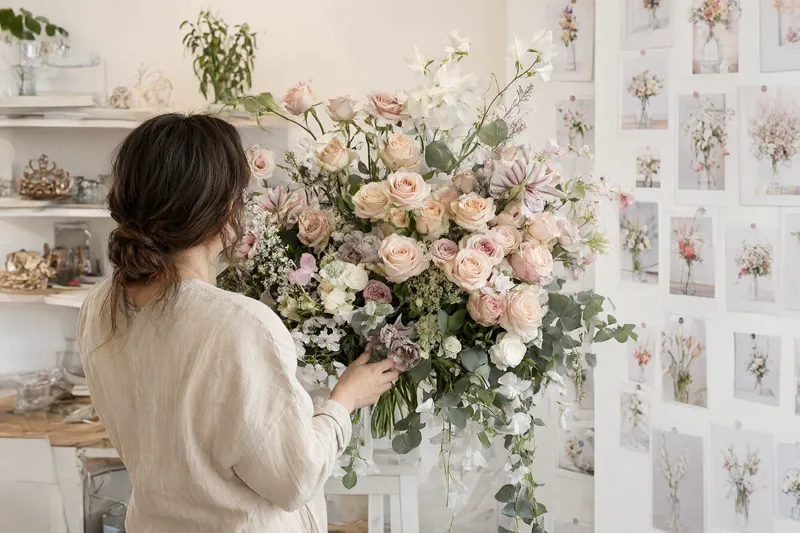
The portfolio is your first filter. Do not stop at how pretty the photos are: ask yourself whether what you see resembles what you want.
Consistency of style
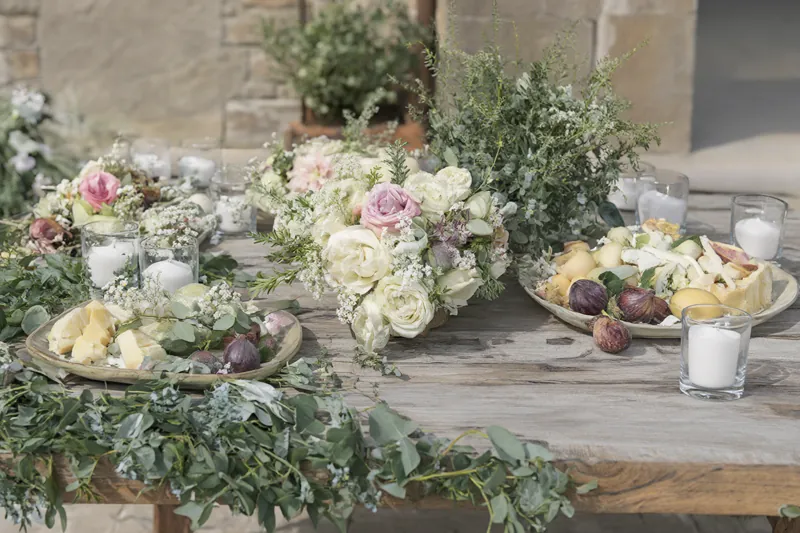
Every designer has a recognisable hand. Some work with soft, natural, garden-style arrangements, some with clean lines and few flowers, some with big volumes and strong colour. A good florist can adapt, but they do their best work in their own style. If nothing in the portfolio looks like your idea, ask for examples.
Whole weddings, not just details
A close-up of a bouquet tells you little. Ask to see the full gallery of one complete wedding: ceremony, drinks reception, tables, the room in the evening. That shows you how they handle large spaces and whether they keep the quality across a hundred tables, not just one.
Season and place
A photo of peonies in May at a villa in the north tells you nothing about how they cope with August heat at a masseria (a fortified farmhouse) in Puglia. Ask for work in the same season and in venues similar to yours: outdoors, in a church, by the sea, in the mountains.
The first conversation: what should happen
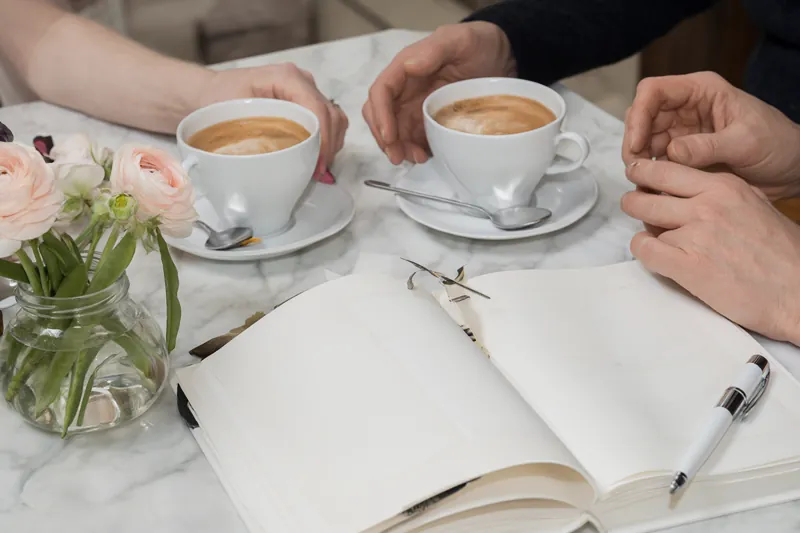
The first meeting, in person or on a video call, tells you a lot. A good professional:
- asks questions about you, the venue, your outfits and your other suppliers;
- tells you what cannot be done on that budget or in that season, rather than promising everything;
- suggests a site visit before the final design;
- explains the alternatives if a flower is not available;
- sends you a written proposal with clear line items.
If instead you receive a flat-rate quote with no questions asked, one total and no breakdown, ask for the detail. To prepare the call, use our list of questions to ask your wedding florist.
A comparison table
Use this table to compare two or three florists on the same basis. Give each row a simple rating.
| Criterion | What to look at | Good sign | Weak sign |
|---|---|---|---|
| Style | Portfolio, work similar to yours | Weddings close to your idea | Only generic photos or images taken from elsewhere |
| Experience with your type of venue | Churches, villas, beaches, mountains | Work in the same area or similar venues | No comparable example |
| Listening | First meeting | Precise questions, reasoned suggestions | Vague answers, "anything is possible" |
| Quote | Line items, hire, set-up | Detailed list, VAT stated | One total with no breakdown |
| Logistics | Team, timings, breakdown | Can say how many people and how many hours | Cannot answer on timings and breakdown |
| Contract | Deposit, substitutions, cancellation | Clear written terms | Verbal agreements only |
| Reviews | Feedback from real couples | Specific, recent comments | Only generic praise, all identical |
Genuine reviews and references
Reviews help, but read them carefully. Useful ones describe specific things: punctuality, how a problem was handled, whether the flowers survived the heat, how the breakdown went. Generic, glowing sentences tell you little.
You can also ask the florist for the contact of a couple they have worked with, ideally another international couple, or ask your venue or wedding planner. Florists who work often at the same venue are known to the staff, and the staff know who respects timings and rules.
From site visit to contract
Site visit and design
After the first contact, serious professionals want to see the spaces. At the site visit they measure tables, arches and entrances, look at the light and check the venue's rules. The final design comes out of that, often with sketches, reference photos and a colour palette. What to check at that stage is covered in our guide to the site visit with your florist.
If you are getting married far from home, the florist can do the visit alone and send you a video. In that case, ask for photos and measurements of every space.
The contract
Do not rely on a quote accepted by text message. A written contract should state at least:
- what is included, item by item;
- what happens if a flower is unavailable and what it will be replaced with;
- the deposit amount and the payment dates;
- cancellation and date-change terms;
- the wet-weather plan;
- hire items, security deposits and who is liable for breakages;
- set-up and breakdown times.
All the points are covered in detail in our guide to the wedding florist contract.
Warning signs
They are not proof of bad faith, but each one deserves an extra question:
- no detail in the quote, just a total;
- promises of out-of-season flowers at low prices, with no mention of imports or alternatives;
- almost full payment up front without a contract;
- portfolio photos they cannot place at a venue or a date;
- no answer on set-up and breakdown, or times that do not match the venue's;
- pressure to sign immediately, with discounts that expire in a few days.
Destination weddings: what changes
If you live abroad and are marrying in Italy, add a few points:
- language: ask whether the florist or their team works in English, including for the quote and the contract;
- paying from abroad: bank transfer in euros, exchange rate, bank fees, invoicing;
- remote communication: video calls, photos of samples, response times;
- Italian customs: a local professional knows, for example, that chrysanthemums are associated with funerals in Italy and will steer you away from them for a wedding.
You can start from our list of florists for destination weddings in Italy and read our guide to planning your flowers from abroad.
Questions to ask the florist
- Have you worked at this venue, or a similar one?
- Can you show me the full gallery of a wedding in the same season?
- How many weddings do you take on the same day or weekend?
- Who will be there on the day: you or your team?
- Is the site visit included, or charged separately?
- If a flower is unavailable, what will you replace it with, and who decides?
- Does the quote include hire items, set-up, breakdown and travel?
- Is the price including or excluding VAT (IVA, Italian sales tax)?
- What happens if it rains?
- How much is the deposit, and what are the cancellation terms?
Making the decision
In the end, choose the person who gave you a clear proposal, asked the right questions and also told you "no" a few times, with good reasons. Once you have a date, venue and guest count, you can use find your florist to narrow the choice and then request a quote from two or three florists, sending all of them the same information.