In short
- A flower subscription is a recurring service: arrangements and plants changed or tended at fixed intervals.
- Frequency depends on what you choose: cut flowers in a lobby usually weekly, plants as little as monthly.
- The cost is recurring and predictable: flowers, labour, transport, vase hire and any extras for special periods.
- In the contract, replacements, duration, notice and invoicing are what matter.
A hotel lobby, a restaurant dining room, the reception of a professional practice: in these spaces flowers are part of the image every day, not only during an event. That is what a flower subscription (often called contract flowers) is for. This guide is for people who run a hotel, restaurant, office or shop in Italy, including international groups and owners who are new to the Italian way of doing things, and who want to know how it works, what it does to the budget and what to put in the contract.
To find florists who offer this service, see our list of florists offering subscriptions for hotels, restaurants and offices.
How a flower subscription works
The basic pattern is similar almost everywhere:
- Site visit: the florist looks at the spaces, the light, the temperatures, the spots where flowers are noticed.
- Proposal: number of arrangements, sizes, style, plants, frequency of changes.
- Initial installation: vases and containers, often hired or on free loan.
- Scheduled changes: the team arrives on the agreed day and time, takes away the old and puts in the new.
- Regular invoice: usually monthly, with the same items.
The advantage is continuity. The style stays consistent, the flowers change with the seasons, and none of your staff has to deal with it.
Frequency: how often to change
| Space | What is usually used | Typical frequency |
|---|---|---|
| Hotel lobby and reception | Large arrangement of cut flowers and greenery | Weekly, sometimes with a mid-week check |
| Restaurant dining room | Small vases on tables, one arrangement at the entrance | Weekly, or more often for the tables |
| Rooms and suites | Small vases, plants | Following the room schedule or on request |
| Offices and open-plan spaces | Potted plants | Every two weeks or monthly |
| Reception and meeting rooms | Cut flowers or flowering plants | Weekly or fortnightly |
| Shops and showrooms | Arrangements coordinated with the windows | With window changes or at set intervals |
These are guidelines, not rules. Sturdy flowers in a cool space last longer; with heating in winter or the heat of an Italian summer, they last less.
Hotels: the lobby as a calling card
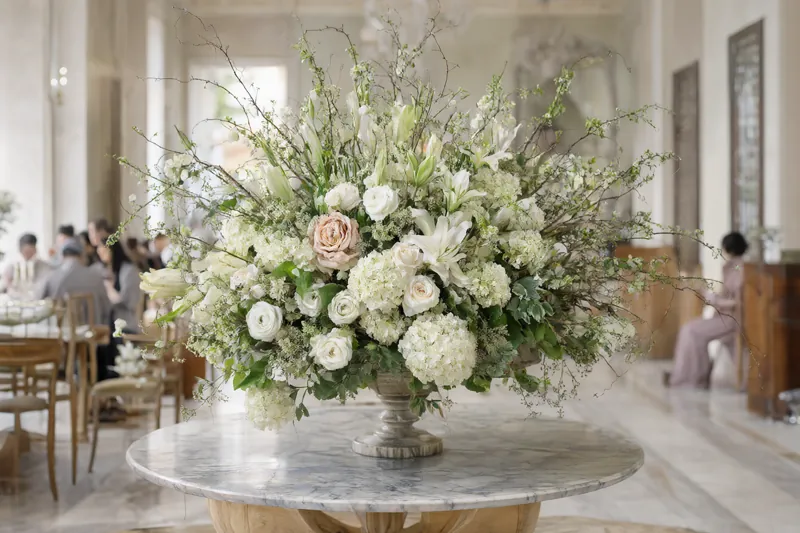
In hotels the lobby arrangement is often the first thing guests see and photograph. A few points to consider:
- size and position: in proportion to the space and out of the way of luggage;
- scent: pleasant at the entrance, but not overpowering for guests with allergies;
- seasonality: changing flowers and colours with the seasons says something about the place;
- in-house events: weddings and conferences at the hotel can use the same supplier, with coordinated terms.
If the hotel hosts weddings, it makes sense to ask the subscription florist whether they also work for couples, or whether couples are free to choose. Couples will ask, and many villa and hotel venues in Italy keep a list of approved suppliers.
Restaurants: flowers near food
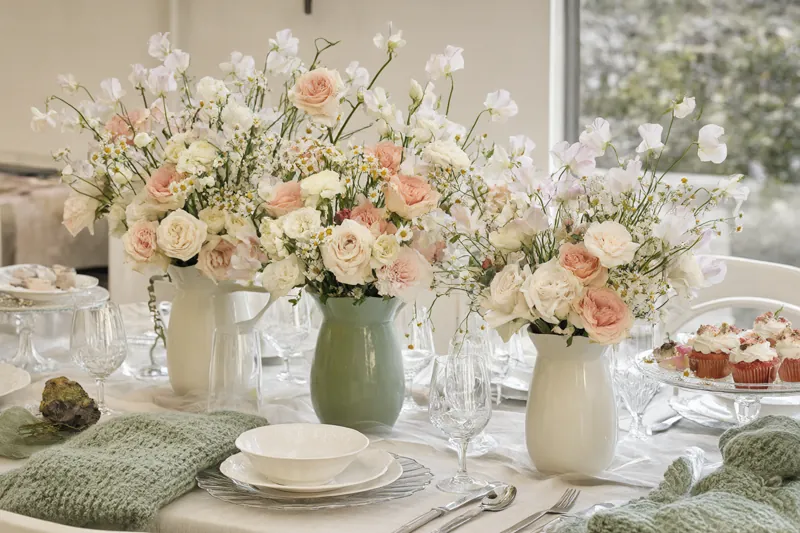
In a restaurant, flowers share the table with the food. The rules are the same as at any event:
- light scents on tables, so as not to mask flavours;
- little pollen and no petals dropping into dishes;
- low, stable vases that do not get in the way of service;
- untreated flowers if they end up near food or as garnish, and in that case only edible flowers chosen by the kitchen.
For more, read our guides to food-safe flowers and to scented flowers and allergies.
Offices: plants, maintenance and wellbeing
In offices, potted plants are often the choice: they last, improve the look of the space and need fewer changes. The service usually includes watering, leaf cleaning, feeding and replacing plants that are not doing well. Ask:
- whether the plants are hired or bought;
- who replaces a plant that dies, and within how many days;
- whether they suit the actual light of the space, not the light in the photos.
Recurring costs: the items
There is no standard price list. The fee depends on the number and size of arrangements, the flowers chosen, frequency, distance and access. The usual items are:
| Item | What it covers |
|---|---|
| Flowers and greenery | The raw material for each change |
| Labour | Preparation in the studio and placement on site |
| Transport | Scheduled journeys, sometimes by delivery zone |
| Vases and containers | Hired, on free loan or purchased |
| Plants | Hire or purchase, plus maintenance |
| Seasonal extras | Christmas, Easter, Valentine's Day, in-house events |
Extras are the item to clarify straight away. In December many hotels and offices want Christmas decorations: they may be included in the fee or invoiced separately. For ideas and timing, read our guide to Christmas decorations with flowers and greenery. Prices are in euros; check whether they include VAT (IVA).
Contract and invoicing
A subscription is an ongoing relationship. Put it in writing, even in a simple form:
- duration and renewal (automatic or not);
- notice period for cancellation;
- frequency, day and time window of changes;
- what happens if an arrangement is spoiled before the change;
- suspensions: seasonal closures, holidays, building work;
- ownership of vases and liability for breakages;
- price review, for example if flower costs change.
The invoice needs full company details. Between businesses in Italy invoices are normally electronic: give the florist your recipient code or certified email address (PEC). Many coastal and lake hotels close for the winter, so agree in the contract how the seasonal closure is handled. For the tax treatment of the expense, ask your accountant.
Start with a trial period
Before signing a long contract, many businesses ask for a trial of a few weeks. It shows whether the style works, whether the change times fit around the life of the lobby or restaurant, and whether the flowers really last until the next visit. Note what does not work: an arrangement that wilts too soon, a scent that is too strong, a vase in the way. This is valuable information for adjusting the proposal.
Questions to ask the florist
- Can you do a site visit and a proposal with two or three budget options?
- How often do you recommend changes for our spaces?
- On which day and at what time do you come? Can you work around lobby or service hours?
- What happens if an arrangement wilts before the change?
- Are the vases yours or ours? Who pays if they break?
- Are Christmas and special event decorations included or extra?
- How do you change flowers and colours with the seasons?
- What are the minimum term and notice period?
- Does someone on your team speak English, for our international staff?
In-room flowers and on-request services
Many hotels offer guests flowers in the room for an anniversary, a proposal or a special arrival. It is worth agreeing these requests with your subscription florist too: delivery times, fixed prices for two or three sizes, how reception places the order. That way staff know what to offer and guests get a service that matches the style of the property.
To sum up
A good subscription is barely noticed: the flowers always look right, the style stays consistent and nobody has to think about it. Starting with a site visit and a clear contract avoids surprises on the invoice.
If your spaces also host events, read our guide to corporate event flowers. Once you know how many spaces you want to cover, request a quote and say what frequency you have in mind.