In short
- The Langhe are at their best from late spring to autumn: September and October bring coloured vineyards, but also the grape harvest.
- Typical venues are farmhouses, wineries, castles and hilltop villages: rustic spaces with lots of wood and stone that suit warm-toned flowers and plenty of greenery.
- In autumn light matters: short days, morning fog, temperatures dropping in the evening.
- Grapes, vines, vine leaves and seasonal fruit work well in floral design, if handled carefully near food.
This guide is for you if you are planning a Langhe wedding, or one in Roero or Monferrato, whether you live in Italy or are coming from abroad. You will find the seasons, typical venues, the flowers that work in wine country and the questions to ask your floral designer before you sign.
Why couples choose the Langhe
The Langhe are vine-covered hills in southern Piedmont, around Alba, Barolo, La Morra, Barbaresco and Neive. Together with Roero and Monferrato they are part of the wine landscapes listed as a UNESCO World Heritage Site. Couples who choose them usually want three things: wine, food and an orderly landscape of vine rows, towers and hilltop villages.
For flowers this means a precise context. The backdrop is already strong. The florist's job is to work with the landscape, not cover it. If you are looking for professionals who work in the area, start with the list of floral designers in Piedmont and the Langhe.
Seasons in the Langhe
The Langhe have a continental climate: cold winters, hot but often breezy summers in the hills, long damp autumns. The notes below are indicative: every year is different.
| Period | What to expect | For flowers |
|---|---|---|
| April-May | Vines budding, soft green, cool evenings | Ranunculus, peonies towards late May, wildflowers, flowering branches |
| June-July | Hot days, possible storms | Garden roses, hydrangeas, aromatic herbs, abundant greenery |
| August | Very hot, Italian holidays, some venues closed | Hardy flowers, early set-up times |
| September | Harvest begins, busy hills | Dahlias, roses, grapes, first coloured leaves |
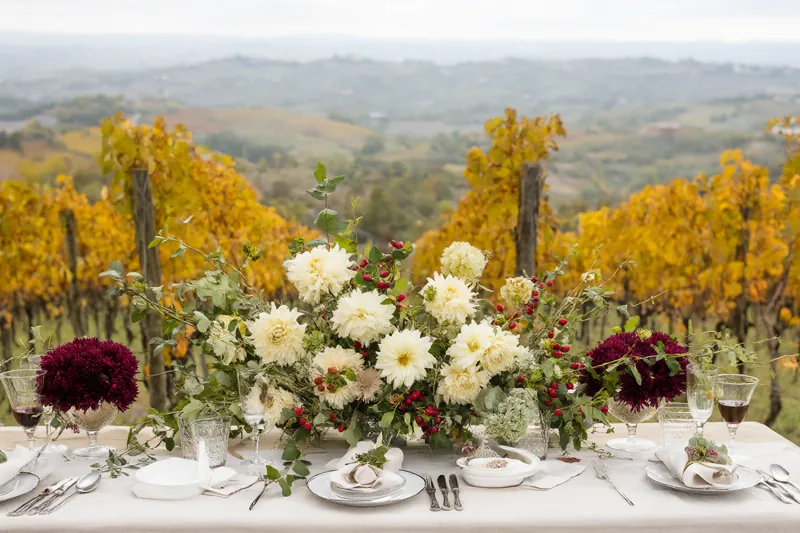
| October | Yellow and red vineyards, morning fog | Dahlias, berries, leaves, fruit, rust and burgundy tones |
| November | Cold, short days, truffle season | Branches, berries, candles, plenty of greenery |
In autumn many visitors come for wine and the white truffle. This affects the availability of venues and accommodation, and of suppliers too. If you are aiming for September or October, book early. The guide on when to book your floral designer helps with timings.
Venues and what they ask of the flowers
Farmhouses and agriturismi
Stone courtyards, porticoes, restored barns. These are warm, rustic spaces. Soft arrangements work well, in terracotta or glass vases, with garlands of greenery on long banquet tables. Watch the porticoes: the light is beautiful but changes a lot through the day.
Wineries
Many wineries host dinners and receptions, sometimes among the barrels. The spaces are cool, damp and often dark. You need flowers that cope with humidity and good lighting: candles, if the winery allows them, or warm lights. Always ask what can and cannot be placed on the barrels.
Castles and historic houses
High-ceilinged halls, formal Italian gardens, terraces over the hills. Here the rules are stricter: no nails, no tape on walls and furniture, precise access times. Tall arrangements and installations must be agreed with the owners.
A ceremony among the vines
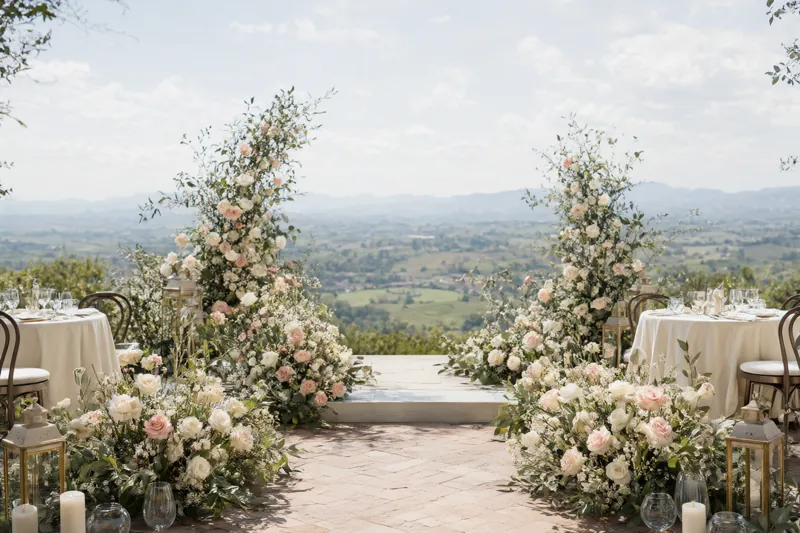
Many couples want an outdoor ceremony in front of the vine rows. It is possible, but the vineyards are a workplace. During harvest there may be tractors and pickers. Ask the venue which spaces are available and when. Plan a light, well-anchored backdrop: in the hills the wind makes itself felt.
Flowers and materials that speak of the Langhe
You do not need a "Piedmontese" style. Local florists work in every style, from minimal to romantic. But the area offers materials that tie in well with the landscape:
- vine shoots and leaves, in autumn in shades from yellow to red;
- bunches of grapes, requested from a producer and used with care;
- hazelnuts and hazel branches, because hazel is grown throughout the area;
- seasonal fruit, such as apples, pears, pomegranates and figs in late summer;
- herbs and wildflowers, in spring and early summer;
- dahlias, roses and berries in autumn, in warm tones.
Do not pick anything from the vineyards or fields without permission. The vines belong to someone and the harvest grapes are a year's crop. Your florist knows whom to ask.
Grapes and food on the same table
Grapes are beautiful but heavy, they stain tablecloths and attract fruit flies and wasps. Use them in decorative spots: the couple's table, the entrance, the seating plan. On guest tables keep them away from the plates. For the whole topic, read the guide on flowers near food.
Fog, cold and light: the autumn climate
The charm of autumn in the Langhe has a practical cost.
Fog. In the morning the valleys can be covered. It often lifts during the day, but not always. Ceremony photos may have very different light from what you saw on your site visit.
Darkness. In October and November it gets dark early. A late-afternoon ceremony ends under artificial light. Candles, lanterns and warm lights become part of the design, not a detail. Always check the venue's rules on open flames.
Cold. After sunset temperatures drop sharply. An outdoor aperitivo in October needs heaters, blankets or a covered space nearby. Flowers themselves cope well with cool weather, better than with heat.
Rain. You always need an indoor plan B. Ask your florist which pieces can be moved and how long it takes. The guide to your rain plan explains what to prepare.
Logistics in the hills
The Langhe look small on a map, but the roads are narrow and winding. Getting from one village to another takes longer than you expect, especially at harvest time with tractors and visitors.
Things to clarify:
- where the team is based and where the flowers come from;
- how long it takes to reach the venue and whether an overnight stay is needed;
- who moves the flowers if ceremony and reception are in different places;
- the venue's access times and whether set-up can start the day before;
- breakdown: the same night or the next day, and at what cost.
Many farmhouses and castles are reached by gravel roads or narrow drives. The florist's van must be able to get close to the entrance. Ask the venue before the site visit and bring your florist with you, if you can.
If you are coming from abroad
Many couples who marry in the Langhe come from northern Europe, the UK and the US. Some practical tips:
- do at least one site visit in person, or ask for a video of the venue at different times of day;
- ask your florist for photos of autumn weddings in the same area, not just summer ones;
- check what language the contract is in and how to pay from abroad (ask whether prices include VAT, IVA in Italian);
- arrange shuttles for guests: hill roads at night, after a dinner with plenty of wine, are not for people who do not know them.
For everything about planning remotely, read the guide on how to organise your flowers from a distance.
Questions to ask your floral designer
- Have you worked at this venue or in this area before? Can I see photos?
- Which flowers will be good in our wedding month?
- Do you use flowers grown in Piedmont or Italy, or do you bring them in from elsewhere?
- How will you use grapes, vines or fruit without problems at the table?
- What is the plan for fog or rain?
- Is travel included? Will you need to stay overnight?
- What time do you set up and when do you clear up?
- Who moves the flowers from the ceremony to the reception?
- What are the venue's rules on candles, nails and installations?
Final thoughts
The Langhe call for flowers that respect a landscape that is already beautiful. Choose your season calmly, factor in fog and early darkness if you are aiming for autumn, and rely on people who know the roads and venues. If you are coming from abroad, start with the list of floral designers for destination weddings.
Once you have a date and venue, request a quote and ask how the set-up changes in the season you have chosen.
Sources
- UNESCO, Vineyard Landscape of Piedmont: Langhe-Roero and Monferrato: whc.unesco.org/en/list/1390