In short
- In summer flowers suffer from direct sun, hot wind and hours without water: choose with that in mind.
- Flowers with compact petals, many Mediterranean flowers and sturdy greenery last best.
- Timing matters: late set-up, delicate flowers added last, photos outside the hottest hours.
- Keeping flowers cool does not stop at the shop: cold rooms, air-conditioned vans, cool spaces until delivery.
June, July and early September are popular months to marry in Italy, for Italians and for couples flying in from abroad. The heat, though, tests even the most beautiful summer wedding flowers: an arrangement that is perfect at 11 am can look tired by 5 pm. If you live somewhere cooler, an Italian summer afternoon may be hotter than you expect, especially in the South and on the islands. This guide helps you choose suitable flowers, organise timings and logistics, and know what to ask your florist. If you are looking for someone who works in your chosen region, start with our list of wedding florists in Italy.
Why heat is a problem for flowers
A cut flower keeps losing water through its petals and leaves. In the heat it loses much more. Without a water source it droops, petals darken, edges dry out. Three factors matter most:
- direct sun on arrangements and bouquets;
- hot wind, common in the South and on the islands in summer;
- hours without water, for example in bouquets, hair flowers and car decorations.
Humidity matters too. Near the lakes or in the countryside evenings can be damp, which helps the flowers. By the sea, salty wind can mark delicate petals.
Flowers that cope better with heat
The guidance below is indicative. How long a flower lasts also depends on the variety, its freshness and how it was handled before it reached you.
| Group | Common examples | Notes |
|---|---|---|
| Compact-petalled flowers | Lisianthus, carnations, spray roses, pompon chrysanthemums | Last well; in Italy chrysanthemums are linked to funerals, see below |
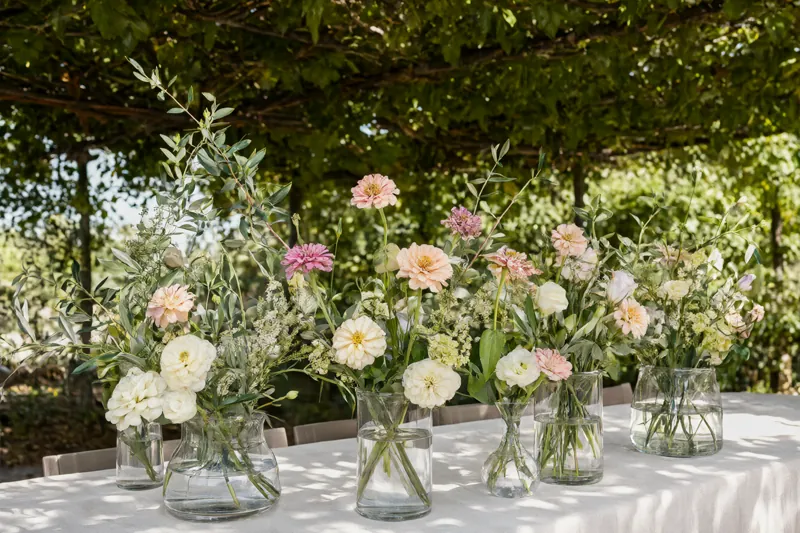
| Summer and field flowers | Sunflowers, zinnias, celosia, gomphrena | Strong colours, well suited to countryside weddings |
| Flowers that dry naturally | Statice, ornamental thistles, yarrow | Stay attractive even with little water |
| Herbs and Mediterranean plants | Lavender, rosemary, helichrysum | Scented, use with restraint on tables |
| Tropical and greenhouse flowers | Robust orchids, anthurium, protea | Very hardy, a different look from the Mediterranean one |
| Greenery | Olive, eucalyptus, pittosporum, ruscus, myrtle | The most reliable base for summer |
For a month-by-month list read our guide to seasonal flowers in Italy.
A note for couples from abroad. In Italy chrysanthemums are associated with funerals and with the day of remembrance for the dead in early November. Some pompon varieties are used at weddings, but some Italian guests may notice them. Talk it over with your florist.
Beautiful but delicate in the heat
These are not forbidden: they need the right spot, with water and shade.
- Hydrangeas: in season and much loved, but they drink a great deal.
- Peonies: their Italian season usually ends between May and early June. In July they are often imported and more expensive.
- Garden roses with thin petals: fragrant, but they open and drop quickly in the sun.
- Gardenias and very delicate white flowers: they bruise with touch and heat.
- Ranunculus and anemones: spring flowers, out of season in summer.
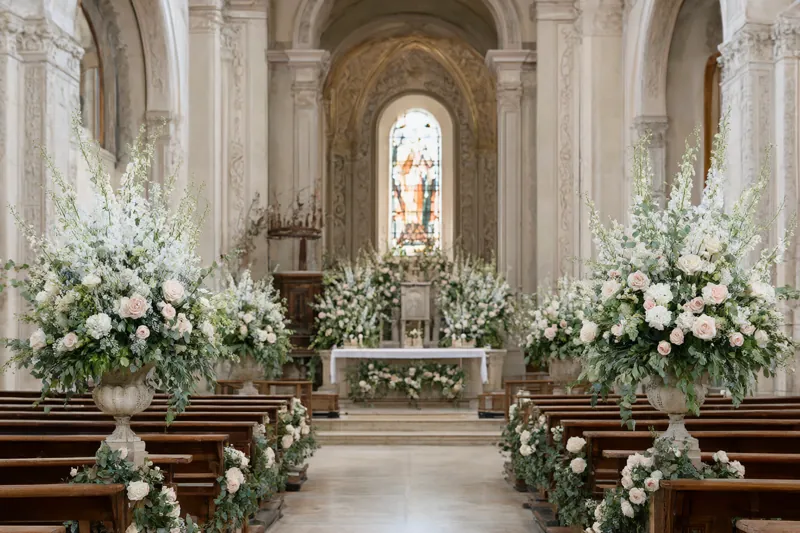
Your florist can use them in church, indoors or in evening centrepieces, and choose sturdier flowers outdoors and in the bouquet. That way you keep the flowers you love, but place them where they can stay fresh until evening.
Timing and set-up
In the heat, organisation matters as much as the choice of flowers. Common practice:
- set up structures and greenery first, then add delicate flowers last;
- where possible, avoid leaving arrangements in full sun in the middle of the day;
- move an outdoor ceremony towards late afternoon, if the venue allows;
- keep the bouquet in water until you leave;
- for an evening reception, put centrepieces on the tables shortly before guests arrive.
The actual times are set by the venue and the ceremony. During the site visit, ask from what time the florist can get in and where they can work. Our guide to set-up and breakdown explains how timings are organised.
Water, shade and containers
A few technical solutions make a real difference:
- Containers with a water reservoir instead of dry arrangements.
- Water tubes for hair flowers, buttonholes and car decorations.
- Light misting of arrangements, if the florist thinks it suits the flowers chosen.
- Shade: parasols, pergolas, trees. A floral arch in the shade lasts far longer than one in the sun.
- Heavy bases against hot wind, for tall centrepieces and structures.
Many florists now work without floral foam, using chicken wire, pebbles or a kenzan (a pin holder) in vases of water: a choice that also helps hydration. Read our guide to sustainable wedding flowers.
Keeping flowers cool until delivery
Flowers come from the market or the grower, go into the studio's cold room and then travel to the venue. In summer every step counts:
- cold rooms in the studio;
- air-conditioned or refrigerated vans, especially over long distances;
- a cool room at the venue where flowers can wait before set-up;
- short journeys or dawn departures for weddings far from the studio.
For weddings in Puglia, Sicily or Sardinia, ask your florist how they handle transport and whether they work with local suppliers. Our guide to flower budgets for a destination wedding covers travel costs. If you are thinking of August, remember that many Italian businesses close for a week or two around 15 August (Ferragosto): check availability early.
Where flowers suffer most
| Element | Summer risk | What to ask |
|---|---|---|
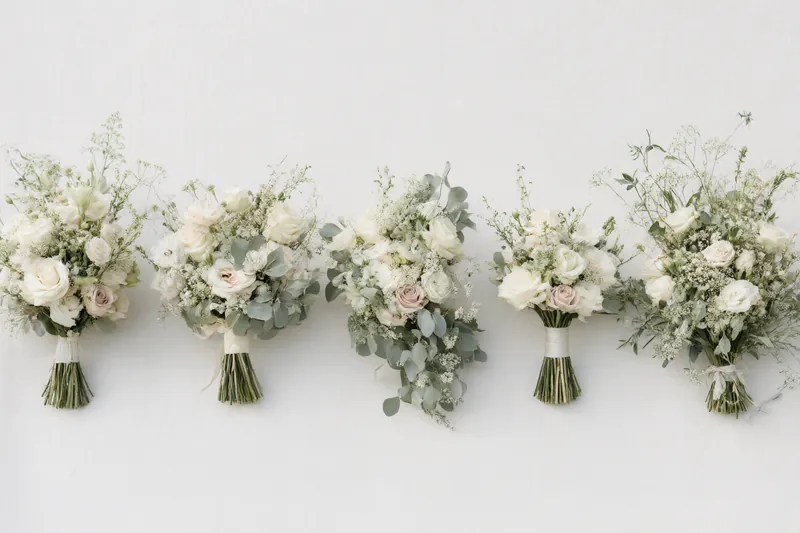
| Bridal bouquet | Hours in hand without water, photos in the sun | Sturdy flowers, a vase at the reception, a spare if needed |
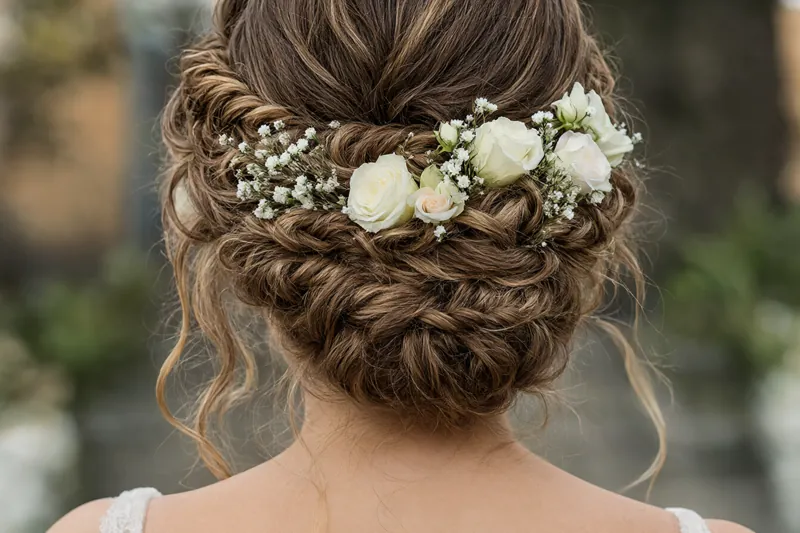
| Hair flowers and buttonholes | Body heat, no water | Water tubes, small flowers, preserved flowers |
| Outdoor arch or backdrop | Full sun and wind | Shade, late set-up, plenty of greenery |
| Outdoor centrepieces | Long hours on the table | Containers with water, placed just before dinner |
| Wedding car | Sun on the bodywork | Small arrangements, hardy flowers |
Guests, insects and scent
In summer arrangements attract more insects, especially outdoors and near food. Very sweet, strongly scented flowers can draw bees and wasps to tables and buffets. Your florist can keep the most fragrant flowers at entrances and away from the tables. If any guests are allergic to stings, tell the venue too.
The bouquet during the photos
Summer couple photos are often taken when the light is best, towards sunset. In the hours before, the bouquet moves from a hot car to a sunny garden. Ask your florist for a vase with water to leave in the car or at the venue, and ask a friend in the wedding party to put it back in water between shots.
Questions to ask your florist
- Which flowers do you recommend for my month and venue?
- How will you protect the bouquet and arrangements from sun and wind?
- What time do you set up, and in what order?
- Do you use containers with water or floral foam?
- How do you transport the flowers? Do you have a refrigerated van?
- Is there a plan for exceptionally hot days?
To sum up
In summer, good flowers are the ones chosen realistically: hardy varieties, water, shade and the right timing. If you are marrying outdoors, also prepare a plan B for rain and storms: summer storms in Italy can arrive suddenly.
Once you have a date and venue, request a quote and say whether the ceremony and reception are outdoors.