In short
- The site visit turns an idea into a design with real measurements.
- Check the light at the right time of day, the measurements of tables, arches and entrances, and access for vans.
- Ask the venue for its written rules: candles, nails, petals, set-up and breakdown times.
- If you cannot attend, ask for a video and a written summary.
The wedding venue site visit is when the florist sees your spaces with their own eyes. It is for measuring, looking at the light, working out how the flowers get in and what the venue allows. This guide tells you what to check together, what to bring and what to ask the venue. It is just as useful if you are marrying from abroad and the florist carries out the visit for you.
When to do it
Usually after you have chosen the florist, or when you are torn between two and want to see how they work. Many florists prefer to visit before the final quote: without measurements, the number of arrangements and quantity of flowers are only estimates.
If you are still looking for someone who works near your venue, see our list of wedding florists in Italy or those who specialise in destination weddings.
If you can, schedule the visit at the time of the ceremony or dinner and in the same season. A June afternoon light is not an October evening light.
What to bring
- a floor plan of the venue, if they have one;
- the guest count and an idea of the table layout;
- a mood board with reference photos and a palette: see our guide to the flower mood board;
- the rules of the venue and the church, if you already have them;
- contacts for the caterer and wedding planner, if you have them.
What to look at in the spaces
The light
Light decides colours and volumes. During the visit, notice:
- where the sun comes from at ceremony time: an arch against the light makes lovely photos but can dazzle the guests;
- shaded areas where flowers cope better with heat;
- evening light: chandeliers, spotlights, candles. Many dark colours disappear in low light;
- reflections on windows, water and marble.
For evening weddings, also read our guide to lighting and flowers.
Measurements
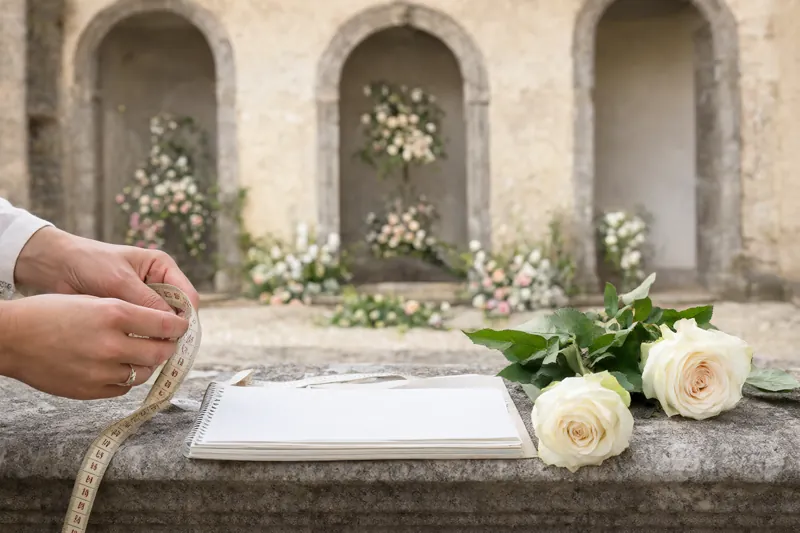
Without measurements, the design is a guess. The florist usually takes:
| What to measure | Why |
|---|---|
| Tables (diameter, or length and width) | Size of centrepieces and space for place settings |
| Ceiling and chandelier heights | Tall arrangements and hanging installations |
| Entrances and doors | Getting arches, structures and trolleys through |
| Church aisle and pews | Number of arrangements along the aisle |
| Altar or ceremony table | Proportions of the main arrangements |
| Stairs and level changes | Carrying time and safety |
| Space for the table plan and buffet | Size of those elements |
Access and logistics
This is the least romantic part and the most important. Check together:
- where vans unload: how close they can get, whether there are ZTL zones (limited-traffic areas in Italian historic centres where unauthorised vehicles are fined), narrow roads or gates;
- the route from the van to the spaces: stairs, gravel, lawns, lifts;
- a covered work area to prepare flowers and keep them cool;
- water to fill vases;
- power sockets for lights, fans or illuminated structures;
- parking for the team's vehicles during the event.
In historic centres, on islands, in hill towns or on seaside terraces, logistics may need more people and more time. Better to know now than from the final quote.
The venue's rules
Every venue has its own rules. Ask for them in writing and check them with the events manager. The most common cover:
- candles and open flames: where they are allowed, and whether enclosed holders or LED candles are required;
- nails, screws and tape on walls, beams and trees;
- petals on the floor and petal throwing, especially on delicate floors or lawns;
- garden plants and trees: what can be hung from them and what cannot;
- access times for set-up and exit times for breakdown;
- exclusive suppliers: some Italian villas work with in-house florists or require you to choose from an approved list.
For flowers near food and working alongside the caterer, read our guide to coordinating flowers, catering and venue.
The church or the town hall
If the ceremony is somewhere else, you need a second visit or at least a phone call. Italian parishes often have rules on:
- what can go on the altar and the pews;
- access times, especially if there are other services the same day;
- sharing decorations with another couple marrying the same day;
- throwing rice or petals on the church steps.
Civil ceremony rooms run by the Comune often have tight gaps between one ceremony and the next. Ask the Comune what you can bring and how quickly it must be removed. Read more in our guide to church wedding flowers.
Timings
At the visit, ask the venue:
- from what time the florist can come in, including the day before;
- until what time the room is free of the caterer for set-up;
- by what time breakdown must be finished, and whether it can be done the next day;
- whether there are other events the same day or weekend.
These times must match the contract. Read our guide to set-up and breakdown.
Typical Italian venues and what to check
Each type of Italian venue has its weak points. The most frequent:
| Venue | What to check in particular |
|---|---|
| Historic villa or period house | Rules on nails, candles and floors; frescoes and furniture not to be touched |
| Masseria or farmhouse in the countryside | Wind, heat, distance from suppliers, water and power outdoors |
| Historic church | Parish timings, other services, what can rest on the altar |
| Rooftop terrace in a historic centre | ZTL, lifts, stairs, loading and unloading times |
| Beach or beach club | Sand, wind, salt spray, permits for using the beach |
| Hotel | Other events the same day, service lifts, staff hours |
| Mountain lodge or refuge | Access roads, temperature, protected alpine flowers that must not be picked |
In many parts of Italy the rules change from one Comune to the next, for example on beach use or vehicle access to historic centres. Always ask the venue and, if needed, the Comune.
Plan B
If the ceremony or drinks are outdoors, also visit the covered alternative space. The florist needs to know where the arrangements would go and how long it would take to move them.
If you are marrying from abroad
If you cannot be there, ask for:
- a video showing the spaces and the route from the van;
- photos with measurements noted on them;
- a written summary of rules and timings;
- a live video call from the venue, if possible.
If you are visiting Italy on a planning trip, try to book the florist's visit for the same days so you can walk the spaces together.
Questions to ask your florist at the site visit
- What worries you about these spaces?
- How many people will you need to set up here, and how long will it take?
- Does the light at this time change the colours you would suggest?
- Are there extra costs for access or stairs?
- What would you do for the wet-weather plan?
- Where will you keep the flowers cool before setting up?
After the visit
Ask for a written summary and the updated design. If you still need to decide whom to hire, read our guide on how to choose your wedding florist. Then request a quote with measurements and photos of the spaces: you will receive more precise proposals.