In short
- Vases, stands, candelabras and arches are usually hired from the florist, not bought.
- Hire can be included in the price of each arrangement or listed separately: check the quote.
- Breakages, missing pieces and deposits should be in the contract before the event.
- Collection at the end of the party is a delicate moment: decide who looks after the pieces until they go back to the warehouse.
Behind every centrepiece there is a container. Behind every arch there is a structure that someone brings, sets up, takes down and carries back. This guide to wedding vase hire and structures is for anyone planning a wedding or an event in Italy who wants to understand what gets hired, how it is paid for and what happens if something breaks. If you are still looking for someone to do the flowers, start with the list of wedding florists and compare how they handle hire.
Why hire instead of buying
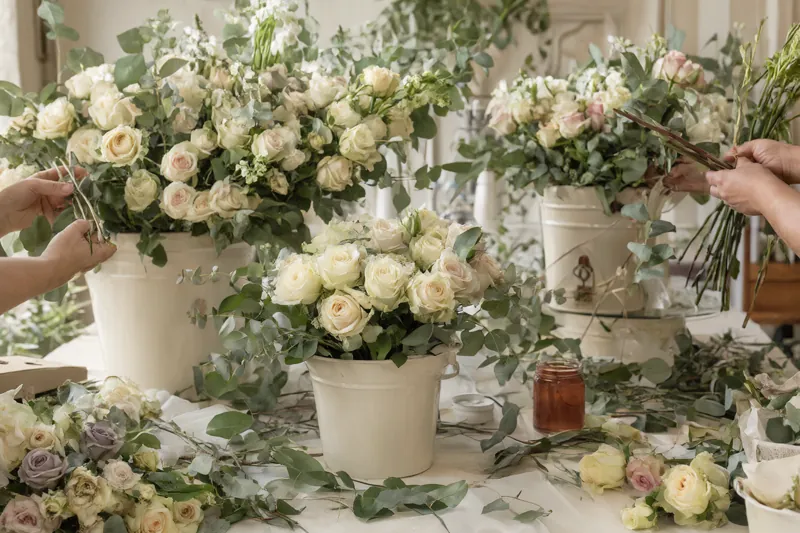
A wedding with fifteen tables can need dozens of vases, stands and candle holders. Buying them all means spending money, storing them and then not knowing what to do with them. The florist, on the other hand, has a stock they reuse across many events.
Hiring also has a practical advantage: the pieces are made to work with flowers. They have the right weight, they hold water and they fit the transport crates. A vase bought at random may look nice but be unstable, porous or too wide for the table.
Buying can make sense in a few cases: if you want to give the containers to guests, if you are using family pieces, or if your plans are very small.
What is usually hired
| Item | What it is for | What to check |
|---|---|---|
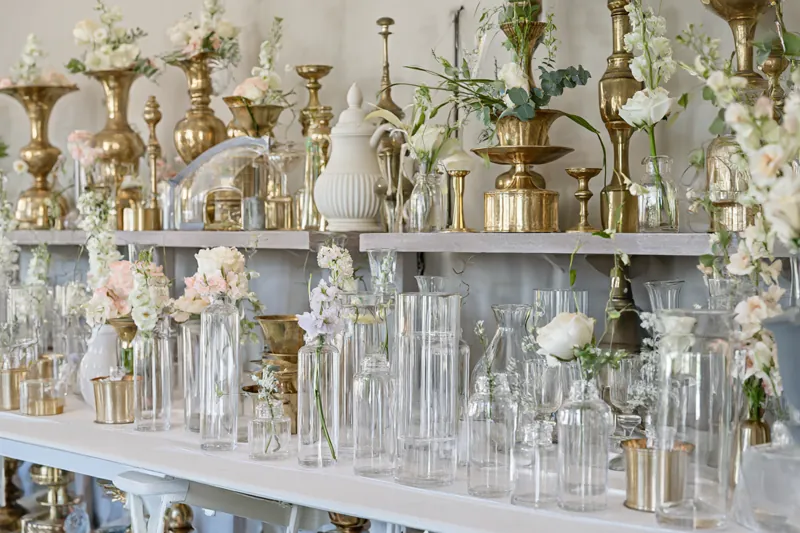
| Glass vases (cylinders, bottles, low bowls) | Centrepieces, buffet, bathrooms | Exact number, sizes, clear water |
| Stands and tall candelabras | Raised centrepieces on round tables | Stability, base weight, wind outdoors |
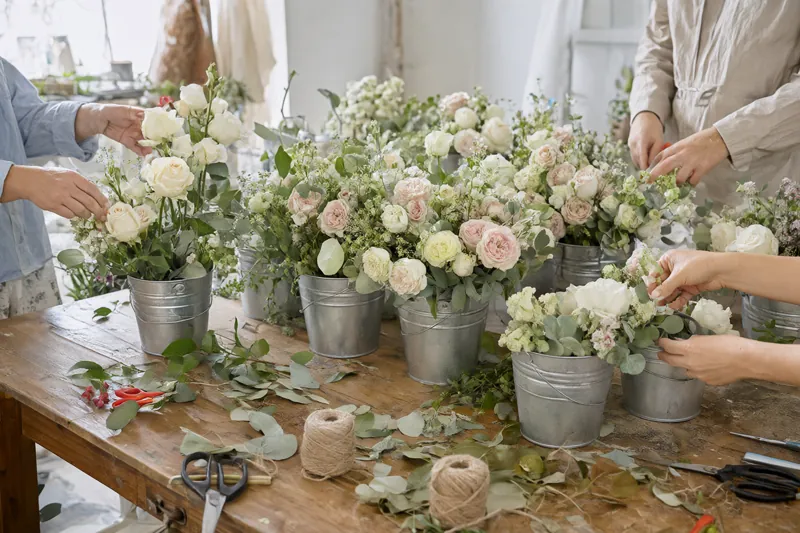
| Ceramic or metal bowls and containers | Low arrangements, long banquet tables | Colour that suits the tablecloth |
| Arches and ceremony structures | Backdrop for the altar or symbolic ceremony | Anchoring, weights, height, set-up time |
| Columns and plinths | Entrance, either side of the altar | Footprint, room for guests to pass |
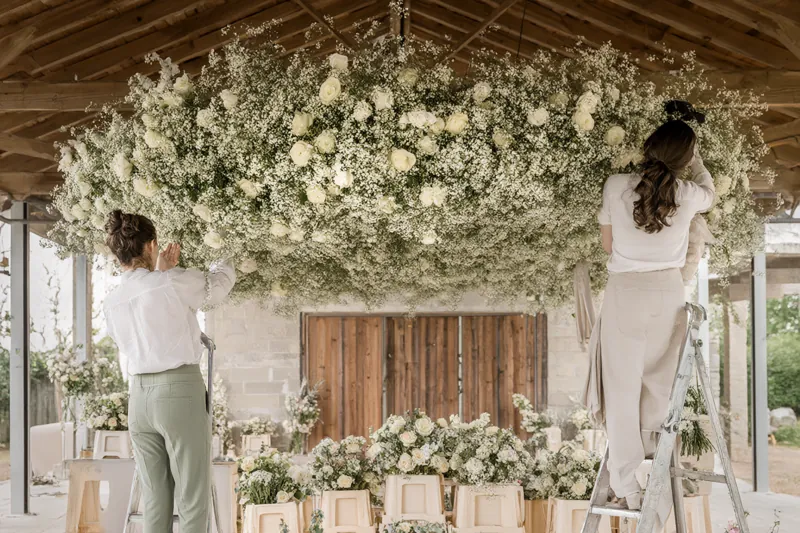
| Hanging structures | Flowers suspended over tables or ceilings | Fixing points, venue permission |
| Potted plants and trees | Citrus, olive trees, greenery for large spaces | Weight, transport, care in hot weather |
| Candle holders and lanterns | Light on tables and along paths | Venue rules on open flames |
Every florist has a different stock. Ask for photos of the actual pieces, not just inspiration images.
Included or separate: how to read the quote
There are two common ways to present hire.
- Included in the arrangement. The centrepiece has one price covering flowers, vase and labour. It is simpler to read.
- A separate line. Flowers on one side, hire on the other, often with quantities and unit prices. It is more transparent and shows you where the money goes.
Neither is wrong. What matters is being able to compare two quotes on the same basis. To do that, read the guide on how to read a florist's quote.
The cost of hire depends on the piece, the quantity and its value. There is no standard price list. A ceremony structure or a hanging installation costs far more than a glass cylinder, partly because of the set-up time. Transport, installation and late-night takedown may also appear as separate lines. Check whether VAT (IVA, the Italian sales tax) is included or added.
Deposits, breakages and missing pieces
Glass breaks, lanterns disappear, candelabras come back covered in wax. These things are normal at a party of a hundred people, which is why it pays to put everything in writing.
The most common arrangements are:
- Deposit: a sum paid in advance and returned once the pieces have been checked.
- Flat breakage allowance: a small amount of damage is already built into the price.
- Per-piece charge: each broken or missing item is charged at the value on the hire list.
- Insurance: for large structures or valuable set-ups some suppliers have their own cover.
Also ask what counts as damage. A vase with a small chip? A candelabra with wax on it? A structure scratched during a takedown done by someone else? The clearer it is beforehand, the fewer arguments afterwards. The guide to the contract with your florist covers the other clauses to check.
Delivery, set-up and collection
Hire is not just an object: it is an object that travels. There are three practical questions.
Who brings it and who sets it up
Usually the florist's team delivers and sets up the pieces along with the flowers. If the venue has tight time slots, set-up has to fit within a precise window. Large structures need more people and more time.
Who looks after it during the party
During the reception the pieces are in full view of guests, waiters and venue staff. Agree with the venue and the caterer who can move the centrepieces, for example for the cake cutting or to clear the dance floor.
When it is collected
Collection can happen:
- the same night, at the end of the party, with a charge for late-night takedown;
- the next day, if the venue allows it and keeps the pieces safe;
- by you, if you take the vases back to the warehouse yourself (rare, and to be agreed).
Late-night collection often costs more because the team works into the small hours. The guide to set-up and takedown goes into detail.
If the flowers go to guests or to charity
Many couples do not want the flowers to end up in the bin. It is a good idea, but with hired containers it needs planning.
- The florist can make posies wrapped in paper to hand to guests at the end of the evening, leaving the vases in place.
- If you donate the flowers to a hospital, care home or church, someone has to take them out of the containers before collection.
- If you want to give away the vase too, choose containers you buy, not hired ones, and put it in writing.
Venues with their own pieces
Some villas and hotels have their own vases, candelabras or arches. They can save money, but ask:
- what condition they are in and how many there really are;
- whether they are charged separately;
- whether the florist can use them or prefers their own;
- who is responsible if they break.
The florist may prefer their own pieces to be sure of sizes and a consistent style. Talk about it at the site visit.
Distant weddings and destination weddings
When the wedding is far from the florist's base, hire also becomes a question of transport. Glass vases and structures travel in crates, in vans, sometimes on boats or ferries, as on the Amalfi Coast, in Venice or on the islands. Each step adds to the risk of breakage and to the cost.
That is why some florists, for distant events, hire part of the pieces from local suppliers. Ask how they plan to organise it, who is responsible for pieces hired from third parties and whether transport is a separate line. If you are flying in from abroad, shipping your own vases rarely pays off. For an overview of travel costs, read the guide to the flower budget for a destination wedding.
Questions to ask the florist about hire
- Are vases and stands included in the price of the arrangements or separate?
- Can I see photos of the pieces you will actually use?
- Do you ask for a deposit? How much, and when is it returned?
- How do you charge for breakages and missing pieces?
- Do you collect the same night or the next day? At what cost?
- How are structures fixed? Do you need weights or venue permission?
- Can I give the flowers to guests? Who takes them out of the vases?
- Do you work with the venue's pieces or only your own?
To wrap up
Hire is an invisible but significant part of the design. Ask for a list of what will arrive, who looks after it and when it goes back to the warehouse. If you are thinking about an arch or a backdrop, read the guide to the ceremony flower arch.
When you have a date, a venue and a table count, ask for a quote and request that hire items be listed line by line.