In short
- Umbria offers hilltop villages, castles, abbeys and farmhouses among olive groves and hills: stone settings that suit soft flowers and Mediterranean greenery.
- Wildflowers are the natural draw, but weddings use cultivated flowers with the same effect: longer-lasting and allowed.
- Churches and abbeys set their own rules on flowers and decoration: ask early.
- Hill roads and steep villages make set-up and transport slower than you expect.
This guide is for you if you are dreaming of an Umbria wedding, around Perugia, Assisi, Todi, Spoleto, Orvieto and the villages nearby. You will find the types of venue, the flowers that work in each season, the rules to check and the questions to ask your floral designer.
Why Umbria
Umbria is a green, landlocked region of hills planted with olives and vines, woods and medieval stone villages. Couples who choose it often want a more intimate, less crowded atmosphere than other destinations. Italian couples come, and many from abroad, especially from the UK, the US and northern Europe.
For flowers the context is clear: warm stone, wood, olive trees, country light. Different styles work, from the most natural to the most elegant. If you are looking for professionals who know the region, see the list of floral designers in Umbria.
Typical Umbria wedding venues
| Venue | What defines it | What it asks of the flowers |
|---|---|---|
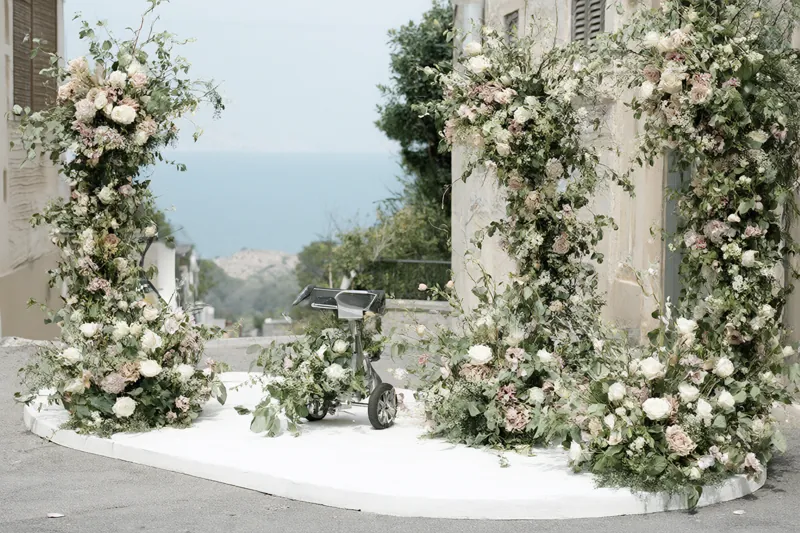
| Medieval village (borgo) | Lanes, squares, stairways, few vehicle access points | Arrangements carried by hand, slow set-up |
| Castle or fortress (rocca) | High halls, courtyards, stone walls | Large volumes, limits on walls and furniture |
| Abbey or former convent | Cloisters, Romanesque churches, quiet | Restraint, respect for religious rules |
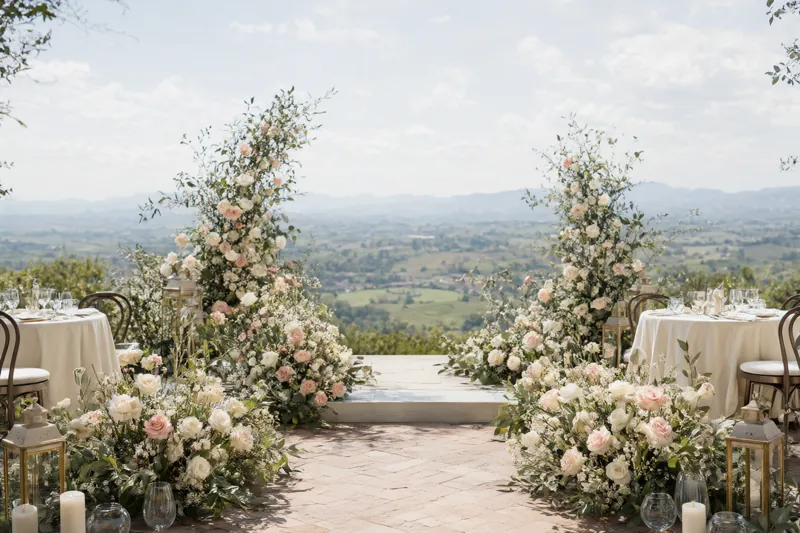
| Farmhouse among the olives | Lawns, pergolas, pools, open views | Outdoor set-ups, wind and sun |
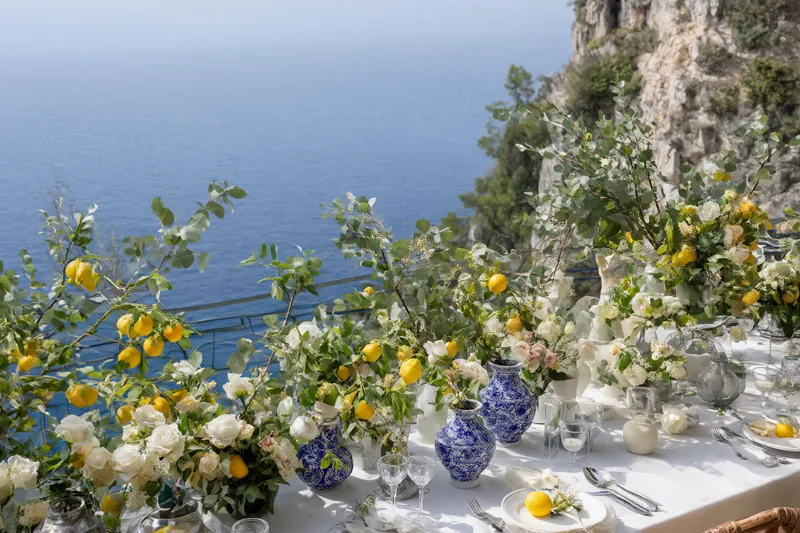
| Historic villa | Formal gardens, lemon houses, halls | Balance between indoors and outdoors |
Many villages and castles have been turned into places to stay. Often guests, ceremony and reception are all in the same place, which simplifies the flower logistics.
Wildflowers: the effect and the reality
In spring Umbrian fields fill with poppies, cornflowers, daisies and other wild species. On some high plains the bloom is a spectacle that draws visitors. It is easy to fall in love with it and want it at your wedding.
Two things to know:
- Not everything can be picked. In nature parks and protected areas picking flowers is banned or regulated. On private land you need the owner's permission. Always check local rules.
- Wildflowers wilt fast. Many last only a few hours once cut. They will not survive a wedding day in the sun.
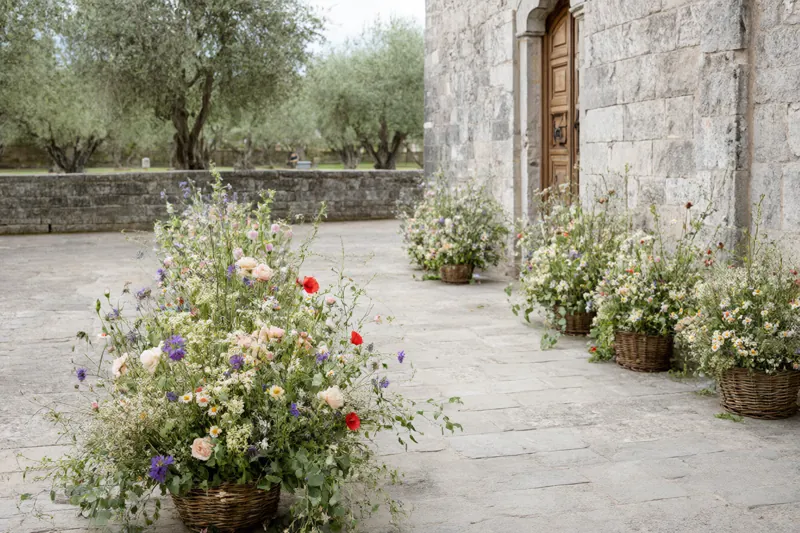
That is why florists use cultivated flowers with the same natural look: chamomile, cultivated cornflowers, cosmos, scabious, ornamental grasses, small roses. The effect stays natural and the arrangement lasts. To learn more, read the guide on wildflowers at your wedding.
Seasons in Umbria
The seasons are indicative. Always ask your florist what they can source in your month.
| Period | Climate | Flowers and materials often available |
|---|---|---|
| April-May | Mild, possible rain | Ranunculus, anemones, peonies in late May, flowering branches, cultivated wildflowers |
| June | Warm, long days | Garden roses, lavender, chamomile, herbs |
| July-August | Very hot in the middle of the day | Heat-tolerant flowers, olive, greenery, sunflowers |
| September-October | Cooler, warm light | Dahlias, roses, grapes, leaves, fruit, berries |
| November-March | Cold, possible fog and frost | Branches, greenery, berries, greenhouse flowers |
In summer the difference between day and night in the hills can be big. A 5pm ceremony in July is very hot; dinner under the pergola is pleasant. For flowers, sun on the ceremony matters most: go for heat-tolerant flowers, containers with water and set-up as late as possible.
Olives, vines and greenery
Olive trees are almost everywhere in Umbria. Olive branches, potted olive trees, silvery leaves on the tables: it is an element that links the design to the landscape effortlessly. It copes well with heat and usually costs less than many flowers.
Other local materials:
- vine shoots and leaves, especially in autumn;
- aromatic herbs such as rosemary, sage and lavender, fragrant on the table too;
- wheat ears, in early summer;
- seasonal fruit such as figs, pomegranates and grapes.
If you like this direction, read the guide on lemons, oranges and olive in wedding design.
Churches, abbeys and floral traditions
Umbria is a land of saints, abbeys and sanctuaries. Many couples want a religious ceremony in a historic church. Each church decides its own rules on:
- whether it marries non-resident couples and with which documents;
- what can be placed on the altar, pews and rails;
- whether petals and rice can be thrown at the exit;
- how much time there is to set up and clear, especially if there are several ceremonies on the same day.
Contact the church before you fix the date, and put your florist in touch with the parish priest or whoever manages the church. The guide on church wedding flowers explains what is usually done.
In some Umbrian villages floral traditions linked to religious feasts survive, such as the infiorate: carpets of petals that decorate the streets for Corpus Domini. They have nothing to do with weddings, but they show how much flowers are part of local culture. If your date coincides with a village festival, ask the Comune (the town council): closed streets and busy squares change the logistics.
Logistics in hilltop villages
Many Umbrian villages sit on hilltops, with historic centres closed to traffic and steep lanes. For flowers this means:
- limited access for vans, with permits from the Comune where needed;
- carrying arrangements by hand for the last stretch;
- more people on the set-up team, and so different costs;
- longer times to set up and clear.
Country farmhouses can also be reached by narrow gravel roads. Check that a van can reach the entrance and where it can stop. Ask the venue for access times and whether set-up can happen the day before. Clarify who clears up and when: the same night or the next day.
If you are coming from abroad
Umbria is close to Rome and Florence. Many guests fly into one of the two cities and then drive on. For the flowers this changes little, but it matters for the date: a Saturday wedding in high season means suppliers in high demand.
Some tips:
- ask for photos of real weddings in Umbria, in the same season as yours;
- do a site visit or ask for a video of the venue at the time of the ceremony;
- clarify the contract language and how to pay from abroad, and whether prices include VAT (IVA);
- ask whether the team's travel is included.
Questions to ask your floral designer
- Have you worked in this village or at this venue before?
- How do you get your van there? Are permits needed?
- Which cultivated flowers do you use for the wildflower look?
- How long do arrangements last in the sun in our chosen season?
- Do you know the rules of the church or abbey?
- Do you use local flowers and greenery?
- How many people do you need to set up? Is it in the quote?
- What happens if it rains?
Final thoughts
Umbria works well if you want an intimate wedding, with natural flowers and the landscape in the lead role. Choose your season with heat and blooms in mind, check church and Comune rules early, and rely on people who know the village access routes. If you are weighing up several regions, read the guide to a wedding in Tuscany and the list of floral designers for destination weddings.
Once you have a date and venue, request a quote and ask how the team handles access and travel.