In short
- Orange blossom is the historic symbol of marriage in Italy: in Italian the phrase fiori d'arancio means the wedding itself.
- By tradition the groom gives the bouquet, and his buttonhole repeats one of its flowers.
- Sugared almonds (confetti), wedding favours (bomboniere) and the almond buffet (confettata) matter a lot to Italian guests, and flowers often go with them.
- Chrysanthemums are associated with funerals in Italy: avoid them as the main flower.
This guide to Italian wedding traditions and flowers is for couples marrying in Italy who want to understand local customs: international couples, mixed couples, people of Italian heritage raised abroad. You will find what the main traditions mean, what is still done today, what to avoid and how to discuss it all with your florist.
Traditions, not rules
Italian weddings are full of customs. Some are found across the country, others change from region to region and even from family to family. None is compulsory. But knowing them helps you understand what your Italian guests expect and avoid misunderstandings.
Italian florists know these customs well and work in every style, including ones far from tradition. To find those who look after international couples, browse our list of wedding florists in Italy.
Orange blossom
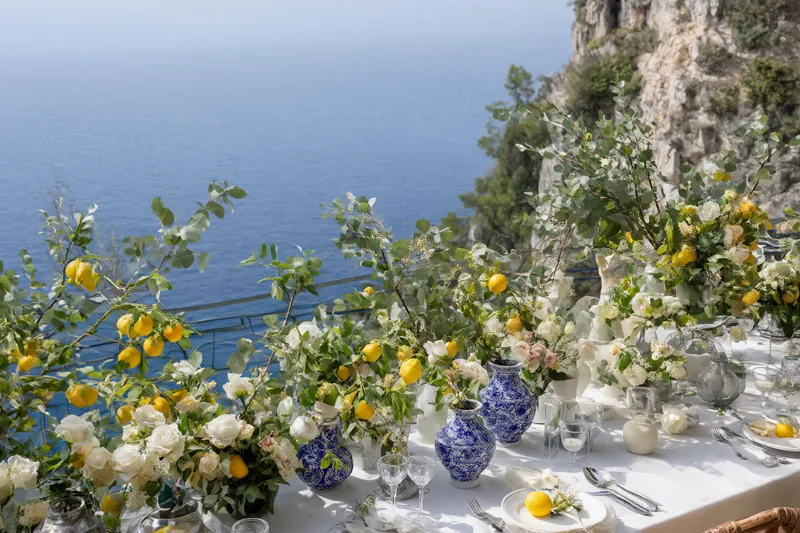
Orange blossom is the white, scented flower of the orange tree. For centuries in Italy, as in other Mediterranean countries, it has been a symbol of marriage, linked to purity and fertility. It was worn in crowns, in the hair and carried in bouquets. Even today, fiori d'arancio (literally "orange flowers") is simply another way of saying "wedding" in Italian.
Today it is used:
- in the bouquet, as a fragrant detail;
- in the hair, in small amounts;
- on favours and invitations, often as a drawing or motif.
Orange trees flower mainly in spring. Out of season, florists use white flowers with a similar effect or preserved versions. Ask what is possible in your month.
The bouquet: who gives it and what it means
In Italian tradition the bouquet is a gift from the groom. He chooses it, pays for it and has it delivered to the bride on the morning of the wedding, often at her family home while she gets ready. In the past the bride did not see it until then.
Other customs linked to the bouquet:
- the groom's buttonhole (boutonnière) usually repeats a flower from the bouquet;
- at the end of the party there is often the bouquet toss to unmarried friends: whoever catches it, so they say, will be the next to marry;
- many brides have a smaller toss bouquet and keep the real one as a keepsake;
- sometimes the bride leaves her bouquet in church or gives it to someone dear.
Today many couples choose the bouquet together, or the bride decides with the florist. That is fine: tradition is a starting point. For flowers for the groom and families, read our guide to buttonholes and flowers for the groom.
Sugared almonds, favours, the almond buffet and rice
These are not flowers, but flowers often go with them. Italian guests expect them.
Confetti (sugared almonds)
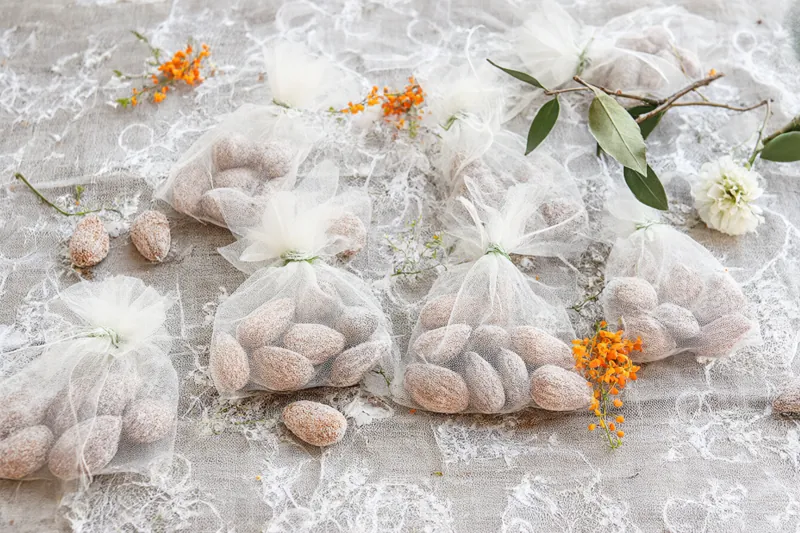
In Italy confetti are not paper but almonds coated in hard sugar. At weddings they are white. In each favour they usually come in an odd number, often five, which by a widespread custom stand for health, fertility, long life, happiness and wealth. The Abruzzo region, and the town of Sulmona in particular, has a long tradition of making them.
The bomboniera (wedding favour)
This is the small gift the couple gives each guest, with sugared almonds. It can be an object, a little bag or a small plant. Flowers often find their way in: a sprig of lavender, a succulent, a dried flower, a pot of herbs. Ask your florist whether they make favours too or whether you need another supplier.
The confettata (almond buffet)
A table or buffet of sugared almonds in many flavours, often at the end of the reception. Guests fill small bags. Flowers around the confettata are a frequent request: low arrangements, flowers that do not drop petals into the jars, colours that match the rest.
Rice and petals as you leave
As the couple leaves the church or town hall, guests traditionally throw rice, a wish for abundance and fertility. Many churches and town halls now ban or limit it, for cleaning and safety reasons. The most common alternatives are fresh or dried petals, and soap bubbles. Always ask what is allowed. Our guide to petal tosses and your wedding exit covers the pros and cons.
Flowers in church
Many couples marry in church even if they do not practise. A few customs to know:
- altar flowers often stay with the church after the ceremony, as a gift to the parish;
- when there are several weddings on the same day, couples sometimes share the decorations and the cost;
- each parish decides what can go where, and during some periods of the church year it may ask for restraint.
For the details, read our guide to church wedding flowers in Italy.
What to avoid: funeral flowers
Some flowers carry meanings in Italy that visitors may not know.
| Flower or custom | Meaning in Italy | Advice |
|---|---|---|
| Chrysanthemums | Linked to the dead and to the remembrance days in early November | Avoid them as the main flower |
| Wreaths and flower cushions | Typical funeral shapes | Avoid similar shapes in your decor |
| An even number of flowers as a gift | Often said to be linked to mourning | Give odd numbers in gift bunches |
| The colour purple | For some, linked to mourning and certain superstitions | If you love it, talk to your florist |
These are customs, not laws. Not everyone feels them the same way, and younger people often pay no attention. But a wedding has guests of all ages. For the meaning of individual flowers, read our guide to the meaning of wedding flowers.
Regional customs worth knowing
Italy is varied. Some examples of local customs, to check with families and planners because they are not the same everywhere:
- in several parts of the South, the serenade to the bride the evening before the wedding survives, sometimes with flowers brought by the groom;
- in parts of Sardinia, the couple is showered with wheat, salt, petals and coins for good luck;
- in parts of the North-East, the groom's tie is cut up and pieces are sold to guests;
- myrtle, sacred to love in ancient tradition, is still used in some bouquets and hairpieces, especially where it grows wild.
If there are Italian families among your guests, ask them which customs matter most to them. It is the best way to get it right.
Questions to ask your florist
- Which Italian traditions do you still see at the weddings you decorate?
- Is orange blossom available in our month? What would you use instead?
- Do you also make toss bouquets, buttonholes and flowers for the mothers?
- Can you decorate the confettata and prepare the favours?
- Which flowers would you advise us to avoid, to prevent any misunderstanding?
- Does the church allow petals or rice as we leave?
- Do the altar flowers stay with the church? Who decides?
To sum up
Italian flower traditions are a language: you can use it, reinterpret it or set it aside. Knowing it helps you choose with confidence. If you are planning from abroad, read our guide to a destination wedding in Italy.
Once you have a date and a venue, request a quote and tell us which traditions you want to keep.