In short
- The main styles are classic, romantic, boho, minimalist, Mediterranean, garden, opulent and wild.
- The right style comes from venue, season and light, not just personal taste.
- It works best to choose one lead style and use the others only as accents.
- Your florist needs pictures, measurements and photos of the venue more than adjectives.
Romantic, boho, minimalist: you will see these words everywhere when you look for wedding flower ideas. But what do they mean in practice? This guide to wedding flower styles is for couples choosing the look of their flowers, especially if you are planning from abroad. It explains how to recognise each style, where it works, what it means for your budget and how to talk about it with your florist.
Why style comes before individual flowers
Many couples start with a flower: "I want peonies". That is a fine starting point, but the same flower can give very different results. A peony in a low, full arrangement looks romantic. A single peony in a glass vase looks minimalist. The style decides shapes, volumes, colours, containers and quantities.
That is why a florist almost always asks: where is the event, at what time, with what light, and what atmosphere do you want? If you want to compare florists who work in different styles, start from our list of wedding florists in Italy and look through their portfolios with this guide beside you.
The eight main styles at a glance
| Style | How you recognise it | Where it works best | Effect on budget |
|---|---|---|---|
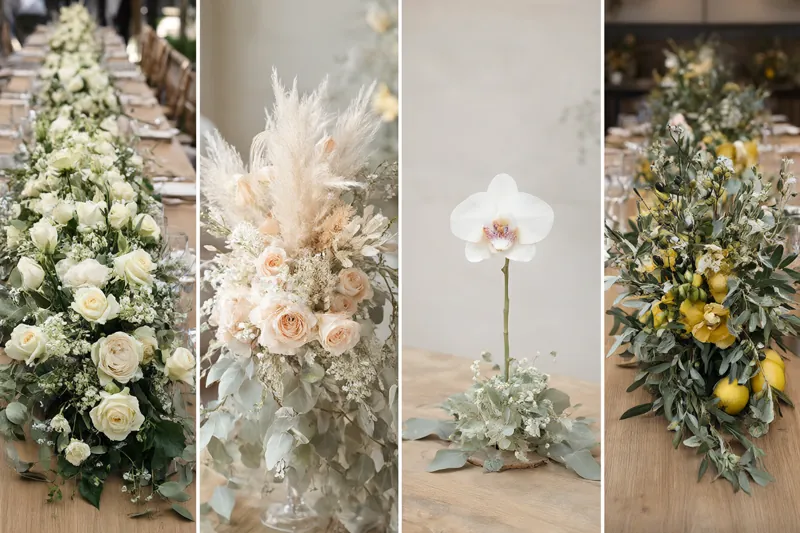
| Classic | Symmetrical arrangements, roses, white and green | Churches, palazzi, historic hotels | Medium, depends on volume |
| Romantic | Soft, full shapes, pastel tones, petals | Villas, gardens, rooms with warm light | Medium to high, many stems |
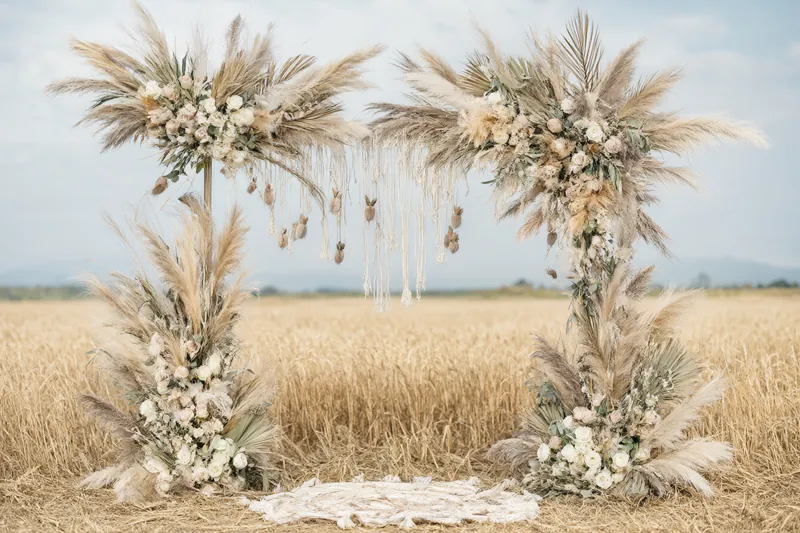
| Boho | Dried grasses, pampas, neutral and earthy tones | Masserie (Puglia farmhouses), beaches, country houses | Variable, dried flowers last |
| Minimalist | Few flowers, lots of empty space, one colour | Modern architecture, museums, lofts | Medium, flowers must be perfect |
| Mediterranean | Olive, citrus, white and green, terracotta | Southern Italy, islands, coastlines | Medium, lots of greenery |
| Garden | Garden flowers, natural look, foliage | Villas with grounds, outdoor ceremonies | Medium |
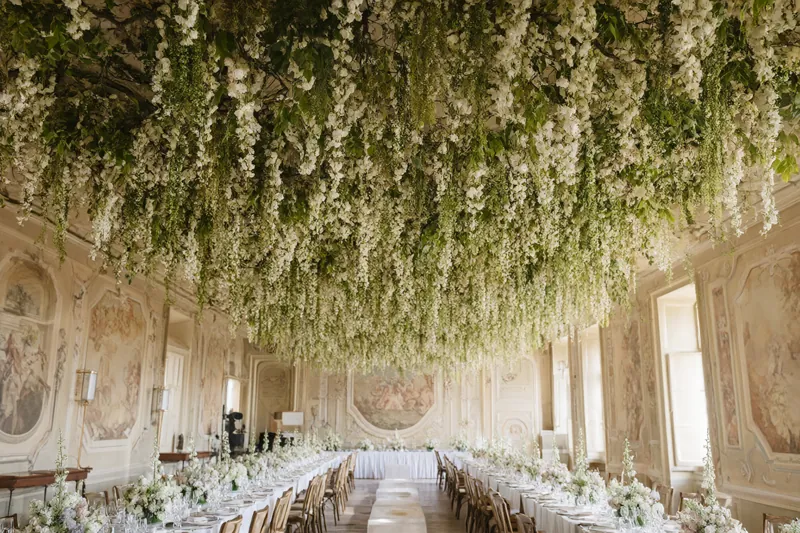
| Opulent | Large installations, arches, many premium flowers | Palazzi, large villas, gala dinners | High |
| Wild | Free lines, branches, wildflowers, asymmetry | Countryside, mountains, hill towns | Low to medium, or medium |
These cost levels are indicative and are only meant to compare the styles with each other. For real figures in euros, read our guide on how much wedding flowers cost in Italy.
Classic and opulent: structured elegance
Classic
This is the style of tidy, symmetrical arrangements. Roses, hydrangeas, calla lilies, lisianthus and well-controlled greenery. Often white and green, sometimes with one soft colour. It works in churches, where the volumes have to relate to altars and naves, and in the reception rooms of palazzi and hotels. It is a style that ages well in photos.
Opulent
The opulent style takes the classic look to its largest scale: arches, flowered ceilings, tables covered in flowers, tall candelabra. It needs large teams, structures and long set-up times. If you are interested in this level, look at florists who handle high-end events and read our guide to hanging floral installations.
Romantic and garden: softness and nature
The romantic style uses full, rounded shapes, garden roses, peonies, ranunculus and pastel colours. Garden is its more relaxed cousin: it looks as if the flowers were picked in a garden just before the party, with plenty of foliage and stems escaping from the arrangement.
Both work well in villas with grounds and at outdoor ceremonies, in spring and early summer. You can read more in our guide to the romantic and garden style.
Boho and wild: freedom and natural materials
Boho loves neutral tones: sand, cream, terracotta. It uses pampas, dried grasses, palm leaves, and sometimes macramé and wood. Wild is greener and fresher: branches, wildflowers, asymmetrical lines, an unconstructed look.
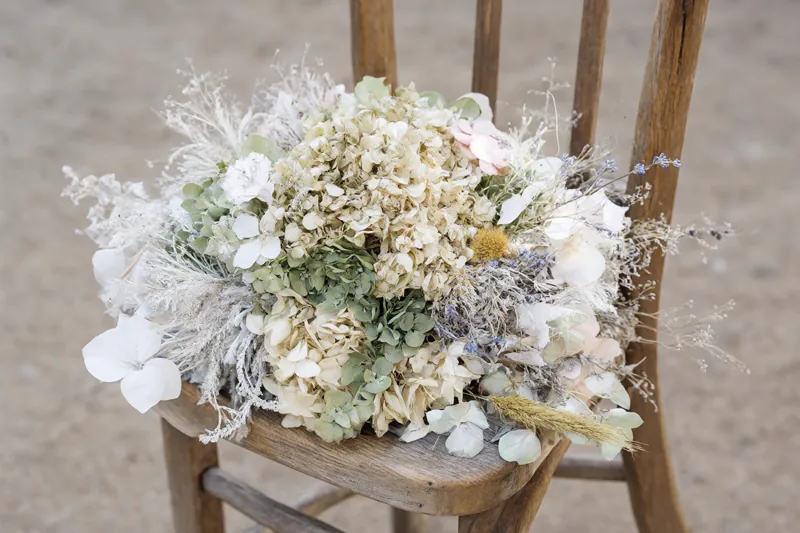
Both suit farmhouses, country estates, beaches and mountains. Thanks to dried flowers, boho copes better with the heat of an Italian summer. Read more in our guides to the boho style and to dried and preserved flowers.
Minimalist: little, but chosen well
Minimalist design uses few elements, often in a single colour or a single variety. Empty space is part of the design. It looks simple, but it is unforgiving: every flower must be perfect and every vase chosen with care. It works in modern buildings, museums, contemporary terraces and small civil ceremonies. Read our guide to minimalist wedding flowers.
Mediterranean: the landscape of the South on the table
Olive branches, lemons, oranges, bougainvillea, jasmine, white and green, ceramics and terracotta. This is the style many couples from abroad associate with southern Italy and the islands. Greenery takes centre stage and often costs less than premium flowers. It is not compulsory in Puglia or Sicily: florists in the South work in every style. Read our guide to the Mediterranean style.
How to choose your style: five questions
- What is already at the venue? Frescoes, stone, stained glass, centuries-old olive trees. The flowers should work with what is there, not cover it.
- What light will you have? An outdoor dinner at sunset brings out warm tones. A room with artificial light changes colours.
- What season? A romantic style with peonies is easier in May than in October. Boho with dried flowers works all year.
- How many guests and what tables? A long banquet table, often called an imperial table in Italy, suits garlands. Round tables suit central arrangements.
- What is your flower budget? Some styles need large volumes. Better to know that before you fall in love with a photo.
To work on colours, pair this guide with our guide to wedding flower colour palettes.
Common mistakes when choosing a style
- Copying a photo without context. A picture taken in an English garden in June cannot be reproduced exactly in a Puglia farmhouse in August.
- Mixing too many styles. Pampas on the tables, classic roses in church, a tropical arch at the civil ceremony: the result is confusing.
- Ignoring the venue rules. Some churches and historic houses restrict hooks, candles and petals on the floor. Always ask first.
- Forgetting everything else. Linen, chairs, lighting and outfits affect the result as much as the flowers.
The style across the different moments of the day
One lead style does not mean making everything identical. The ceremony, the aperitivo (the Italian pre-dinner drinks reception) and the dinner have different needs:
- at the ceremony, visibility and proportion against the altar or arch matter most;
- at the aperitivo, flowers welcome guests and guide them around, often while they stand;
- at dinner, arrangements must let guests see and talk to each other;
- on the dance floor and at the photo corner you can be bolder.
Keep the same colours and materials, and vary volumes and shapes. That way the style stays recognisable without becoming repetitive.
Questions to ask your florist
- Which styles do you work in most often? Can you show me work similar to what I have in mind?
- Does this style work at my venue and in my season?
- Which flowers would you use to get the same effect for less?
- Can the ceremony arrangements be moved to the reception without changing the style?
- Are there venue restrictions that change the proposal (hooks, candles, petals)?
- Will you prepare a mood board or a mock-up before the wedding?
To sum up
Style is the thread that ties together the bouquet, the ceremony and the tables. Choose it starting from the venue and the season, then let your florist turn it into real flowers. To prepare the pictures to share, read our guide to the wedding flower mood board. If you are looking for a professional in your chosen area, use find your florist.
Once you have a date, a venue and a lead style, request a quote and ask how the style would be carried through the different moments of the day.