In short
- Dried flowers are dehydrated and brittle, preserved flowers are treated and stay soft.
- Neither wilts: useful in the heat, for installations and if you want to keep them.
- They are not always cheaper: preserved flowers can cost as much as fresh, or more.
- They are flammable and can shed fibres: keep them away from candles and food.
A bouquet that stays the same for years, an arch that does not suffer in the August sun, centrepieces guests can take home. Dried flowers for a wedding, and preserved ones, are now a settled part of wedding design. This guide explains the differences, when they make sense and when they do not, and how they affect your budget, allergies and safety, with notes for couples marrying in Italy from abroad.
Dried, preserved, fresh: the differences
| Feature | Fresh flowers | Dried flowers | Preserved flowers |
|---|---|---|---|
| Look | Natural, alive | Stiff, more muted or dyed colours | Soft, close to fresh |
| Water | Needed | No | No |
| Lifespan | Days | Months or years | Months or years |
| Heat tolerance | Variable, often low | High | High, but sensitive to humidity |
| Fragility | Medium | High, they crumble | Medium |
| Scent | Often present | Almost none | None |
| Preparation | In the last few days | Even weeks ahead | Even weeks ahead |
There are also high-quality artificial flowers, made of fabric or synthetic materials. They are a separate category: they are not plants, and they are mostly used for installations or repeated hire.
If you are looking for florists who work with these materials, see our page of sustainable and dried flower designers.
How they are made
Drying. Flowers are hung upside down in dry, dark places, or treated with drying sands and gels. Some are then dyed or bleached. The best varieties are those with little water: lavender, pampas, statice, gypsophila, bunny tails, wheat, helichrysum and many grasses.
Preserving. The fresh flower is soaked in a solution, often glycerine-based, that replaces the sap. It keeps its shape and softness. Roses, hydrangeas, eucalyptus, mosses and some leaves are the most commonly preserved. Colours are often touched up.
When they make sense
- Outdoor summer weddings: the heat does not wilt them.
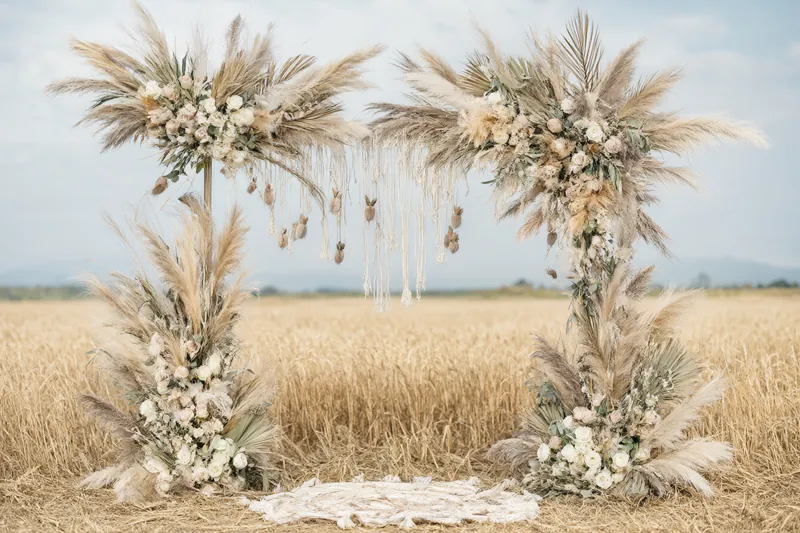
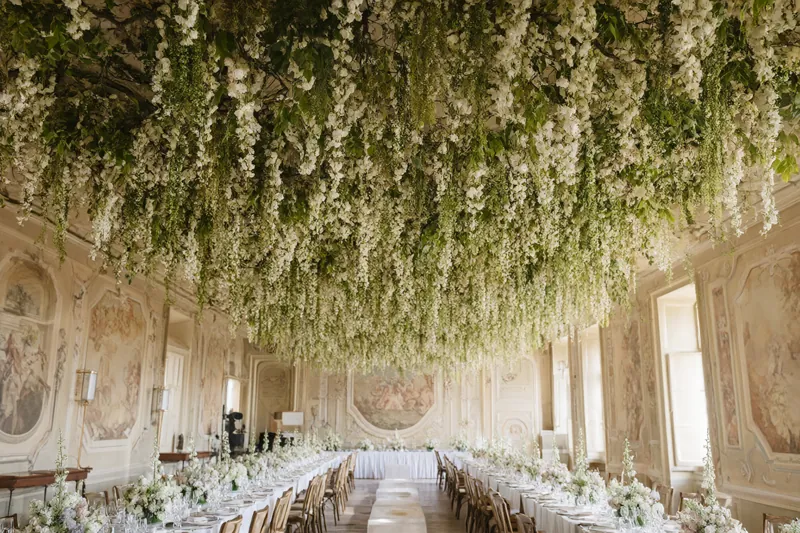
- Hanging installations and arches: they are light and need no water. Read our guide to hanging floral installations.
- Destination weddings: they can be prepared ahead and transported with less risk.
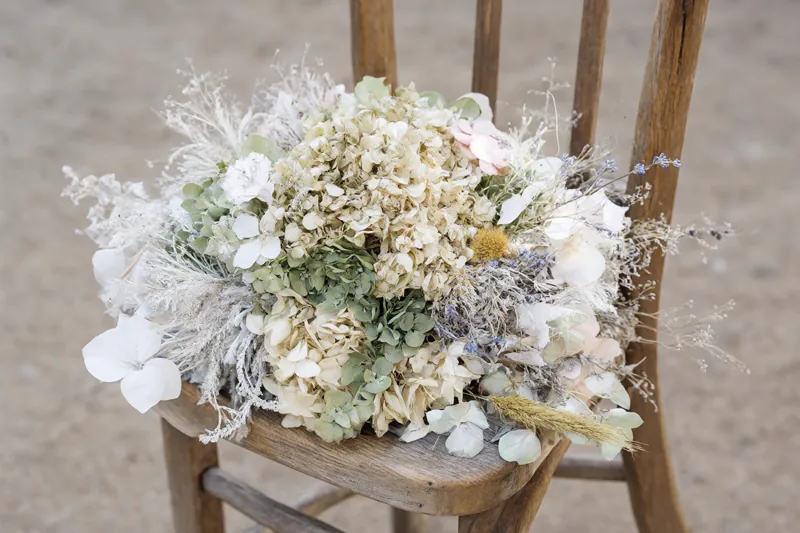
- Bouquets to keep: a dried or preserved bouquet stays as a keepsake.
- Boho and rustic styles: they are part of the look. See our guide to the boho style.
- Designs to reuse: for several events or for the couple's home.
When fresh is better
- If you want scent in church or in the bouquet.
- If you love flowers that look alive and luminous: peonies, ranunculus, just-opened roses.
- In very humid settings (gardens after rain, lakeshores, the seaside), where preserved flowers can spoil.
- If your style is romantic or garden: read our guide to the romantic and garden style.
Many florists use a mix: fresh for bouquets and tables, dried or preserved for structures, arches and installations.
Allergies, dust and fibres
Dried flowers hold dust. Pampas and grasses can shed fibres and small fragments, especially in the wind or when touched. For guests with allergies or asthma:
- ask which materials are used and how they are treated;
- prefer arrangements fixed with suitable sprays, which limit shedding;
- keep dried flowers away from plates, the buffet and the cake;
- tell your florist about allergies before the design is finalised.
For a general picture, read our guide to scented flowers and allergies.
Safety: dried flowers and flames
Dried flowers burn easily. With candles, simple rules apply:
- no open flames near dried arrangements;
- LED candles are better inside or next to dried arches and centrepieces;
- check the venue's rules, which sometimes require treated materials or ban flames.
Read more in our guide to flowers and candles.
Costs: the items that matter
We do not give prices, because they vary a lot by variety and quality. These are the items:
- materials: some dried flowers cost little, preserved ones often much more, especially roses and hydrangeas;
- labour: dried flowers are fragile and need careful arranging;
- structures: arches and hanging pieces have their own costs;
- advance preparation: preparing ahead can reduce last-day work;
- reuse: some florists hire out dried pieces for arches and installations.
For a general picture, read our guide to how much wedding flowers cost.
Dried and preserved flowers at a destination wedding
For couples marrying in Italy and travelling from abroad, dried and preserved flowers have an extra advantage: they can be prepared weeks ahead and do not depend on last-day deliveries. A few points to watch:
- they must be transported in rigid boxes, because they break easily;
- if you plan to take them home after the wedding, check your country's rules on bringing in plant material: some countries, such as Australia and the United States, have strict controls;
- the humidity of the lakes and coast can spoil preserved flowers in the days before the event: ask where they will be stored.
See also our guide to working with a florist remotely.
The dried or preserved bouquet
This is a popular choice for couples who want a lasting keepsake. It can be all dried, all preserved or mixed. Some couples choose a fresh bouquet for the ceremony and a second, smaller dried bouquet to keep or to toss. Bear in mind that a dried bouquet is light but fragile: ask for a well-finished handle and a box to put it in after the photos.
Origin and sustainability
Dried does not automatically mean sustainable. Many dried and preserved flowers are imported, sometimes bleached or dyed with chemicals. Ask:
- where they were grown and dried;
- whether they are dyed or natural;
- whether they can be composted afterwards (dyed and preserved flowers often cannot).
For a more environmentally aware approach, read our guide to sustainable wedding flowers.
Looking after the flowers after the wedding
- Keep them out of direct sun, which fades colours.
- Avoid humidity and bathrooms: preserved flowers can "sweat" or go mouldy.
- Remove dust with a hairdryer on cold, held at a distance, or a soft brush.
- Never wet them.
For the bouquet, read our guide on how to preserve your bridal bouquet.
Common mistakes
- Using only dried flowers in a very humid setting or on a wet lawn.
- Putting real candles inside dried arches or centrepieces.
- Choosing dyed colours that clash with the fresh flowers next to them.
- Leaving the arrangements in the sun for weeks before the event.
Questions to ask your florist
- Do you use dried, preserved or a mix? Why for my wedding?
- Where do the materials come from? Are they dyed?
- How do you limit shedding and dust?
- Which arrangements can I keep after the party?
- Do you have dried pieces or structures for hire?
- How should they be kept over time?
To sum up
Dried and preserved flowers are a practical and beautiful choice in many situations: heat, installations, destination weddings, keepsakes. They do not fully replace fresh flowers, but they complement them well. To see how they fit into the different styles, read our guide to wedding flower styles.
Once you have decided where to use them, request a quote and say which arrangements you want fresh and which dried or preserved.