In short
- Romantic aims for full shapes and pastels, garden for a relaxed look and lots of foliage.
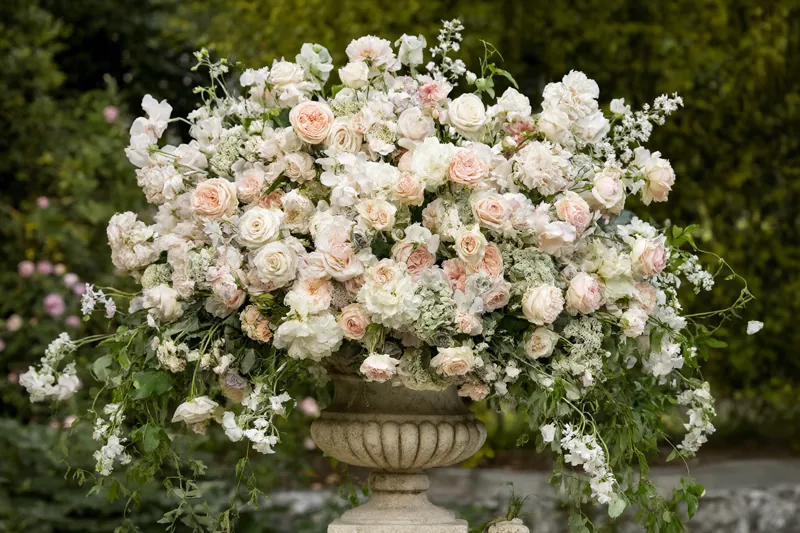
- The signature flowers are garden roses and peonies, but they are not the only ones.
- Peonies have a short season: out of season they cost more or need replacing.
- Watch scent and heat: decide where the strongest and most delicate flowers go.
Opening roses, full peonies, petals falling on the tablecloth, foliage spilling from the vases. Romantic wedding flowers in a garden style are a popular choice at Italian weddings, especially in spring and early summer, and a favourite of couples marrying at a villa. This guide explains how they are built, which flowers are used, where they look best and how to deal with the limits of season, heat and scent.
Romantic and garden: what sets them apart
| Aspect | Romantic | Garden |
|---|---|---|
| Shape | Full, rounded, compact | Loose, airy, with stems breaking out |
| Colours | Pastel, pink, blush, ivory | More variety, even bright tones with lots of green |
| Typical flowers | Garden roses, peonies, hydrangeas, ranunculus | Garden roses, cosmos, scabious, foxgloves, wildflowers |
| Greenery | Present but controlled | Abundant, a lead element |
| Effect | Soft, polished | Natural, "just picked" |
In practice the two styles blend. Many weddings have a garden bouquet and more romantic tables, or the other way round. To see real examples, start from the portfolios of our wedding florists in Italy.
The flowers of the style
Garden roses
They differ from the classic florist's rose: they have many petals, a cup shape and sometimes a strong scent. They come in many tones, from white to apricot to pink. Read more in our guide to roses for weddings.
Peonies
They are the romantic flower above all others. Their season in Italy is short, usually between May and June. Outside this window you find imported peonies, with variable availability and cost. Read our guide to peonies for weddings.
Hydrangeas
They give volume with few stems. They drink a lot and suffer in the heat. Excellent in large arrangements and in church. See our guide to hydrangeas for weddings.
Ranunculus and anemones
Delicate and full, they are the answer for a romantic look in late winter and spring. See our guide to ranunculus and anemones.
Garden flowers and wildflowers
For the garden style: cosmos, scabious, foxgloves, delphiniums, lisianthus, astrantia, herbs. Many are seasonal and local, so they vary a lot from region to region.
The seasons of the romantic and garden styles
| Period | Helpful flowers | Notes |
|---|---|---|
| March to April | Ranunculus, anemones, tulips, flowering branches | Spring romance, light tones |
| May to June | Peonies, garden roses, hydrangeas, wildflowers | The most natural time for these styles |
| July to August | Roses, hydrangeas, lisianthus, cosmos | Heat: precautions needed |
| September to October | Roses, dahlias, hydrangeas turning colour | A warmer, deeper romantic look |
This is indicative. Your florist will tell you what is good in your month and your region.
Where they look best
- Villas with grounds and Italian formal gardens: the garden style continues the landscape.
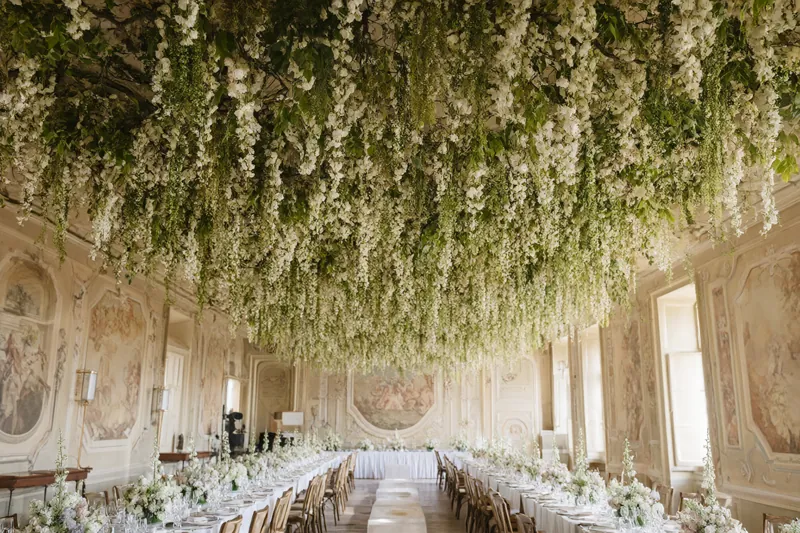
- Historic houses with bright reception rooms: the romantic style softens the spaces.
- Cloisters and courtyards: full arrangements beside the arches.
- Outdoor ceremonies: arches and aisles of flowers that seem to grow from the lawn. Read our guide to the floral arch for the ceremony.
They feel less natural in very modern architecture or industrial spaces, where a minimalist or wild style may work better.
The romantic bouquet and the garden bouquet
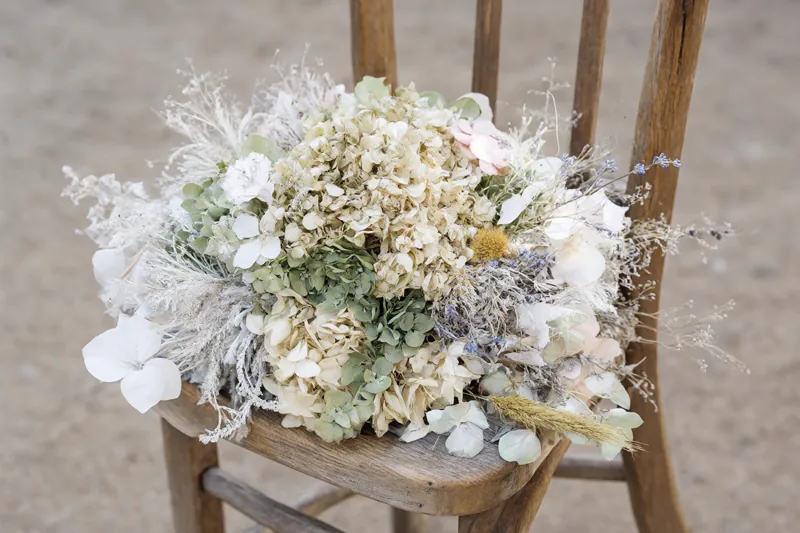
The romantic bouquet is often round and compact, with full flowers and few gaps. The garden bouquet is wider and looser, with flowers at different heights, escaping stems and trailing foliage. Both suit soft dresses in lace or tulle. If the dress is very structured, your florist can suggest a tidier version of the same style.
A practical detail: garden bouquets with lots of garden flowers are heavier and more delicate. Ask for one that is comfortable to hold through the whole ceremony and the photos.
Petals, arches and the ceremony
At the ceremony the romantic style shows in full arches, arrangements along the aisle and petals on the ground. The garden style prefers arrangements that seem to grow from the lawn or the ends of the pews, with flowers at different heights. Two cautions:
- petals on the floor can be slippery on marble or smooth stone, and some churches and venues do not allow them;
- arrangements along the aisle must not narrow the way through.
Always check with the parish priest or the venue. For petal tosses as you leave, read our guide to the couple's exit and petals.
Scent: where to put it
Many romantic flowers are scented. That is a plus, but it needs managing.
- Entrances, ceremony, bouquet: scent is welcome here.
- Dinner tables: better to use lightly scented flowers, so as not to compete with food and wine.
- Small, enclosed spaces: too many scented flowers can be tiring.
- Guests with allergies: tell your florist.
To learn more, read our guide to scented flowers and allergies.
Heat and staying power
Peonies, hydrangeas and garden roses do not like direct sun. At summer weddings:
- set-up should happen as late as possible or in the cooler hours;
- arrangements need water or an adequate reserve;
- outdoor arrangements are better in the shade or under cover;
- the bouquet stays somewhere cool until the last moment.
For details, read our guide to flowers in the heat.
Budget: why romantic costs more
The romantic style needs volume: full arrangements mean many stems. Out-of-season peonies and some garden roses are expensive. To keep the budget in check:
- use hydrangeas and greenery to add volume;
- choose spray roses or less expensive varieties alongside a few star flowers;
- reuse the ceremony arrangements at the reception;
- concentrate flowers where people look most: the top table, the arch, the entrance.
See also our guide to saving on wedding flowers.
Romantic and garden styles at destination weddings
For many couples from abroad, a wedding at a villa with a garden is the classic image of Italy. The garden style is ideal for making the most of what the villa already offers: hedges, rose beds, lemon houses, pergolas. Ask your florist for a site visit, even by video, and ask what will be in flower in the garden on your wedding day. It can become part of the design and reduce the number of arrangements to bring in.
Questions to ask your florist
- In my month, are the peonies Italian, European or imported?
- Which flowers would you use to get the same effect for less?
- How do you protect the flowers from heat during the ceremony and dinner?
- Which scented flowers would you use, and where?
- Can the arrangements move from the ceremony to the reception?
- Can you show me similar work done in the same season?
To sum up
Romantic and garden are generous styles that need the right flower in the right season. If you marry between May and June you have the widest choice. In other months a good florist will keep the atmosphere with different flowers. To compare them with other styles, read our guide to wedding flower styles.
Once you have a date and a venue, request a quote and ask which flowers in your month would best bring this style to life.