In short
- A centrepiece must leave sightlines and space: guests need to talk and the caterer needs to serve.
- Each table calls for different solutions: round, long banquet, top table.
- Height works on two levels: low, below eye level, or tall, above guests' heads.
- Candles, season and the light in the room change the result more than the number of flowers.
Centrepieces are the flowers guests look at longest: all through dinner, inches from their plates. They are also usually one of the biggest items in the flower budget, because they multiply by the number of tables. This guide collects practical wedding centrepiece ideas for each type of table. You will find options for round and long tables, advice on height and candles, and the questions to ask. If you are looking for someone to design your reception flowers, see our list of wedding florists in Italy.
The basic rules
Three practical rules come before style.
- Guests must be able to see each other. A centrepiece that hides the face of the person opposite kills the conversation. Go low, below eye level, or very tall, above heads and on a slim base.
- The table has to work. Plates, water and wine glasses, bread, bottles, sometimes place cards and menus. The centrepiece has to fit in the space that is left.
- Service has to get through. At many dinners, waiters set trays or bottles in the middle. Ask the caterer what they need.
Our guide to table settings and flowers explains how to coordinate flowers, linens and glassware.
Round tables
The round table, usually for eight to ten people, is still the most common at Italian receptions. The centre is free for one main arrangement.
| Option | Effect | When it works |
|---|---|---|
| Low, wide arrangement | Welcoming, full | Rooms with normal ceilings, gardens |
| Tall arrangement on a stand | Dramatic | Halls with high ceilings, historic villas |
| Cluster of bud vases and candles | Light, relaxed | Country weddings, garden or boho style |
| Single vase with branches | Pared back, modern | Minimal venues, contemporary style |
| Alternating tall and low | Movement across the room | Many tables in a large space |
Alternating is very popular: one table with a tall arrangement, the next with a low one. It gives the room rhythm and helps balance the budget.
Long banquet tables
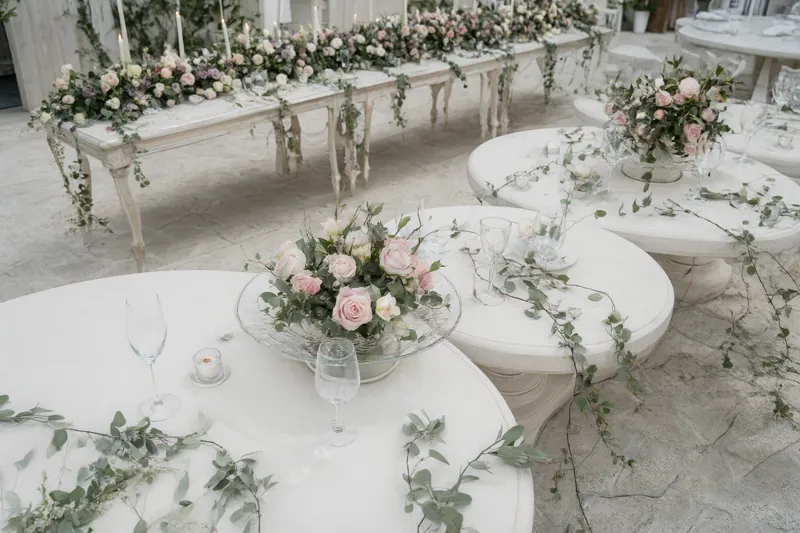
Long rectangular tables, sometimes called imperial or banquet tables, are much loved for weddings at villas, in courtyards and outdoors. They feel convivial, but leave little room in the middle.
The most common options are:
- a greenery garland running the length of the table, with flowers added at intervals;
- low bud vases in a row, in different shapes and heights;
- repeated arrangements every metre or metre and a half, with candles in between;
- seasonal branches and fruit laid on the table, such as lemons, pomegranates or grapes, if the caterer agrees.
On width: a standard banquet table is narrow. A garland that is too wide spills into the place settings. Ask the florist for a trial on a table of the same size, or at least for exact measurements.
The top table
The couple's table is the most photographed. It can be a long head table, a sweetheart table for two or a round table like the others. Arrangements are often fuller and front-facing, to be seen from the room, but they must not hide the couple. All the details are in our guide to top table flowers.
Height
Height is the choice that changes the room most.
- Low: they stay below the eye level of seated guests. They work everywhere and get in nobody's way.
- Tall: they sit above heads. They need slim bases such as stands, candelabra or stemmed vases, and high ceilings so they do not crowd the space.
- Medium: these are the ones to avoid. A centrepiece at face height blocks conversation.
Outdoors, tall centrepieces suffer in the wind. In a garden or on a terrace, low and stable arrangements are better.
Candles and light
Candles transform the table as the sun goes down: glass cylinders, candlesticks, tapers, tea lights. A few points of care:
- check the venue's rules on open flames;
- keep candles away from dried flowers, dried greenery and tablecloths;
- outdoors, always use glass holders because of the wind;
- consider LED candles where flames are not allowed.
For more, read our guide to flowers and candles.
Season and style
Centrepieces can tell the story of the season and the place.
| Season | Ideas often seen |
|---|---|
| Spring | Ranunculus, tulips, blossom branches, pastel tones |
| Summer | Hydrangeas, lavender, lemons, herbs, Mediterranean greenery |
| Autumn | Dahlias, warm-toned roses, berries, leaves, grapes and pomegranates |
| Winter | Amaryllis, hellebores, branches, conifers, candles |
Seasons are indicative: ask your florist what they can find in your month. For autumn weddings, which are very popular in Italy, fruit and foliage allow full designs with fewer flowers.
Scent and flowers near food
Centrepieces sit close to plates and glasses. Two points to watch:
- scent: lilies, tuberoses and gardenias have strong scents that can overpower the food at the table. Lightly scented flowers are better;
- pollen and petals: some flowers shed a lot. They must not end up in the plates.
If any guests have allergies, tell your florist.
Reuse and give away
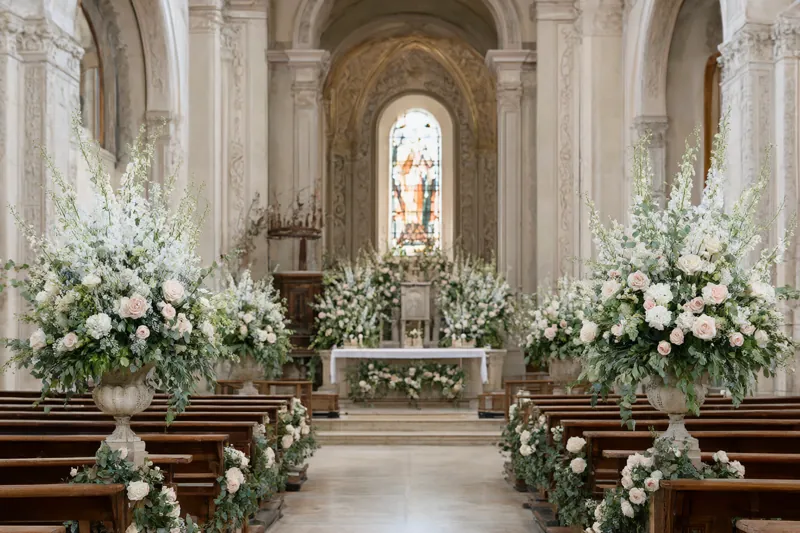
Many centrepieces start life as ceremony arrangements: aisle vases, pew decorations, flowers from the officiant's table. It is a practical way to keep costs down. At the end of the evening centrepieces can be given to guests, if the vases and containers are not hired. For costs, read our guide to how much wedding centrepieces cost.
Place cards, table numbers and menus
A centrepiece is not just flowers. The same table often holds the table number or name, place cards and a printed menu. Coordinating them avoids a crowded table.
- The table number can sit inside the arrangement on a small holder, or next to it in a frame.
- Place cards can carry a sprig of greenery, a dried flower or a leaf: a detail that links each seat to the flowers.
- The menu can rest on the plate, so it does not take up the centre.
If you name your tables after flowers, towns or places, the florist can pick up the theme in the arrangements. For the board showing where guests sit, see our guide to floral seating plans and place cards.
Questions to ask your florist
- Which option would you suggest for my tables and my room?
- How tall and how wide will the centrepieces be?
- Can I see a trial on a real table?
- Are the vases hired? Can guests take the flowers home?
- Which flowers would you use in my month? Are they scented?
- Does the venue allow candles? Do you supply them?
- Will you reuse the ceremony arrangements? Who moves them?
- Have you spoken to the caterer about the table setting?
Final thoughts
A good centrepiece is seen but does not get in the way. Start from the table, the room and the service, then choose height, flowers and light. Once you have the table plan and guest numbers, request a quote and ask for centrepieces to be listed by type and by table.