In short
- There are four main routes: drying, pressing, resin, and a frame or display case.
- Timing matters: the flowers need to be worked on in the first few days after the wedding.
- For a polished result, book the studio before the wedding.
- To toss a bouquet without ruining yours, ask for a separate toss bouquet.
Knowing how to preserve your wedding bouquet matters, because it is the only part of the floral design that truly stays with the bride. After the wedding many people want to keep it, but do not know how or how quickly they need to act. This guide is for anyone who wants to keep theirs: it explains the methods, what to expect from each and what to prepare before the day, including when the wedding is in Italy and home is a flight away. If you still have to choose your bouquet, you can ask the wedding florists at that stage which flowers keep best.
First of all: realistic expectations
A preserved flower is not a fresh flower. Whatever method you choose, something changes:
- colours darken or fade, especially whites and pale pinks;
- shapes shrink;
- some petals may drop or change texture.
An experienced studio reduces these effects but cannot remove them. Look at work they have already done on the same kinds of flowers as yours before you decide.
The methods compared
| Method | Result | Indicative time | Suits |
|---|---|---|---|
| Air drying | Whole bouquet, darker colours, smaller shape | A few weeks | Anyone doing it themselves |
| Drying with salts or gel | More faithful shape, brighter colours | A few days to a few weeks | Studios or patient hands |
| Pressing | Flat flowers, ready to frame | A few weeks | Frames, albums, anniversary cards |
| Resin | Flowers sealed in a clear block | Often several weeks or months of work | Paperweights, jewellery, keepsakes |
| Frame or display case | Arrangement under glass, flat or 3D | Depends on the studio | Anyone who wants something to display |
Timings depend on the studio and the time of year: in peak wedding season waiting times grow. Always ask for a written delivery date.
Air drying: the do-it-yourself method
It is the simplest route and costs nothing. Here is how:
- Remove any wet ribbons and flowers that are already damaged.
- Tie the stems with a rubber band, which tightens as they dry.
- Hang the bouquet upside down.
- Choose a place that is dark, dry and ventilated: light fades colours, damp causes mould.
- Wait a few weeks, until the stems are stiff and the petals crisp.
At the end you can spray a light hairspray to hold the petals. The bouquet stays fragile: keep it away from direct sun and humidity.
Drying with salts or silica gel
Drying salts, such as fine-grain silica gel, draw water out of the flowers while keeping their shape better. They are mostly used on single flowers: the bouquet is taken apart, each flower is covered with salts in a sealed container, and then it is put back together.
It is the method many studios prefer. You can do it at home, but it takes patience and a few trials. Handle the salts with care and keep them away from children and pets.
Pressing
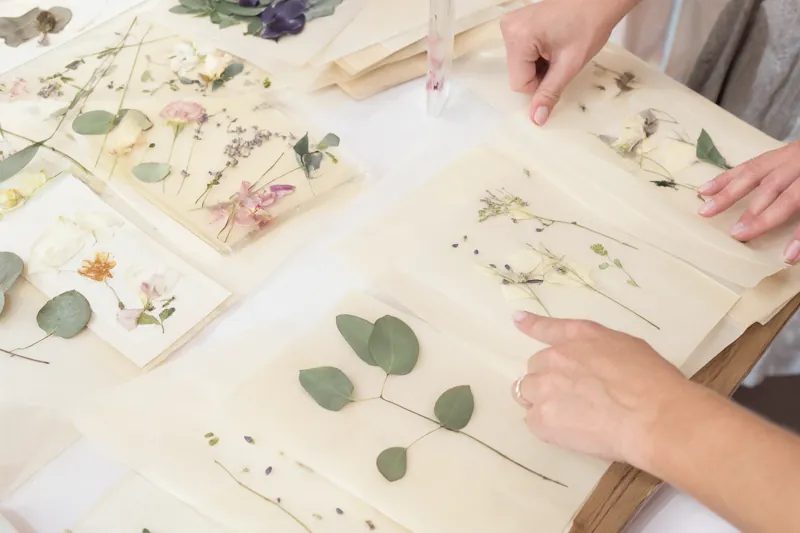
The flowers are taken apart and placed between sheets of absorbent paper under a weight for a few weeks. The result is flat and delicate, ideal for pictures, frames and albums.
It works well with thin, not very fleshy petals. Very full roses press better once the petals are separated. If you do it yourself, change the paper in the first few days, when it absorbs the most water.
Resin
The flowers are dried first and then set in clear resin that hardens and seals them. The result can be blocks, paperweights, pendants or coasters.
Two things to know:
- the flowers must be completely dry, or they will darken in the resin or form bubbles;
- the work takes time and equipment: professionals may have long waiting lists.
Ask for photos of work done with flowers similar to yours, and ask how the colour holds up over time.
Frames and display cases
Many studios combine methods: pressed flowers in a frame, or dried flowers in three dimensions inside a glass case. You can add the invitation, the bouquet ribbon or a photo. It is the choice for anyone who wants something to hang at home.
Studio or do-it-yourself: how to choose
The choice depends on three things: how much the result matters to you, how much time you have after the wedding and what object you want in the end.
- If a keepsake is enough and you have a dry spot at home, air drying is perfectly fine.
- If you want a carefully made frame or resin piece, go to a studio that does it professionally.
- If you leave on honeymoon the next day, a studio also solves the hand-over problem: many collect the bouquet or explain how to send it.
The cost of a studio depends on the method, the size of the bouquet and the final object. There is no single price list: ask for a written quote and what it includes, for example a frame, a case or return shipping.
What to do on the wedding day
What happens to the bouquet is decided in the hours after the party. Arrange:
- who takes charge of it at the end of the evening: a bridesmaid, a sister, your mother;
- where it goes: in fresh water, away from heat, not in a car in the sun;
- who takes it to the studio, if you leave on honeymoon the next day.
If you plan to toss it, ask the florist for a smaller bouquet to throw. This is covered in the guide to bridal bouquet styles.
If the wedding is far from home
For a destination wedding, the bouquet has to travel, or stay behind. Consider:
- a studio near the venue, which takes the bouquet the day after and ships the finished piece to you;
- refrigerated shipping, if the studio is near your home (ask how they organise it);
- air drying on site, if you are staying on for a few days.
Taking fresh flowers on a plane, especially outside the European Union, may be subject to plant health rules in the country you land in, and some countries, such as Australia, are especially strict. Check before you travel. For the opposite case, flowers coming into Italy, read the guide on bringing flowers into Italy from abroad.
Choosing flowers with preservation in mind
If you already know you want to keep your bouquet, tell the florist. They can steer you towards flowers that dry well, such as roses, lavender, gypsophila, statice, eucalyptus and many herbs. They can also avoid flowers that change a lot, such as lilies or orchids. To choose by month, read the guide to the bridal bouquet with seasonal flowers.
Other flowers worth keeping
It is not only the bouquet. Many couples also keep the groom's buttonhole, a flower from a centrepiece, some petals from the ceremony or a flower girl's crown. These are small pieces that air dry well or press nicely in a book. They can go into the same frame as the bouquet or into a small memory box. Decide beforehand who collects them at the end of the party, because during takedown they disappear quickly.
Questions to ask the preservation studio
- Which method do you recommend for my flowers?
- Within how many days must I hand over the bouquet?
- How do I get it to you if I am travelling?
- How long until the finished piece is ready?
- Can I see work done with similar flowers?
- How will the colour change over time?
- Is the price fixed or does it depend on the bouquet size?
- Do you ship abroad, and is shipping included?
To wrap up
Preserving your bouquet is a personal choice. What matters is deciding beforehand, so nobody leaves it in a bucket the next day. For the rest of the wedding flowers, read the guide on what to do with the flowers after the wedding.
If you are still choosing who will make your bouquet, ask for a quote and ask which flowers keep best.