In short
- This guide covers 18 wedding flower styles, each with typical flowers, a 3-4 colour palette, venues that suit it and the effect on your budget.
- Choose your style from venue, season and light, not from a single photo.
- Budget depends more on quantity, season and logistics than on the name of the style.
- It works best to pick one lead style, with a second one at most as an accent.
This guide is for couples looking for wedding flower ideas who want to see the full range before talking to a florist, especially if you are planning a wedding in Italy from abroad. For each style you will find how to recognise it, which flowers it uses, a starting palette, where it works and how it compares on budget. For a closer comparison of the eight main styles, read our guide to wedding flower styles. If you want to see where flowers are needed through the day, start with wedding flowers moment by moment.
You can find floral designers who work in these styles in our list of wedding florists in Italy. Look through their portfolios with this guide beside you.
The 18 styles at a glance
| Style | In a few words | Where it works | Relative budget |
|---|---|---|---|
| Classic | Symmetry, roses, white and green | Churches, palazzi, historic hotels | Medium |
| Romantic | Full shapes, pastels | Villas, gardens | Medium to high |
| English garden | Garden flowers, natural look | Villas with grounds | Medium |
| Shabby chic and vintage | Dusty tones, antique vases | Farmhouses, country houses | Low to medium |
| Opulent | Large volumes, arches, installations | Palazzi, grand villas | High |
| Boho | Pampas, dried flowers, sand tones | Masserie, beaches | Medium |
| Botanical | Greenery, branches, plants | Glasshouses, gardens, lofts | Medium |
| Wildflower | Loose lines, meadow flowers | Countryside, mountains | Low to medium |
| Rustic and country | Wood, hessian, sunflowers | Agriturismi, farms | Low or medium |
| Sustainable and local | Local flowers, no floral foam | Anywhere, best outdoors | Medium |
| Dried and preserved | Flowers that last | Hot venues, winter weddings | Medium |
| Mediterranean | Olive, citrus, white | The South, islands, coast | Low to medium |
| Tropical | Big leaves, bright colours | Beaches, summer terraces | Medium to high |
| Autumn harvest | Dahlias, grapes, warm tones | Wineries, vineyards | Medium |
| Winter and Christmas | Evergreens, berries, candles | Castles, mountain lodges, hotels | Medium |
| Minimalist | Few pieces, empty space | Modern buildings, town halls | Medium |
| White and green | One colour family | Churches, villas, modern rooms | Medium |
| Modern with hanging installations | Flowers overhead | High ceilings, marquees | High |
The relative budget is indicative and only compares the styles with each other. For prices per piece, read how much wedding flowers cost in Italy.
Classic and romantic styles
1. Classic
- How to spot it: neat, symmetrical arrangements, round or domed shapes, controlled greenery. Nothing sticks out of the outline.
- Typical flowers: roses, hydrangeas, calla lilies, lisianthus, gypsophila, ruscus.
- Palette: white, ivory, sage green, a hint of blush.
- Where it works: churches, palazzi, historic hotels, rooms with stucco work.
- Budget: medium. It rises with tall centrepieces and imported flowers out of season.
Some floral designers in our guide who list this style (in alphabetical order):
- Fiorista Latini, Pesaro (PU) · Marche
- Giardino Fiorito, Acireale (CT) · Sicily
- La Piccola Selva, · Piedmont
2. Romantic
- How to spot it: soft, full volumes, open blooms, scattered petals, candles. Generous but not stiff.
- Typical flowers: garden roses, peonies, ranunculus, frilly carnations, astilbe.
- Palette: blush pink, peach, cream, grey green.
- Where it works: villas, gardens, rooms with warm light.
- Budget: medium to high, because that fullness takes a lot of stems. Our guide to romantic and garden flowers goes into detail.
Some floral designers in our guide who list this style (in alphabetical order):
- Denny Jo, Pescara (PE) · Abruzzo
- Fiorbianco, Noci (BA) · Puglia
- Fiorista Latini, Pesaro (PU) · Marche
3. English garden
- How to spot it: the flowers look as if they were picked from a garden an hour earlier. Stems of different heights, plenty of foliage, small flowers among large ones.
- Typical flowers: English roses, delphiniums, foxgloves, snapdragons, sweet peas, herbs.
- Palette: lilac, powder blue, white, meadow green.
- Where it works: villas with grounds, outdoor ceremonies in spring and early summer.
- Budget: medium. Many varieties are in season from April to June, but the arranging takes time.
4. Shabby chic and vintage
- How to spot it: dusty colours, reclaimed containers (jugs, antique glass, tins), lace and whitewashed wood.
- Typical flowers: hydrangeas, old roses, gypsophila, lavender, carnations.
- Palette: antique rose, cream, dove grey, sage green.
- Where it works: farmhouses, country houses, family weddings.
- Budget: low to medium. Mismatched vases can be hired or collected, and many of the flowers are inexpensive. Take care not to fill every surface with objects.
5. Opulent
- How to spot it: large volumes, full arches, tables covered in flowers, tall candelabra, sometimes flowered ceilings.
- Typical flowers: large-headed roses, phalaenopsis orchids, peonies, hydrangeas, trailing amaranthus.
- Palette: white, ivory, champagne, deep green; or burgundy, red and gold.
- Where it works: palazzi, grand villas, ballrooms, city hotels.
- Budget: high. Structures, large teams and long set-up hours all add up. Ask for an itemised quote.
Some floral designers in our guide who list this style (in alphabetical order):
- Biancospino Flowers, Foiano della Chiana (AR) · Tuscany
- Fede Floral Design, · Tuscany
- Floreventi, Roma (RM) · Lazio
Natural styles
6. Boho
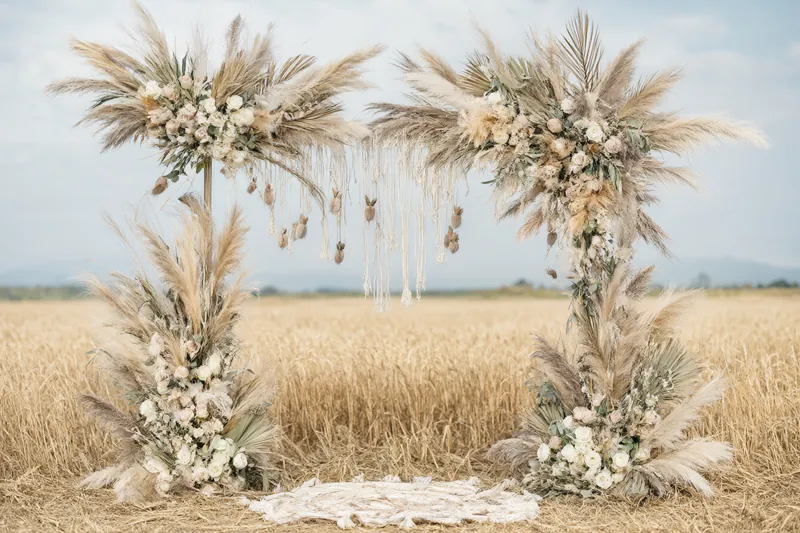
- How to spot it: neutral tones, dried grasses, palm leaves, wood, sometimes macramé. Low, wide arrangements.
- Typical flowers: pampas grass, bunny tails, protea, cream roses, eucalyptus, dried palm.
- Palette: sand, terracotta, cream, rust.
- Where it works: masserie, beaches, farmhouses, sunset ceremonies.
- Budget: medium. Dried flowers cope with heat and can be reused. Read more in our guide to boho wedding flowers.
Some floral designers in our guide who list this style (in alphabetical order):
- Blumen Edelweiss, Nova Ponente (BZ) · Trentino-South Tyrol
- Il Petalo di Marino, Marino (RM) · Lazio
- Studio M, Natural Flower Design, Roma (RM) · Lazio
7. Botanical
- How to spot it: greenery takes the lead. Branches, ferns, potted plants, a few flowers left to move naturally.
- Typical flowers: ferns, eucalyptus, olive, flowering branches, anthurium, potted orchids, small white flowers.
- Palette: forest green, sage green, white, natural wood.
- Where it works: glasshouses, winter gardens, lofts, villas surrounded by greenery.
- Budget: medium. Foliage costs less than flowers but you need volume. Potted plants can be hired. See our guide to wedding greenery.
Some floral designers in our guide who list this style (in alphabetical order):
- Agristile Flower Farm, Selvazzano Dentro (PD) · Veneto
- Azzurra Brozzetti Floral Designer, Roma (RM) · Lazio
- Blums Flower Farm, Cesiomaggiore (BL) · Veneto
8. Wildflower
- How to spot it: loose, asymmetric lines, meadow flowers, grasses, an unstructured look. Often small, mismatched vases.
- Typical flowers: chamomile, cornflowers, scabious, yarrow, cosmos, wheat, nigella.
- Palette: butter yellow, cornflower blue, white, straw green.
- Where it works: countryside, mountains, hill towns, small weddings.
- Budget: low to medium, if you follow the season. Wildflowers are bought from growers, not picked in the wild, and in the Alps many species are protected. Read our guide to wildflower weddings in Italy.
9. Rustic and country
- How to spot it: wood, hessian, crates, jars, lanterns. Simple, generous arrangements with no formality.
- Typical flowers: sunflowers, daisies, lavender, gypsophila, wheat, rosemary.
- Palette: yellow, white, olive green, wood brown.
- Where it works: agriturismi (farm stays), farmhouses, long outdoor tables.
- Budget: low or medium. One of the easiest styles to keep in check. If you love sunflowers, see our guide to sunflower weddings.
Some floral designers in our guide who list this style (in alphabetical order):
- Gianni Cortese Floral Designer, Lamezia Terme (CZ) · Calabria
10. Sustainable and local
- How to spot it: seasonal flowers grown nearby, no floral foam, arrangements in water on chicken wire or a kenzan, flowers reused from ceremony to reception.
- Typical flowers: whatever the month and region offer: ranunculus and anemones in late winter, peonies in May, dahlias in September.
- Palette: the season decides. A possible base: green, white, one colour of the month, a neutral.
- Where it works: anywhere, especially outdoor venues and areas with local growers.
- Budget: medium. You save on transport, but the choice is narrower and you need to accept that. Our guide to sustainable wedding flowers explains what to ask.
Some floral designers in our guide who list this style (in alphabetical order):
- Agristile Flower Farm, Selvazzano Dentro (PD) · Veneto
- Azzurra Brozzetti Floral Designer, Roma (RM) · Lazio
- Bloomich, · Trentino-South Tyrol
11. Dried and preserved
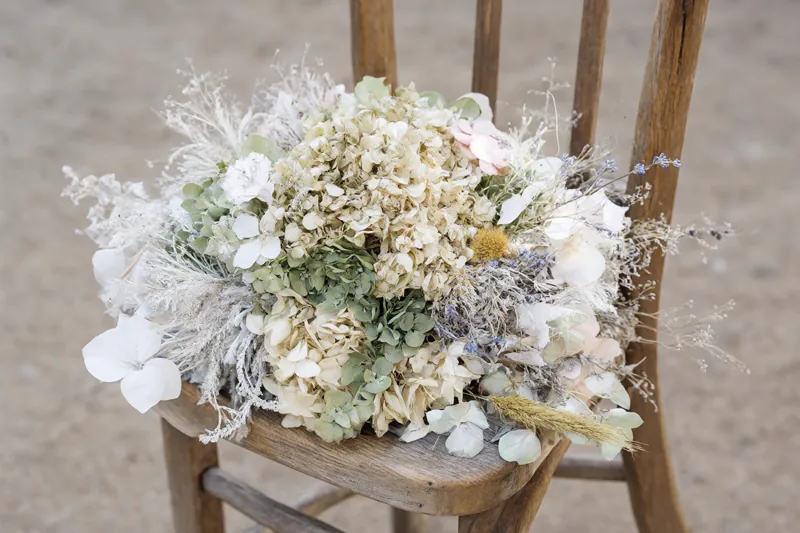
- How to spot it: dried or preserved flowers, muted or dyed colours, dry textures. Often mixed with a few fresh flowers.
- Typical flowers: pampas, honesty, statice, dried gypsophila, preserved hydrangeas, preserved roses.
- Palette: ivory, camel, dusty pink, warm grey.
- Where it works: very hot venues, winter weddings, set-ups prepared in advance.
- Budget: medium. They do not cost less than fresh flowers, but they can be made ahead and kept or sold on. See our guide to dried and preserved flowers.
Some floral designers in our guide who work with dried and preserved flowers (in alphabetical order):
- Carmen Fiori, Vercelli (VC) · Piedmont
- Daisy Studio, Cison di Valmarino (TV) · Veneto
- Fiorista Cassiani Donatella, Pontremoli (MS) · Tuscany
Styles rooted in place and season
12. Mediterranean
- How to spot it: olive branches, lemons and oranges, ceramics, terracotta, white linen. Greenery matters more than flowers.
- Typical flowers: olive, potted citrus trees, bougainvillea, jasmine, daisies, rosemary.
- Palette: white, olive green, lemon yellow, ceramic blue.
- Where it works: southern Italy, Sicily, Sardinia, the coast, terraces with a sea view.
- Budget: low to medium, because greenery and hired plants cost less than premium flowers. Read about the Mediterranean style and lemon and olive tree decor.
13. Tropical
- How to spot it: big glossy leaves, sculptural flowers, bright colours.
- Typical flowers: monstera, palm leaves, anthurium, bird of paradise, orchids, protea.
- Palette: deep green, coral, fuchsia, mango yellow.
- Where it works: beaches, summer terraces, evening parties with plenty of light.
- Budget: medium to high. Many of these flowers come from outside Europe and prices vary. One option: a few large leaves with warm-coloured local flowers.
14. Autumn harvest
- How to spot it: warm tones, fruit and coloured leaves, grapes, pomegranates, wood and copper.
- Typical flowers: dahlias, orange roses, celosia, amaranthus, berries, vine tendrils.
- Palette: rust, burgundy, mustard, olive green.
- Where it works: wineries, vineyards, the Langhe, Tuscany, Franciacorta, hill towns.
- Budget: medium. September and October offer plenty of local choice. If you are coming from abroad, note that in Italy chrysanthemums are associated with mourning. See our guide to October wedding flowers.
15. Winter and Christmas
- How to spot it: evergreens, berries, pine cones, velvet, lots of candles. A cosy, intimate feel.
- Typical flowers: amaryllis, hellebores, ranunculus, white roses, fir, pine, holly.
- Palette: deep red, fir green, white, gold or silver.
- Where it works: castles, mountain lodges, hotels in the Alps, rooms with a fireplace.
- Budget: medium. Local flowers are scarce, but greenery helps. Candles and open flames follow the venue's rules. Read our guide to winter weddings in Italy.
Pared-back and contemporary styles
16. Minimalist
- How to spot it: few elements, often a single variety, lots of empty space. Glass or ceramic vases with clean lines.
- Typical flowers: calla lilies, orchids, anemones, tulips, single branches.
- Palette: white, black, green, one accent colour.
- Where it works: modern architecture, museums, contemporary terraces, intimate civil ceremonies.
- Budget: medium. There are few pieces, but every flower has to be perfect. See our guide to minimalist wedding flowers.
Some floral designers in our guide who list this style (in alphabetical order):
- Fiorbianco, Noci (BA) · Puglia
- Fiorista Latini, Pesaro (PU) · Marche
- Giardino Fiorito, Acireale (CT) · Sicily
17. White and green
- How to spot it: a single colour family, played out in different shapes and textures. Elegant without being stiff.
- Typical flowers: white roses, hydrangeas, lisianthus, gypsophila, eucalyptus, ruscus.
- Palette: bright white, ivory, sage green, deep green.
- Where it works: churches, villas, modern rooms. It works almost anywhere and in any season.
- Budget: medium. White flowers are available all year, and you can balance them with plenty of greenery to keep costs down. For other colour schemes read our guide to wedding flower colour palettes.
18. Modern with hanging installations
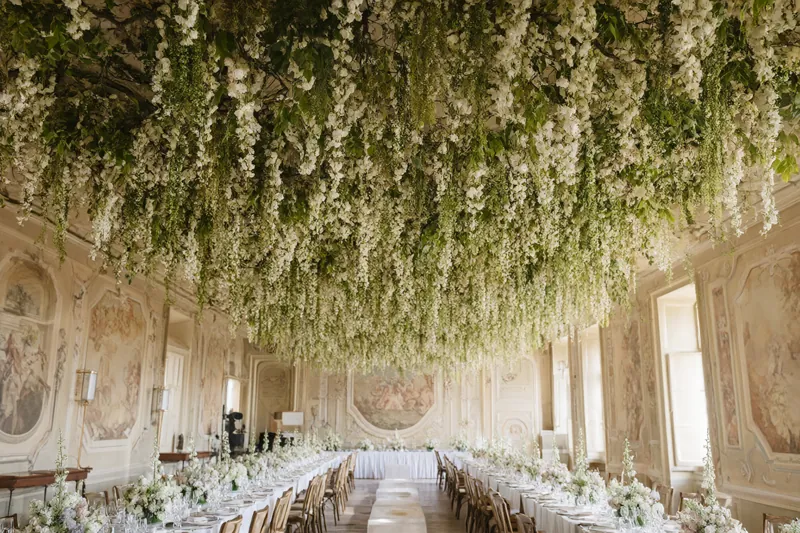
- How to spot it: flowers and greenery suspended above tables or the dance floor, flower clouds, hoops, floral chandeliers.
- Typical flowers: gypsophila, amaranthus, fresh or artificial wisteria, roses, trailing greenery.
- Palette: white, pale pink, green, sometimes one strong colour.
- Where it works: rooms with high ceilings, marquees, courtyards with beams.
- Budget: high. Industry estimates for a hanging installation start at around €2,000 excluding VAT, and the rigging must be approved by the venue. See our guide to hanging floral installations.
Some floral designers in our guide who create hanging installations (in alphabetical order):
- Andrea Patrizi Floral Designer, Roma (RM) · Lazio
- As Flower Design, Lecce (LE) · Puglia
- Capurro Fiori, Pieve Ligure (GE) · Liguria
How to choose from 18 styles
Eighteen styles is a lot. A few questions narrow it down:
- What is already at the venue? Stone, frescoes, wood, glass, a sea view. Keep the styles that work with what is there.
- What season is your wedding? Drop styles that need out-of-season flowers, or accept that they will cost more.
- What light will you have? Warm tones at sunset, clear and bold colours in a room with artificial light.
- How much space do you need to fill? A large church with a minimalist style can look empty. A small agriturismo with an opulent style can look crowded.
- What is your flower budget? If it is tight, choose styles that work with greenery and seasonal flowers.
For colours, start with our guide to wedding flower colour palettes. To see which arrangements you actually need, use the wedding flowers checklist.
Two styles together: when it works
Many successful weddings combine two styles. It works when:
- one lead style sets the palette and materials, and the other only adds details;
- the styles share something: Mediterranean and rustic share greenery, boho and dried share textures, classic and white and green share colours;
- the change is tied to a moment: a classic church ceremony and a more botanical reception in the garden.
Avoid pairing distant styles in the same space, such as tropical with shabby chic, or opulent with wildflower.
Questions to ask your florist
- Which of these styles do you work in most often? Can you show me similar weddings?
- Does the style I have chosen work at my venue and in my month?
- Which flowers would give the same effect on a lower budget?
- How would you carry the style through the ceremony, drinks reception and dinner?
- Does the venue have rules on candles, hooks or petals that change the proposal?
- Will you prepare a mood board or a sample centrepiece?
In closing
A style works when it starts from the venue and the season, not from a single picture. Pick two or three styles from this guide that feel like you, gather a few photos and show them to several florists to see how each would interpret them.
You can compare floral designers in our list of wedding florists in Italy. When you have a date, a venue and a lead style, request a quote with your guest numbers and the moments where you want flowers.