In short
- Wedding flowers are not just the bouquet: there are people, ceremony, reception and sometimes the family home.
- The right order is venue and date, then florist, then flowers: each choice depends on the one before.
- Season and venue rules matter as much as style: check them before you fall for a particular flower.
- For your budget you need clear priorities and an itemised quote, not a single lump sum.
This guide to Italian wedding flowers is the place to start if you are planning a wedding in Italy and do not know where to begin with flowers. You will find every moment where flowers are needed, the best order for decisions, how to think about style, season and budget, and what to ask the people who will make them. Each section links to a detailed guide, so you can dig into only what you need. If you already want to see names, start with our list of wedding florists in Italy.
Every moment that needs flowers
A wedding has more flower "places" than you might think. Not all are necessary: this table helps you see what you actually need.
| Moment | What is usually done | Guide to read |
|---|---|---|
| The couple's family homes | Front door, stairs, balcony, sometimes a table for guests | Decorating the bride's home |
| People | Bouquet, buttonholes, bridesmaids, mothers, hair | Bridal bouquet styles |
| Car | Arrangement on the bonnet or windows | Wedding car flowers |
| Religious ceremony | Altar, pews, church door, aisle runner | Church wedding flowers |
| Civil ceremony | Town hall room or authorised venue | Flowers for a civil ceremony |
| Outdoor symbolic ceremony | Arch, aisle, seating | Flowers for a symbolic ceremony |
| Reception | Drinks, seating plan, tables, top table, cake | Centrepiece ideas |
| Exit and after | Petals, reusing flowers, keeping the bouquet | What to do with flowers after the wedding |
A note for couples from abroad: in parts of Italy, especially the South, the bride's family home is decorated with flowers on the wedding morning. It is a custom, not a requirement.
People
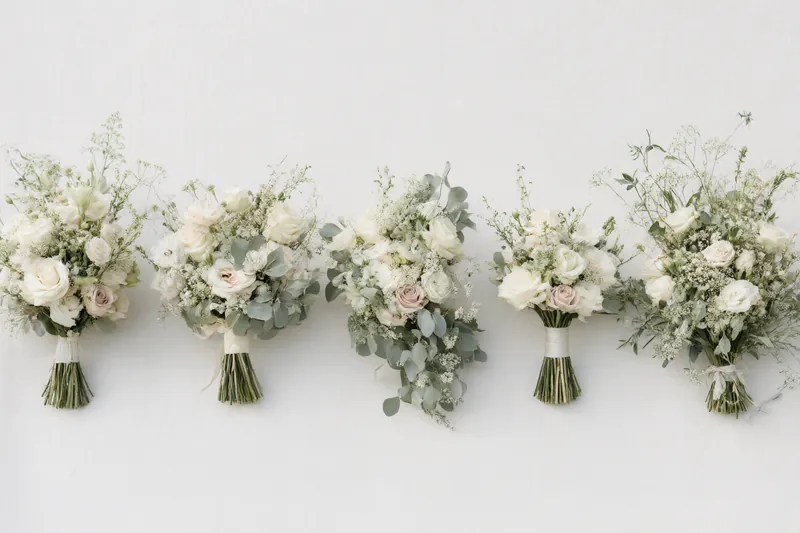
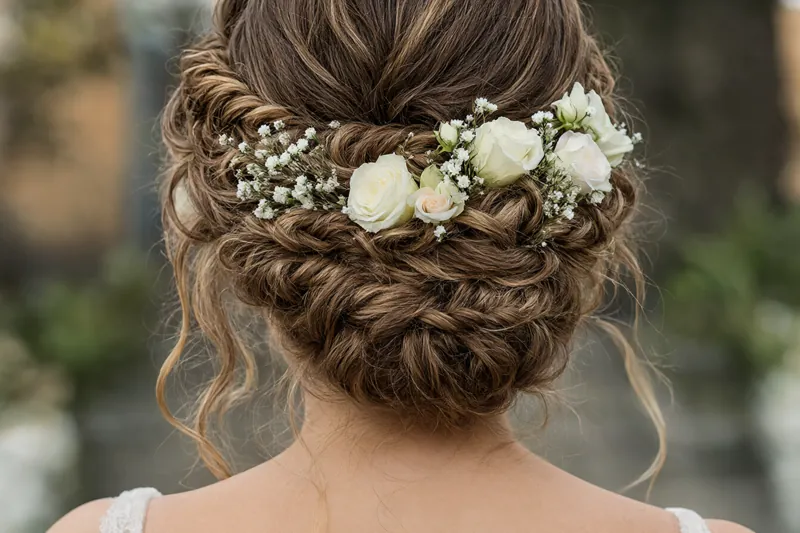
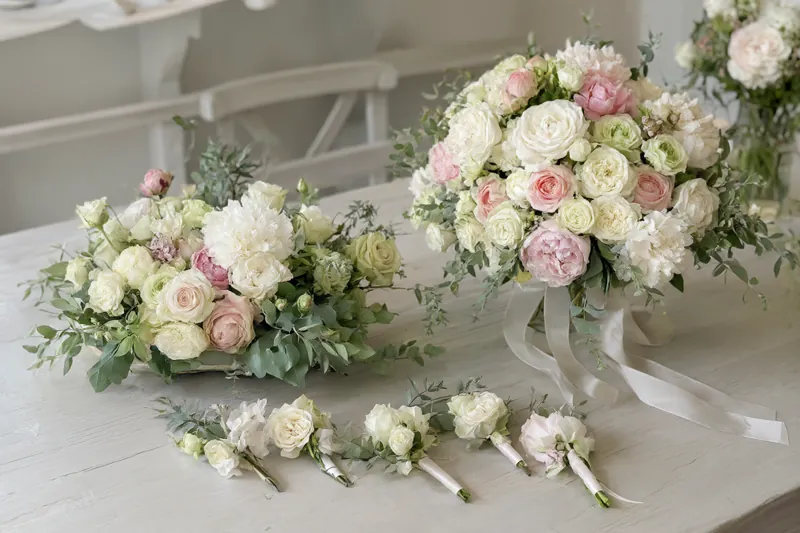
The bridal bouquet is the most photographed piece. Its shape (round, cascade, loose) depends on the dress, your figure and the style of the day: our guide to bridal bouquet styles helps you choose, and the one on seasonal bridal bouquets shows what you can find month by month. For the groom, best man, groomsmen and mothers there are buttonholes and corsages. If children walk in the procession, read about flowers for flower girls and page boys, and if you are thinking of a flower crown, see flowers in the bride's hair.
The ceremony
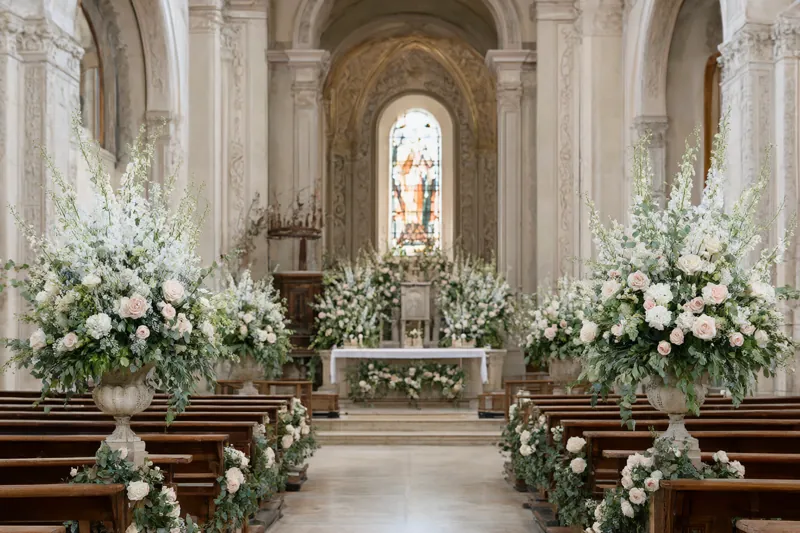
In a church, the parish sets the rules: what can rest on the altar, whether flowers can be fixed to pews, what time set-up can start. There are often other couples on the same day, and sometimes the decorations are shared. For a civil ceremony in a town hall (Comune), timings are tight and the space is not yours: a few arrangements that are easy to remove. For an outdoor symbolic ceremony, the design is free, but sun and wind have a big say: see our guide to the floral ceremony arch.
The reception
Here flowers become part of the table. Centrepieces must let guests see each other across the table and leave space for plates and glasses. The top table is at the centre of the photos. The seating plan display must stay readable. Cake flowers must be suitable and agreed with the baker: read our guide to flowers on the wedding cake. Welcome signs and menus can carry a small floral touch, as our guide to flowers on wedding signage explains.
The order to decide in
Many couples start from their favourite flower. Understandable, but risky: the venue or season may make it difficult. An order that works:
- Overall budget and guest count. They set how many tables and spaces to fill.
- Venue and date. Ask straight away about rules on flowers, candles, set-up times and approved suppliers.
- Choosing a florist. With a fixed date and venue you can ask for comparable quotes. Our guide on how to choose a wedding florist helps you assess portfolio and contract.
- Style and palette. A clear mood board avoids misunderstandings: see how to make a mood board.
- Site visit. Light, measurements, access, power sockets. See our guide to the venue site visit.
- Final design and quote, with a centrepiece mock-up if needed.
- Last details: final table count, bouquet, who gets flowers.
To know how early to book, read how far ahead to book your florist. For the whole calendar at a glance, see the wedding flower timeline.
Style and colour
Your flowers follow the style of the wedding: classic, romantic, boho, minimal, Mediterranean, garden. Our guide to wedding flower styles compares them. In Italy the region gives context, meaning light, climate, venues and local flowers, but it does not impose a style. You can have a minimal design in a Puglia farmhouse or a romantic one in a castle.
For colour, start from three things: season, venue and outfits. Our guide to wedding flower colour palettes suggests a simple method. If you like olive and citrus, see the Mediterranean style; for dried grasses and neutral tones, the boho style; for garden roses and peonies, the romantic garden style. To see what is popular now without chasing fads, read about wedding flower trends.
One point for visitors: in Italy chrysanthemums are linked to remembering the dead and are usually not used at weddings. Other customs, such as orange blossom, are explained in our guide to Italian wedding traditions and flowers.
The season
The season decides which flowers are fresh, beautiful and available in quantity. Out-of-season flowers can often be found, but they come from far away and cost more. Our guide to seasonal flowers in Italy has the full table. If you already have a date, there is a guide for each month: for example September and June, two popular months.
| Season | What affects the flowers | Read next |
|---|---|---|
| Spring | Wide choice, changeable weather | Ranunculus and anemones, peonies |
| Summer | Heat, sun, keeping flowers hydrated | Summer weddings and heat, hydrangeas, sunflowers |
| Autumn | Warm colours, shorter days | Roses, greenery and foliage |
| Winter | Fewer local flowers, more greenery and light | Winter weddings |
Seasons are indicative: they shift between North and South, hills and coast, and from one year to the next.
Your flower budget
The cost of flowers depends on a few items worth knowing before you ask for a quote:
- how many pieces: tables, ceremony arrangements, people who get flowers;
- which flowers: seasonal and local, or imported;
- how much work: low, simple arrangements or tall structures and installations;
- hire items: vases, stands, arches, candlesticks;
- logistics: travel, set-up, moving pieces from ceremony to reception, late-night breakdown.
Our guide to how much wedding flowers cost in Italy goes through each item, and the one on what share of the budget goes on flowers helps you decide how much to set aside. Prices in Italy are quoted in euros and usually subject to VAT (IVA): check whether a quote includes it. When the quote arrives, use our guide on how to read it and check the extra costs that are often left out. To spend less without it showing, there are practical ideas in how to save on wedding flowers: fewer but larger pieces, more greenery, ceremony flowers reused at the reception.
If you are thinking of doing some flowers yourself, first read when DIY flowers make sense and when they do not: the day before a wedding, time is short.
More sustainable flowers, and what is left after
Many couples want flowers that do not all end up in the bin at the end of the night. Some choices help without losing beauty:
- seasonal flowers grown in Italy, which travel less. Our guide to Italian flower growing explains where they come from;
- arrangements without floral foam, using mesh, vases and water. See sustainable wedding flowers;
- dried or preserved flowers for pieces you can keep. See dried and preserved flowers;
- hired potted trees and plants, such as olive and citrus. See lemons, oranges and olive in wedding decor;
- reuse: from ceremony to reception, then given to guests or donated.
The bouquet can be kept by drying, pressing or setting in resin, if you decide beforehand: read how to preserve your bridal bouquet.
Who makes the flowers: florist, floral designer, wedding planner
A local florist can make good bouquets and small arrangements. A floral designer plans the whole design, from ceremony to reception, and installs it on site. A wedding planner coordinates all the suppliers. Our guide to the difference between a florist and a floral designer explains when you need which, and the one on florists and wedding planners shows how they share the work. Before you sign, read what to check in the contract.
Logistics on the day
Flowers are set up a few hours before guests arrive, often while the caterer lays the tables and the photographer starts shooting. Make sure you know:
- what time the church and venue open to the florist;
- who moves arrangements from the ceremony to the reception;
- where flowers are kept cool before set-up;
- who handles breakdown and when, and who collects the hire items.
Our guides to set-up and breakdown and to coordinating flowers, caterer and venue cover this. If your reception is outdoors, prepare a rain plan. For photos, flowers and light should be planned together: see flowers and wedding photography and lighting and flowers.
Safety and rules
Some things are decided not by taste but by whoever runs the space. Always check with the venue, the parish or the town hall:
- candles and open flames: many venues limit them or require LED candles. See flowers and candles;
- flowers near food: no petals or pollen on plates and buffets, food-safe flowers on the cake. See food-safe flowers;
- allergies and scent: on the tables, lightly scented flowers are better. See scented flowers and allergies;
- petal and rice tosses: not every church allows them. See the wedding exit and petals;
- hanging installations: need safe anchoring and the venue's permission.
Getting married in Italy from abroad
If you are planning from another country, the order is the same, but trust and communication matter more. Start with our guide to a destination wedding in Italy and, for an overview of the paperwork, getting married in Italy as a foreigner. How to manage everything remotely is covered in planning your flowers from abroad. For a small wedding, read our guide to eloping and micro weddings in Italy.
Questions to ask your florist
- Have you worked at this venue or this church before? Do you know the rules?
- Which flowers are at their best in our wedding month?
- Is the quote itemised? What is included among hire items, travel and breakdown?
- Who moves the flowers from the ceremony to the reception?
- What happens if a flower is not available? What would you use instead?
- Can we see a centrepiece mock-up?
- What deposit do you ask for, and when is the balance due?
You will find a fuller list in our guide to questions to ask before you sign.
To sum up
Flowers work best when they come at the right point in the chain of decisions: after venue and date, before the details. Pick a few priorities, the ones you will see in the photos, and let your florist make them work with your season and budget.
You can browse wedding florists in Italy, narrow down by area with find a florist or, if you have a date and venue, request a quote with your guest count and the things that matter most to you.